The Most Important Beings in My Home Search Don’t Pay the Mortgage

The Most Important Beings in My Home Search Don’t Pay the Mortgage

The most important beings in my home search don’t pay the mortgage.

They don’t contribute to the down payment.

They don’t review HOA documents.

They don’t care about interest rates.

And they have absolutely no opinion whatsoever on granite countertops.

Their names are Otto and Giorgio.

They’re two Rhodesian Ridgebacks who have somehow managed to become the unofficial directors of my daily schedule.

And while they may not understand real estate, they’ve taught me something important about choosing where to live.

The best neighborhoods aren’t always the ones with the biggest homes.

They’re the ones that make everyday life better.

Before I became a dog dad, I thought I evaluated neighborhoods based on architecture, restaurants, walkability, and convenience.

Then Otto and Giorgio arrived.

They forced me to think beyond the house itself.

Because at some point you realize you’re not just buying square footage.

You’re buying the route you walk every morning.

The park you’ll visit after work.

The coffee shop you’ll stop at on Saturday.

The people you’ll meet.

The life you’ll actually live once the moving truck leaves.
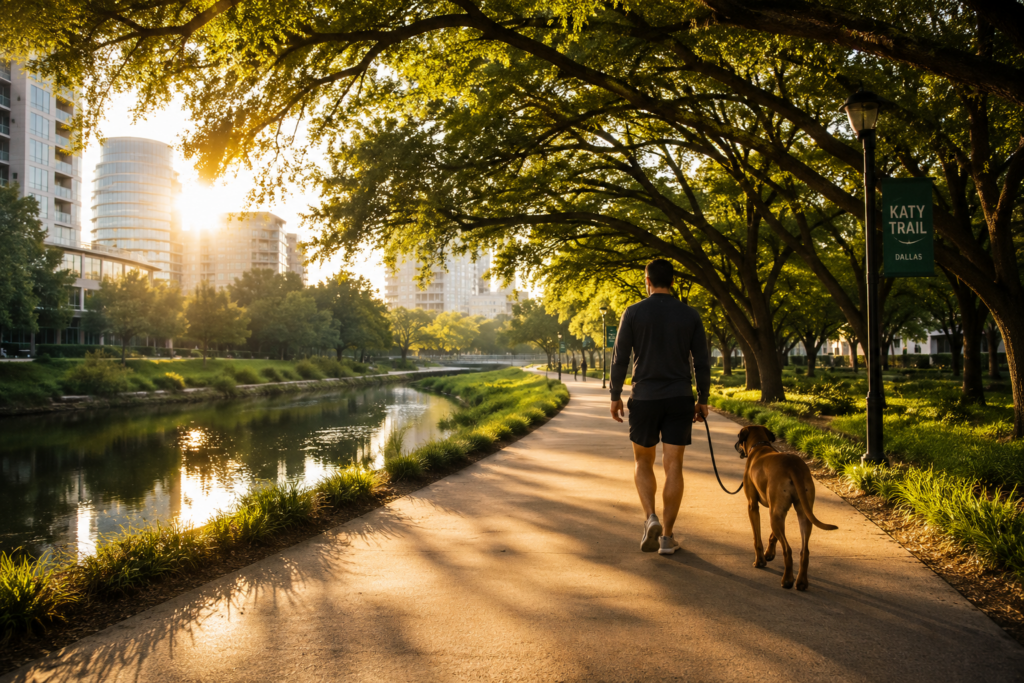
 

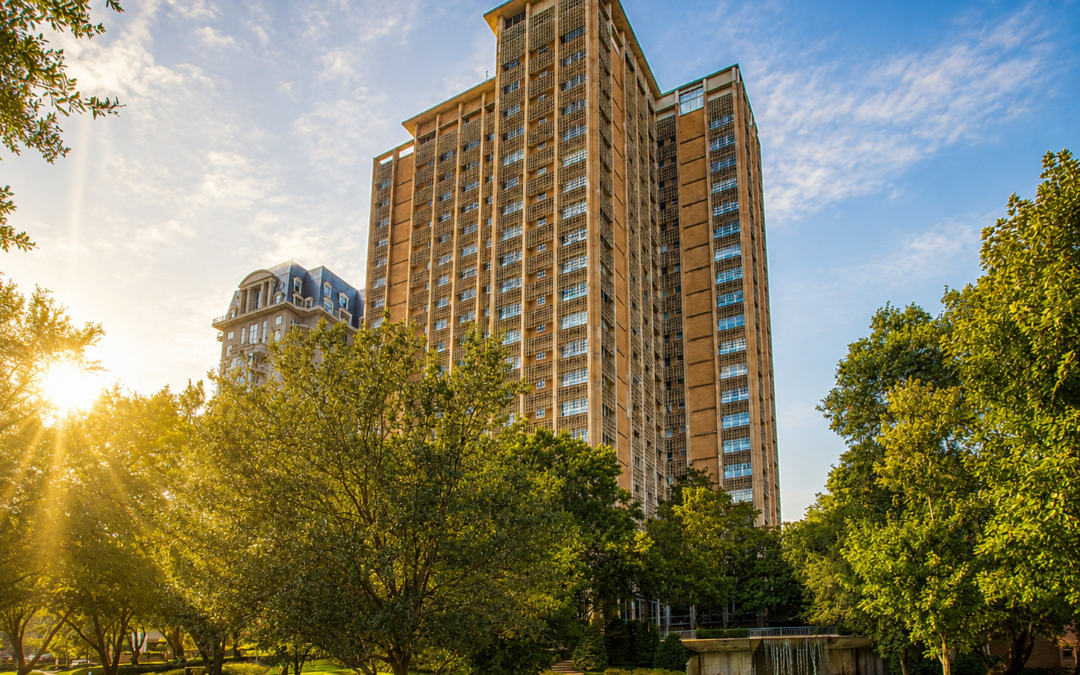
One of the reasons I love Oak Lawn, Uptown, and Turtle Creek is that they work exceptionally well for people who live pet-centered lives.

A great neighborhood for dog owners isn’t simply a place with a dog park.

It’s a place where daily life feels easy.

It’s a place where a morning walk doesn’t feel like a chore.

It’s a place where you can leave your front door and immediately find beautiful streets, shaded sidewalks, trails, green spaces, and other people doing exactly what you’re doing.

Walking their dogs.

Living their lives.

Connecting with their community.

Some mornings, Otto and Giorgio and I walk beneath the massive tree canopy that covers portions of Turtle Creek and Oak Lawn.

The boys are happy.

I’m getting exercise.

And for a few minutes, everybody’s blood pressure improves.

Including mine.

As a bonus, it’s difficult to take yourself too seriously when one of your dogs suddenly decides a squirrel is public enemy number one.

The other thing that makes these neighborhoods special is that they’re built around daily convenience.

Veterinarians.

Boarding facilities.

Groomers.

Dog-friendly patios.

Coffee shops.

Parks.

Trails.

They’re all woven into the fabric of the neighborhood.

You don’t have to plan your life around your dog.

Your neighborhood already supports both of you.

 

One of my favorite examples is watching how often dogs become social connectors.

People who might never speak to each other suddenly find themselves having a ten-minute conversation because their dogs introduced them.

A neighborhood starts feeling smaller.

Friendlier.

More connected.

Community happens.

And sometimes it happens because a Labrador refuses to mind its own business.

Or because a Ridgeback decides everyone within a fifty-foot radius should come say hello.

The best dog-friendly neighborhoods aren’t necessarily the neighborhoods with the biggest backyards.

They’re the neighborhoods that make daily life enjoyable.

The places where a walk feels peaceful.

The places where a patio welcomes both you and your dog.

The places where green space, shade, trails, and community are part of everyday life.

Before Otto and Giorgio, I thought I was choosing neighborhoods based on location.

Now I realize I was choosing neighborhoods based on quality of life.

The dogs just happened to point it out first.

And while they don’t pay the mortgage, they absolutely influence where I want to live.

 

Why Garages Matter More Than Granite

Why Garages Matter More Than Granite

If you’re a first-time buyer, I need you to promise me something.

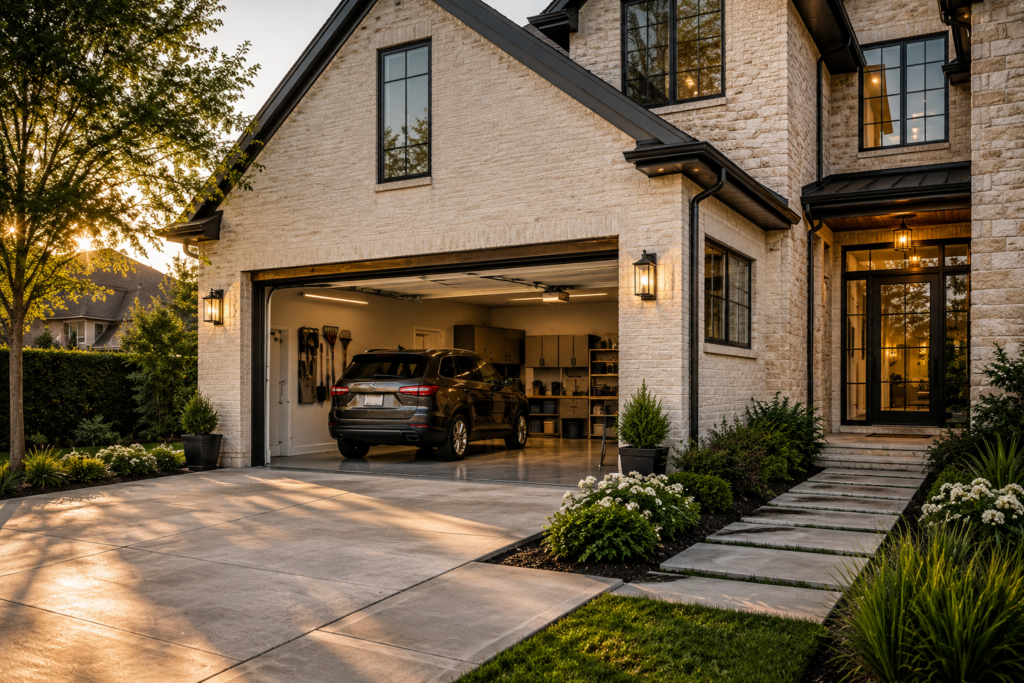
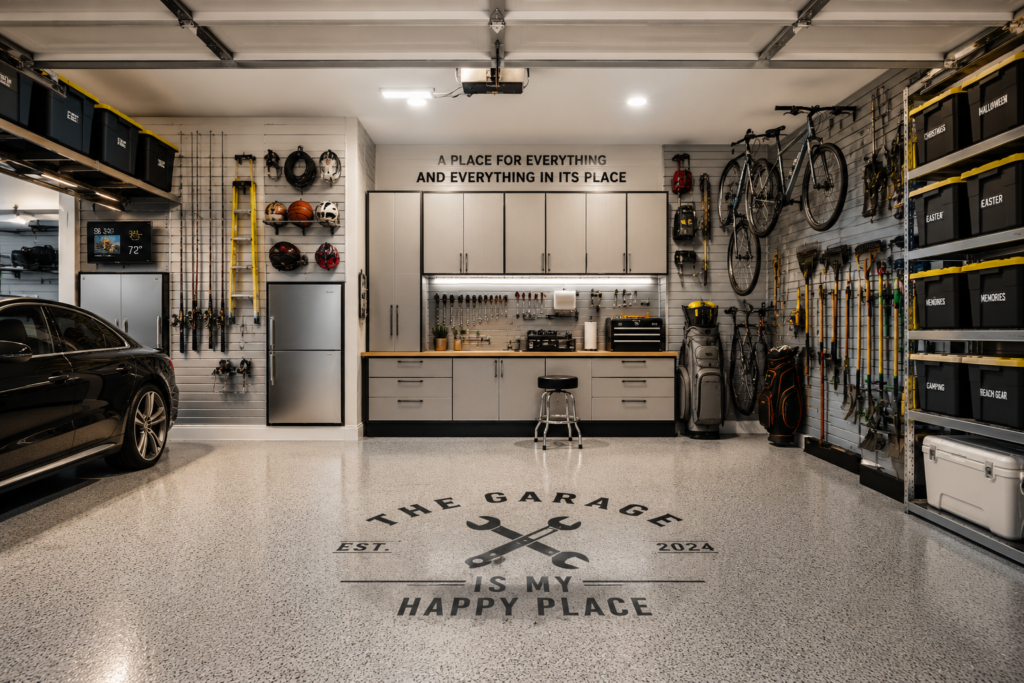
The next time you’re touring a home, spend at least as much time looking at the garage as you do looking at the kitchen.

I know.

That’s not nearly as exciting.

Granite countertops are beautiful. Quartz is beautiful. New appliances are beautiful. Under-cabinet lighting is beautiful.

Nobody has ever invited friends over and proudly announced, “Wait until you see my oversized two-car garage.”

I take that back, a couple of my friends have!

But after more than three decades in real estate, I’ve learned something interesting.

The features that get your attention during a showing are not always the features that improve your life the most after you move in.

And garages are one of the best examples.

When buyers walk into a home, they often spend fifteen minutes discussing the kitchen.

Then they spend about forty-five seconds looking at the garage.

Five years later, they’re using the garage every single day.

The granite?

They’re barely noticing it anymore.

A garage quietly earns its value over time.

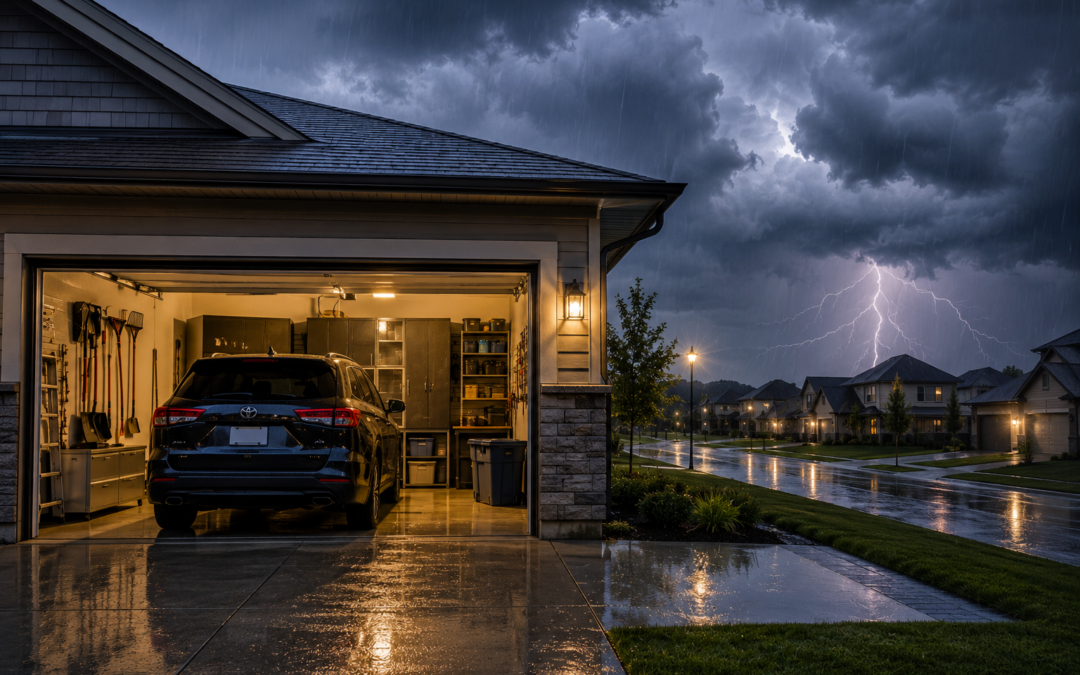
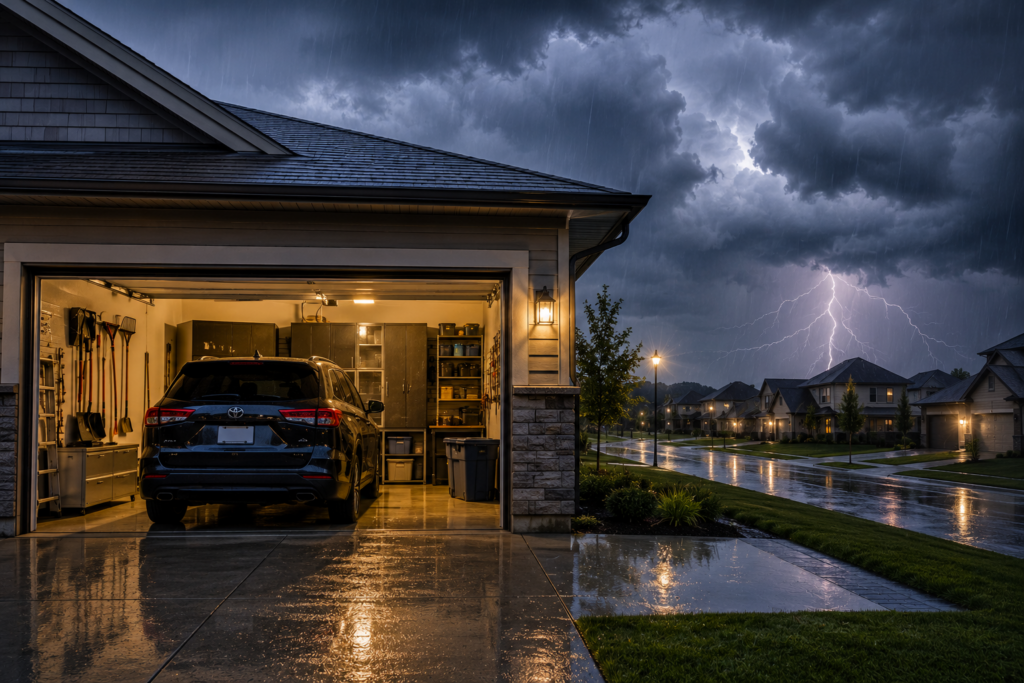
You appreciate it when it’s raining and you’re carrying groceries into the house.

You appreciate it when it’s August in Texas and your steering wheel isn’t capable of branding cattle.

You appreciate it when your Amazon package isn’t sitting on the front porch.

You appreciate it when holiday decorations need a home.

You appreciate it when you buy something from Costco that seemed like a good idea at the time and now requires its own zip code.

Suddenly, that garage doesn’t seem so boring.

And not all garages are created equal.

Some buyers love front-entry garages because they’re convenient and straightforward.

Others prefer rear-entry garages because they create a cleaner streetscape and often improve curb appeal.

Then there are tandem garages.

If you’ve never seen one, imagine parking one car directly behind another.

They can work beautifully for some households.

They can also become a daily negotiation if the person parked in front decides to sleep late.

Tandem garages are a little like bunk beds.

They’re fantastic until somebody needs something.

The larger point is this:

Experienced homeowners tend to evaluate homes differently than first-time buyers.

They still notice the beautiful kitchen.

They still appreciate updated finishes.

But they’ve learned to pay attention to the features that affect daily life.

Storage.

Closets.

Pantries.

Laundry rooms.

Parking.

Garages.

The practical things.

Because those are the features you’ll still be appreciating long after the excitement of new countertops wears off.

This doesn’t mean granite doesn’t matter.

Of course it does.

A beautiful kitchen adds enjoyment, functionality, and value.

The smartest buyers simply learn to evaluate both.

Granite may get your attention.

The garage may improve your life.

And when you’re searching for your next home, it’s worth remembering that the features that photograph best aren’t always the features that serve you best.

The Old “Buyer” Playbook Isn’t the Only Playbook Anymore

The Old “Buyer” Playbook Isn’t the Only Playbook Anymore

For many people, buying a home feels like something they should have already done.

Maybe they assumed they would buy after getting married.

Maybe they thought they would buy younger.

Maybe they imagined buying with a spouse, two children, a golden retriever, and a white picket fence.

Then life happened.

Careers took unexpected turns. Relationships changed. Priorities shifted. Some people stayed single longer than expected. Others found themselves buying later in life. Some are purchasing alone for the very first time.

And because the traditional image of homeownership has been repeated for generations, many buyers quietly wonder if they somehow missed the right moment.

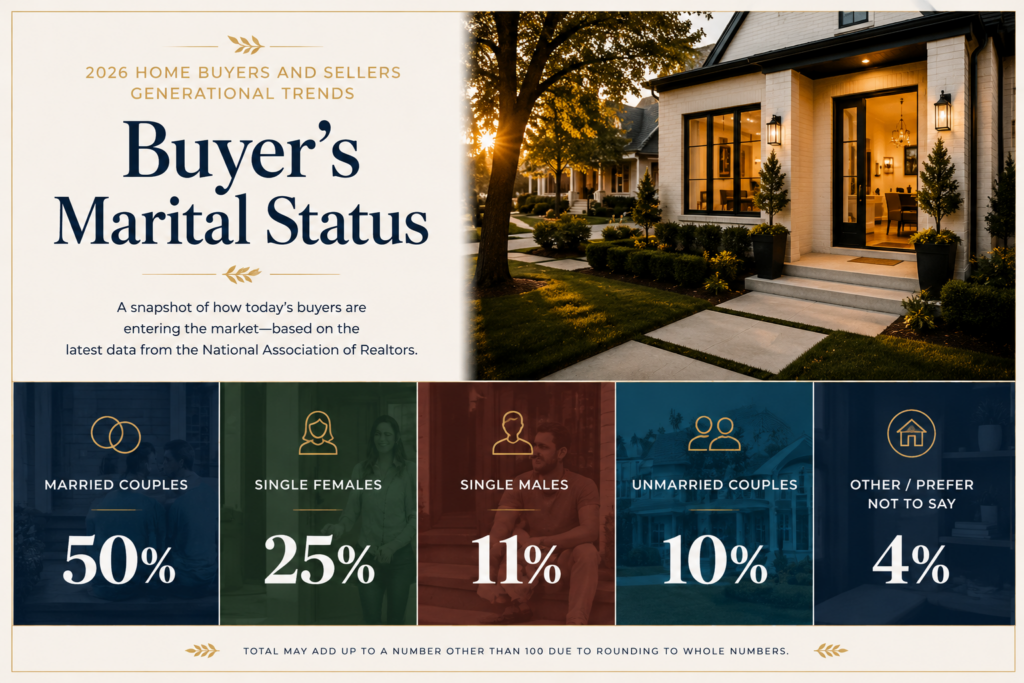
The latest data from the National Association of Realtors tells a very different story.

The reality is that today’s homebuyer looks nothing like the homebuyer of twenty or thirty years ago.

The market is far more diverse than many people realize.

Married couples still represent the largest group of buyers, but they account for only half of the market. The other half consists of single women, single men, unmarried couples, and buyers whose circumstances do not fit neatly into traditional categories.

That means millions of Americans are purchasing homes outside the “expected” path.

Not because they failed.

Because life is different.

And because the definition of homeownership has evolved.

One of the most rewarding parts of working in real estate is seeing firsthand how different buyers arrive at the same destination.

Some are buying their first home.

Some are downsizing.

Some are purchasing after a major life change.

Some are buying alone for the first time.

Others are purchasing later in life than they ever imagined.

The common thread isn’t age, income, or marital status.

The common thread is that each buyer reached a point where homeownership became the right solution for their life.

That’s an important distinction.

Too many people compare their personal timeline to someone else’s.

Too many buyers believe there is one correct age, one correct income level, one correct relationship status, or one correct life stage to purchase a home.

There isn’t.

What matters today is less about who you are and more about what you need.

A stable place to live.

A sense of control over your future.

More room.

Less maintenance.

A shorter commute.

A better school district.

A place to build equity instead of paying rent.

The motivations may be different, but the goal is often the same.

When you look beyond marital status and demographics, something interesting happens.

Buyers begin prioritizing many of the same things.

Comfort.

Security.

Lifestyle.

Financial stability.

Community.

A place that feels like home.

The old playbook suggested that homeownership followed a single predictable path.

The new reality is much more flexible.

And honestly, much more encouraging.

The takeaway from all of this is simple.

If you’ve been waiting because your life doesn’t look exactly the way you thought it would, you may be comparing yourself to a version of the market that no longer exists.

There has never been one right way to become a homeowner.

There has never been one correct timeline.

And there has never been one type of buyer.

The people purchasing homes today come from every stage of life imaginable.

The question is no longer whether your story matches someone else’s.

The question is whether homeownership solves a problem, creates an opportunity, or improves your life today.

Because when it does, that’s usually the right time to start looking.

You Cannot Buy Katy Trail Access at Home Depot

You Cannot Buy Katy Trail Access at Home Depot

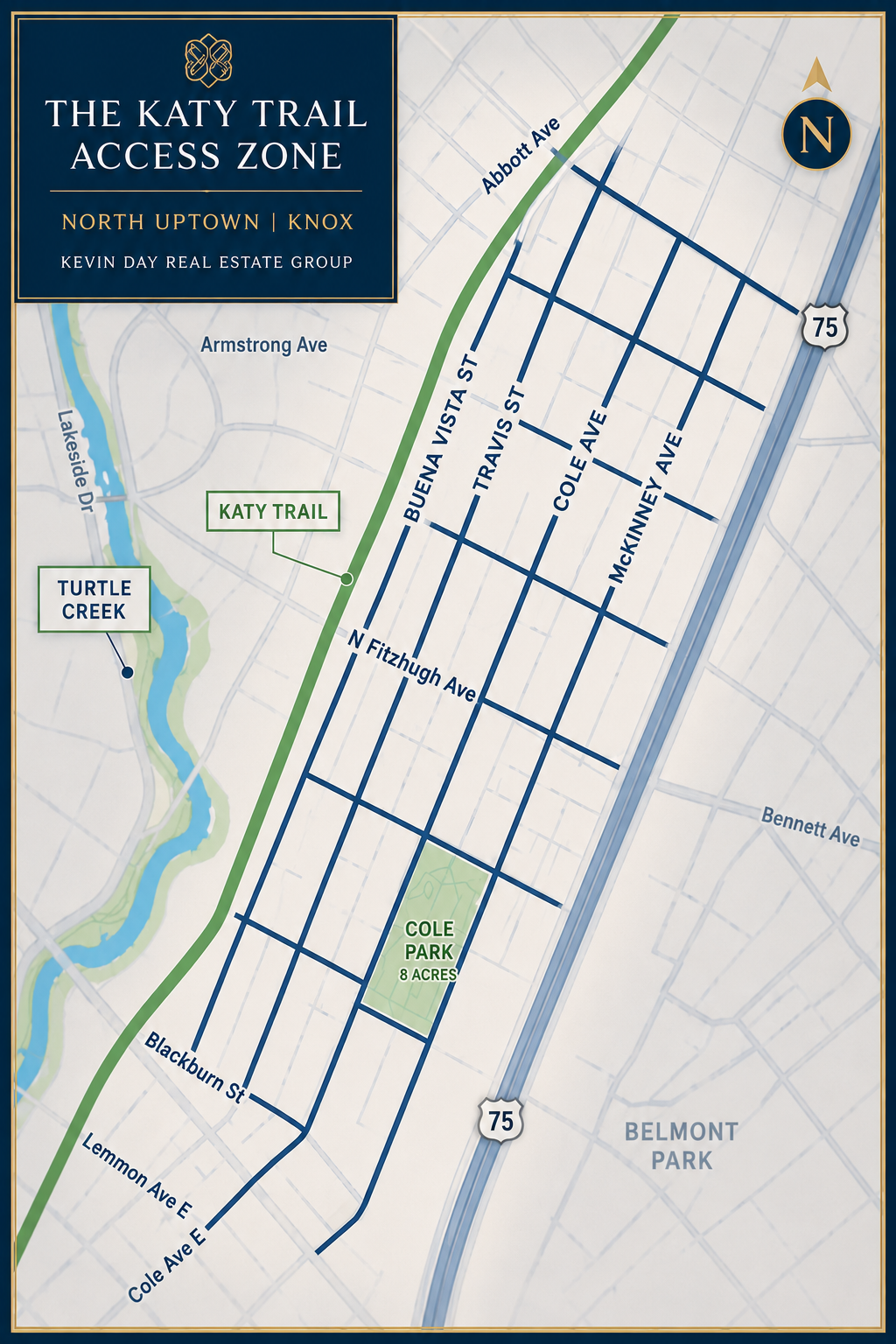
Kitchen cabinets, countertops, lighting, and flooring can all be upgraded. But the thing that keeps drawing people to the eight blocks of Uptown, just south of Knox, isn’t sitting on a shelf at Home Depot.

It’s Katy Trail access.

Most people search for rentals or places to buy by square footage, bedroom count, finish-out details, and price. Then, there is an elite group that want close proximity to Katy Trail.

Because living near Katy Trail changes how people actually live.

Suddenly morning coffee is not a drive. Exercise is not something you schedule. Dinner is not an event that requires planning. You walk out your front door and it’s all in the neighborhood.

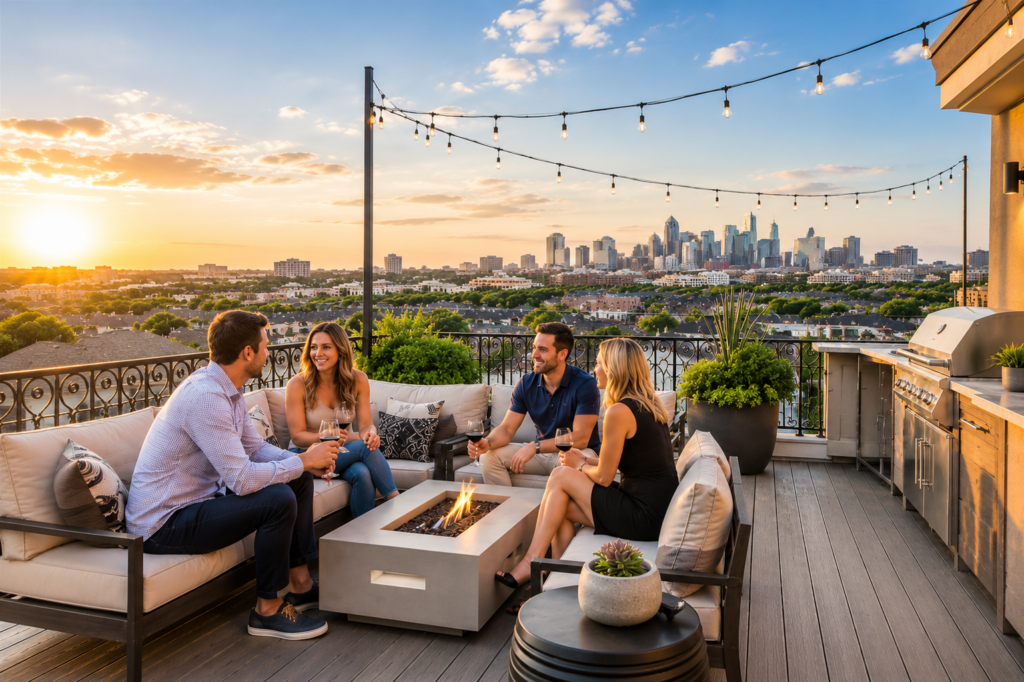
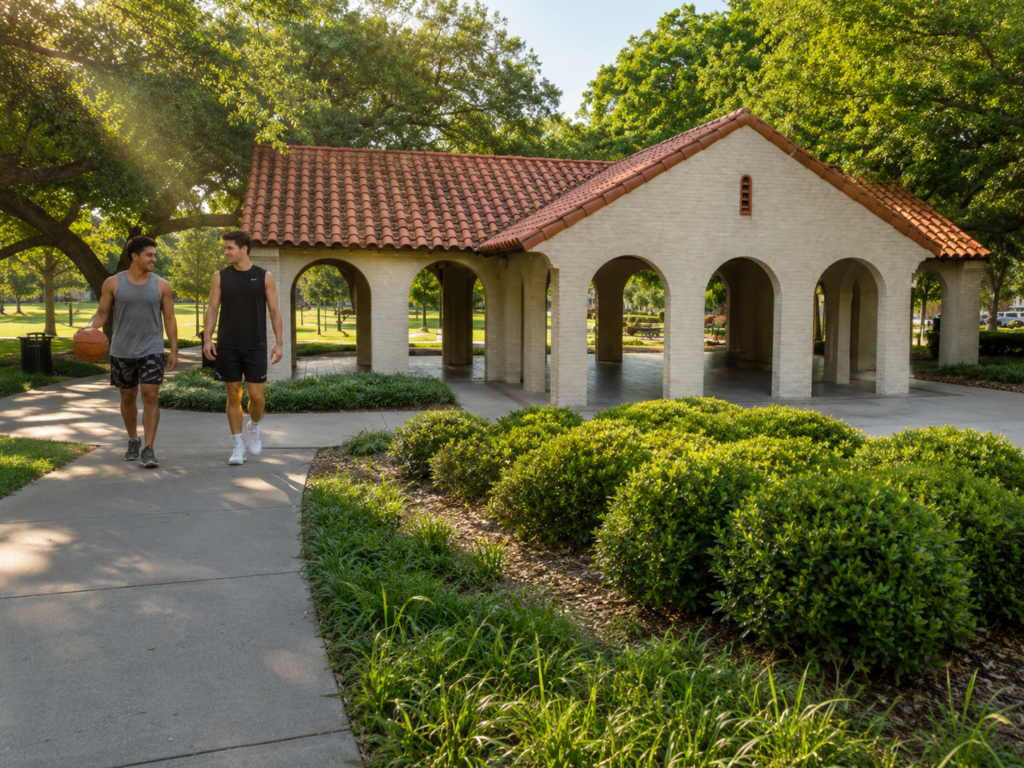
You see people walking dogs, runners finishing morning miles, neighbors heading to the market, friends meeting for coffee, and rooftop patios filling up as the sun starts dropping over the skyline.

The townhomes are beautiful. The kitchens are beautiful. The finish-outs are beautiful.

But those things exist all over Dallas.

Katy Trail access a block away, does not.

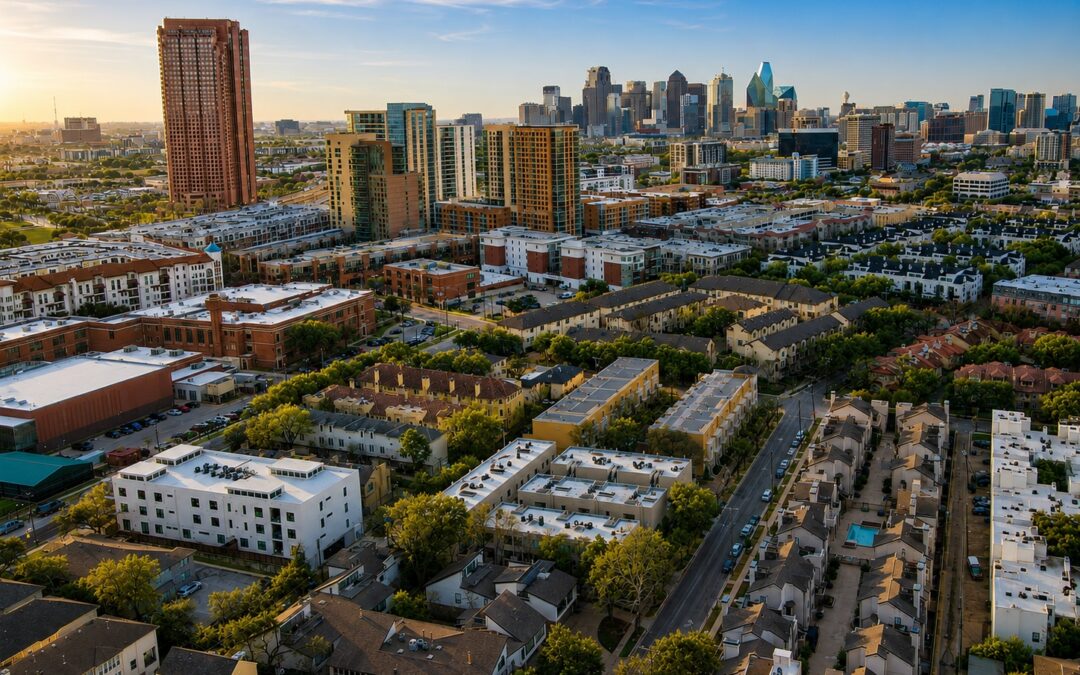
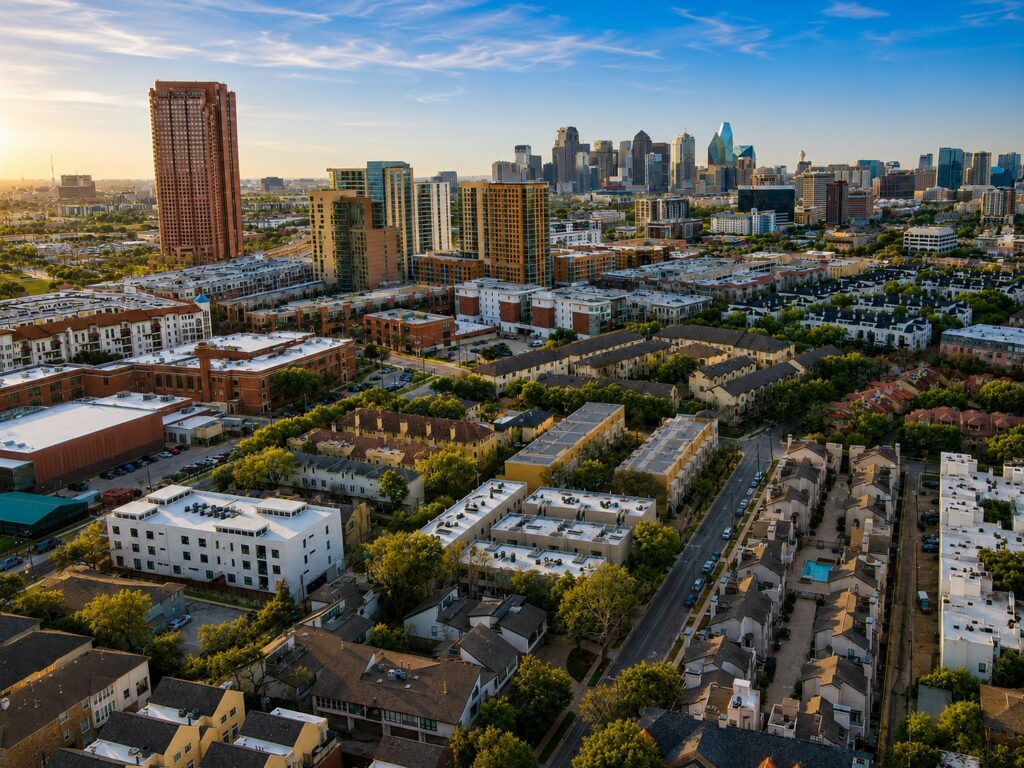
There are certain places around Dallas where people want more than square footage, and this little pocket just south of Knox is one of them. If you’re not familiar with it, think roughly McKinney Avenue, Cole Avenue, Travis Street, Buena Vista, and Katy Trail itself stretching beside it all. It’s an area that somehow manages to feel connected, and tucked away, at the same time.

You can walk out your front door and be on Katy Trail in seconds.

That changes things.

Everything now becomes a walk.

Life gets smaller in the best possible way.

People underestimate how valuable that becomes.

I’ve shown townhomes where couples initially start talking about kitchen finishes and backsplash tile selections. Then we step outside and they realize they can walk to any and everything that want.

Walkable neighborhoods, especially ones with immediate access to the trail, is requested more than large closets or gas stoves.

And here’s another funny observation.

Wherever I see an Apple store, I usually expect a Starbucks and a grocery concept like Trader Joe’s or Whole Foods nearby.

Put a one-mile radius around that trifecta and you’re usually standing in valuable real estate.

Those retailers figured that out a long time ago.

But even that’s only part of the story.

The real magic isn’t those stores or eateries.

It’s the rhythm.

It’s the little routines that don’t seem important until one day you realize you would hate giving them up.

That’s why people come here.

And that’s why they stay, until life changes.

As time goes on they get engaged, or a baby is on the way, and the next move usually isn’t a larger townhome.

It’s a house.

They have thoroughly embraced this Uptown townhome life, but their priorities have changed. Their love for Katy Trail is replaced by the need for good school districts, and the other benefits suburban communities offer growing families.

And while they are moving off to the suburbs, a new young couple has decided to lease the townhome they’ve lived in; and the new young couple is discovering the absolute joy of having immediate Katy Trail access as they requested, as well as their new life of walking everywhere, like the couple before them.

Katy Trail is a property feature that gets requested hundreds of times a day.

You can remodel kitchens.

You can replace flooring.

You can renovate bathrooms.

But you cannot buy Katy Trail access at Home Depot.

Some Homes Feel Expensive Before You Ever See the Price

Some Homes Feel Expensive Before You Ever See the Price

There are homes people admire, and then there are homes people feel something inside of.

The interesting part is that those feelings often begin long before anyone asks about the price per square foot, the school district, or whether the kitchen countertops are quartz or marble. Buyers usually know within moments whether a home feels elevated, calm, inviting, or forgettable. The emotional reaction happens first. Logic arrives later.

And contrary to what many people assume, that “expensive” feeling rarely comes from excess.

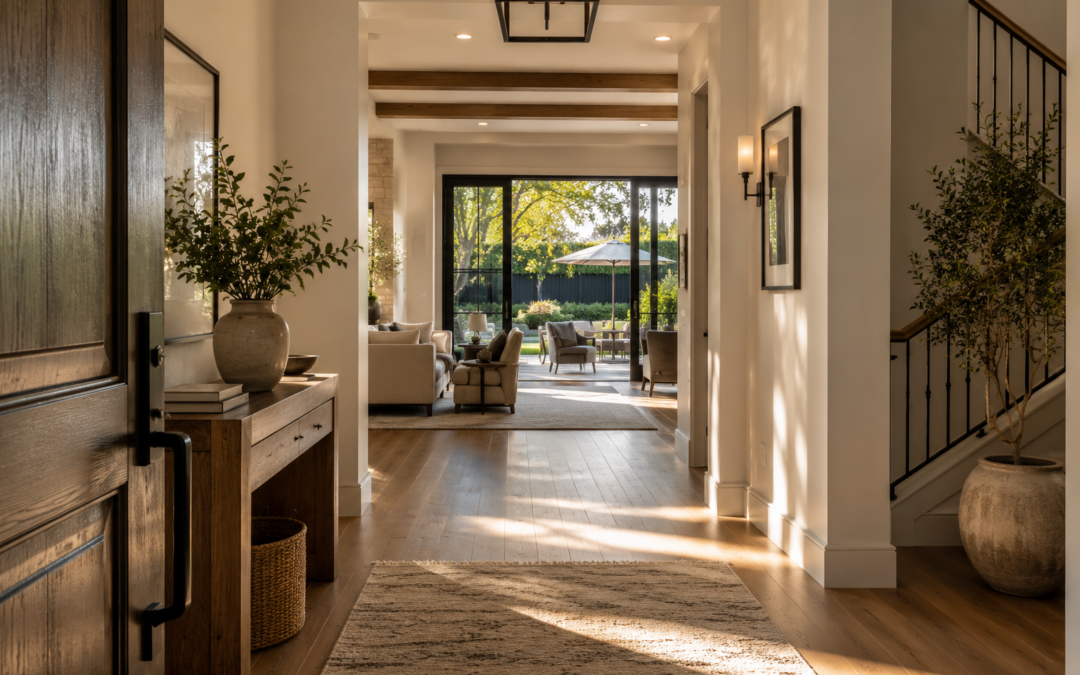
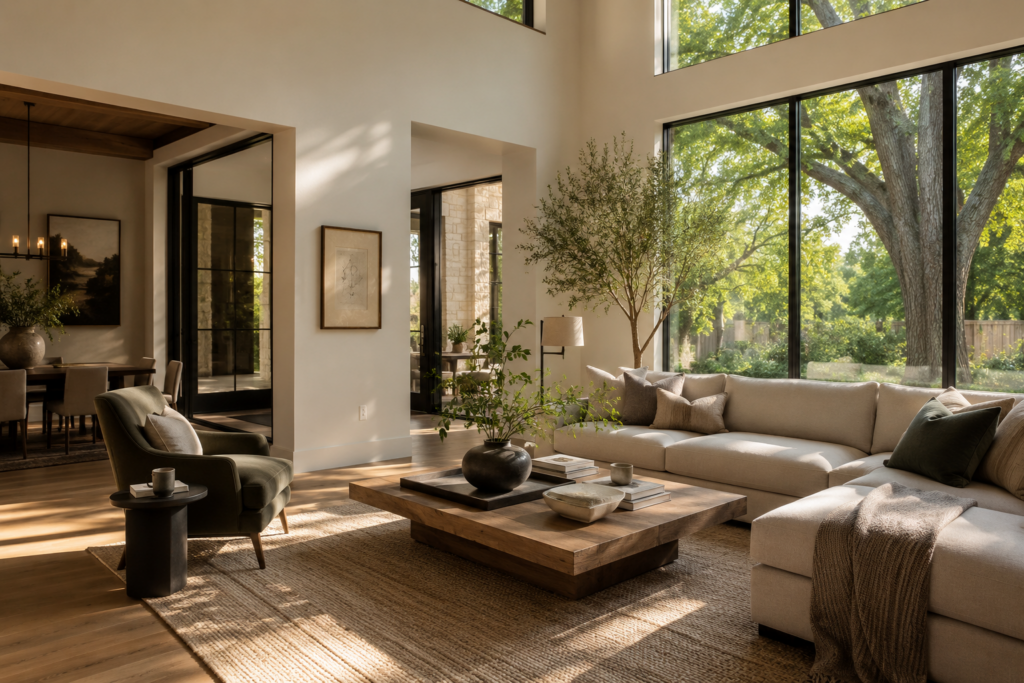
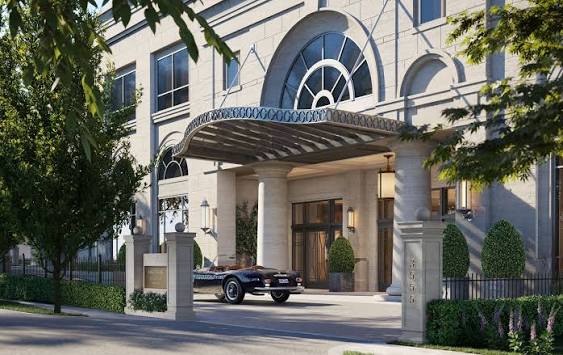
In today’s Dallas market, some of the most memorable homes are not necessarily the largest homes or the most extravagant homes. They are simply intentional. The lighting feels right. The proportions feel balanced. The home feels clean, cared for, and emotionally easy to be inside of.

That matters more than many sellers realize.

Buyers and tenants are overwhelmed today. They scroll through hundreds of listings, endless photos, and properties that begin blending together after a while. The homes that stand out are usually not the loudest ones. They are the ones that create emotional clarity.

A beautifully presented home reduces friction.

People stop wondering if they could live there and begin imagining themselves already living there.

That transition is where momentum happens.

This is also why presentation matters so much more than people think. Not “staging” in the artificial sense. Not filling rooms with trendy furniture and decorative objects that feel disconnected from real life. True presentation is about creating emotional ease.

Clean sightlines.
Natural light.
Thoughtful scale.
Warm textures.
A sense of calm.

Those details quietly shape perception.

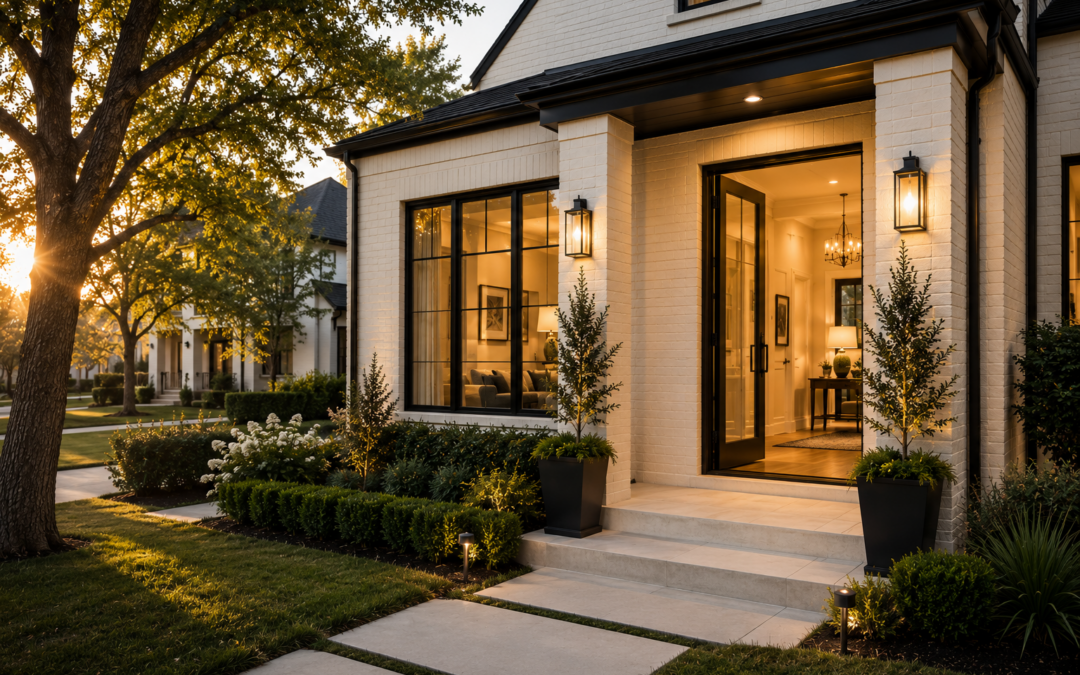
Even landscaping plays a role. Mature trees, intentional outdoor spaces, and a welcoming entry sequence can completely change how a property feels before the front door ever opens. Buyers often interpret emotional comfort as value, even if they cannot immediately explain why.

And this is where many listings miss the mark.

Too many homes enter the market visually noisy, over-personalized, poorly photographed, dimly lit, or emotionally disconnected. Then everyone wonders why the property sits.

The market usually tells the truth fairly quickly.

The homes generating immediate interest right now are the ones that feel intentional, emotionally easy to absorb, and visually composed from the very first photo.

That applies across nearly every price point.

In many ways, the true definition of “expensive feeling” has shifted. It is less about showing off and more about creating an atmosphere people genuinely want to come home to.

And the moment a property achieves that feeling, people notice.

Sometimes before they ever see the price.

Why Some Streets Just Feel Different

Why Some Streets Just Feel Different

There are streets in Dallas that people remember long after they leave them.

Not because they were the most expensive.
Not because the houses were the largest.
And not because someone told them they were important.

They remember them because of how they felt.

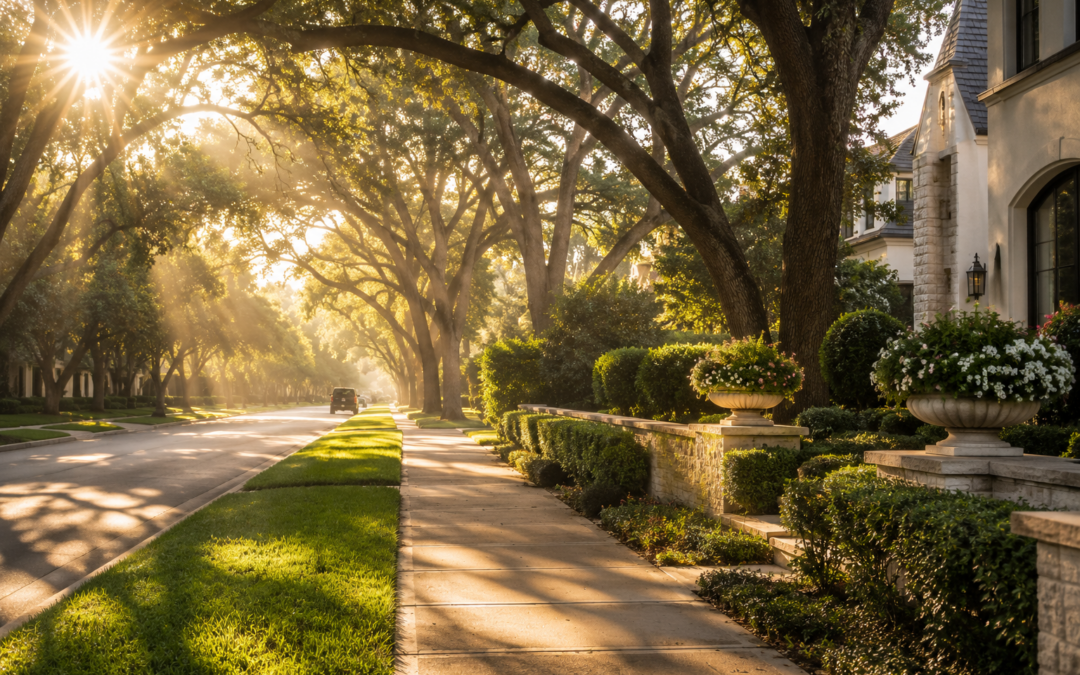
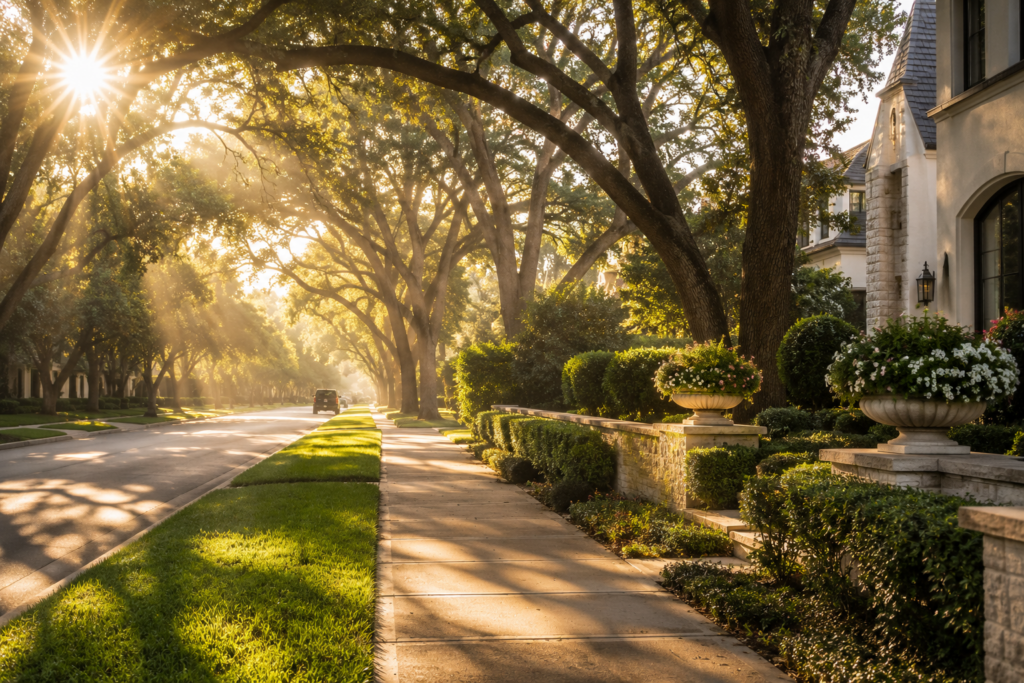
The way morning light filters through the trees along Beverly Drive in Highland Park. The quiet confidence of Swiss Avenue beneath its canopy of mature oaks. The winding calm of Turtle Creek Boulevard just after sunrise, when the city still feels half asleep and the only movement comes from joggers, dog walkers, and the occasional coffee run. The hidden serenity of streets in Bluffview where the terrain shifts unexpectedly and homes feel tucked into nature instead of simply placed on lots.

Some streets simply feel different.

And the interesting thing is, most people recognize it immediately, even if they cannot fully explain why.

Part of it is architecture. Part of it is landscaping. Part of it is scale and proportion. But more than anything, it is intentionality. The best streets in Dallas feel curated over time rather than assembled all at once. Mature trees arch overhead. Lawns are edged carefully. Lighting is soft instead of theatrical. Homes sit comfortably within the landscape rather than competing against it.

Nothing is screaming for attention, and somehow that restraint becomes the luxury.

That feeling exists all over the city if you know where to look. In Devonshire, you’ll find streets where the trees almost create tunnels overhead and morning sunlight stretches across the pavement in long golden lines. In parts of Lakewood, front porches still feel connected to the neighborhood around them. Along Armstrong Parkway and the surrounding Highland Park streets, even simple walks somehow feel elevated.

And then there’s Turtle Creek.

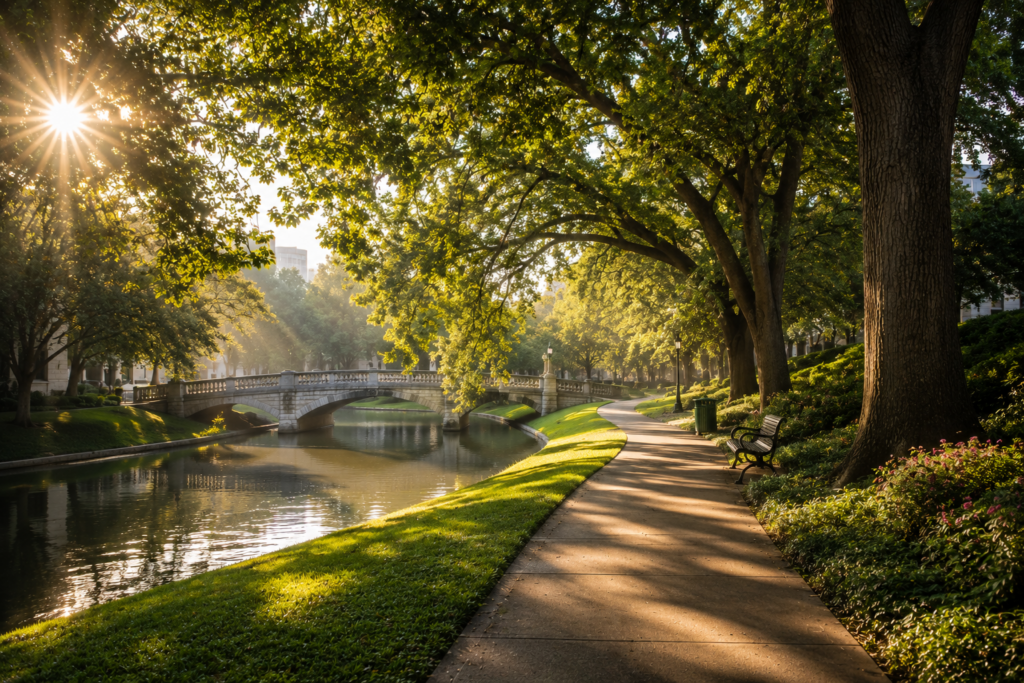
Turtle Creek has always had a rhythm to it that feels separate from the rest of Dallas. The curves of the creek, the bridges, the parks, the layered landscaping, the old trees, the mixture of architecture, all of it creates an atmosphere that people don’t just admire, they emotionally attach themselves to. It’s one of the reasons so many people who move into Oak Lawn and Uptown slowly realize they never want to leave.

Because eventually, it stops feeling like a location.

It starts feeling like a lifestyle.

And that’s the thing about truly special neighborhoods. The luxury is rarely just the home itself. It’s the experience surrounding it. The quietness of a morning walk. The way the light hits the sidewalks. The comfort of mature landscaping. The subtle feeling that life might somehow function a little differently there.

More peaceful.
More grounded.
More intentional.

That emotional response matters more than people realize in real estate.

Buyers often think they’re choosing a house, but many times they’re actually choosing a feeling. A rhythm. A version of their future life that begins forming before they ever walk through the front door.

That’s why some streets just feel different.

And once you experience one, it’s very hard to forget.