
For many people, buying a home feels like something they should have already done.
Maybe they assumed they would buy after getting married.
Maybe they thought they would buy younger.
Maybe they imagined buying with a spouse, two children, a golden retriever, and a white picket fence.
Then life happened.
Careers took unexpected turns. Relationships changed. Priorities shifted. Some people stayed single longer than expected. Others found themselves buying later in life. Some are purchasing alone for the very first time.
And because the traditional image of homeownership has been repeated for generations, many buyers quietly wonder if they somehow missed the right moment.
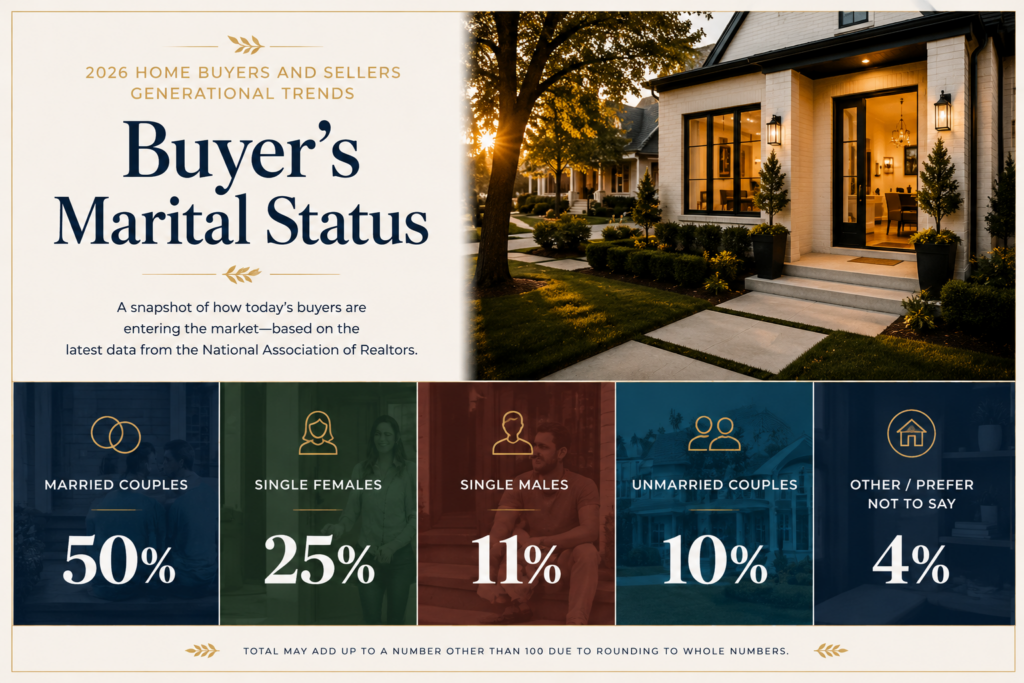
The latest data from the National Association of Realtors tells a very different story.
The reality is that today’s homebuyer looks nothing like the homebuyer of twenty or thirty years ago.
The market is far more diverse than many people realize.
Married couples still represent the largest group of buyers, but they account for only half of the market. The other half consists of single women, single men, unmarried couples, and buyers whose circumstances do not fit neatly into traditional categories.
That means millions of Americans are purchasing homes outside the “expected” path.
Not because they failed.
Because life is different.
And because the definition of homeownership has evolved.

One of the most rewarding parts of working in real estate is seeing firsthand how different buyers arrive at the same destination.
Some are buying their first home.
Some are downsizing.
Some are purchasing after a major life change.
Some are buying alone for the first time.
Others are purchasing later in life than they ever imagined.
The common thread isn’t age, income, or marital status.
The common thread is that each buyer reached a point where homeownership became the right solution for their life.
That’s an important distinction.
Too many people compare their personal timeline to someone else’s.
Too many buyers believe there is one correct age, one correct income level, one correct relationship status, or one correct life stage to purchase a home.
There isn’t.

What matters today is less about who you are and more about what you need.
A stable place to live.
A sense of control over your future.
More room.
Less maintenance.
A shorter commute.
A better school district.
A place to build equity instead of paying rent.
The motivations may be different, but the goal is often the same.
When you look beyond marital status and demographics, something interesting happens.
Buyers begin prioritizing many of the same things.
Comfort.
Security.
Lifestyle.
Financial stability.
Community.
A place that feels like home.
The old playbook suggested that homeownership followed a single predictable path.
The new reality is much more flexible.
And honestly, much more encouraging.
The takeaway from all of this is simple.
If you’ve been waiting because your life doesn’t look exactly the way you thought it would, you may be comparing yourself to a version of the market that no longer exists.
There has never been one right way to become a homeowner.
There has never been one correct timeline.
And there has never been one type of buyer.
The people purchasing homes today come from every stage of life imaginable.
The question is no longer whether your story matches someone else’s.
The question is whether homeownership solves a problem, creates an opportunity, or improves your life today.
Because when it does, that’s usually the right time to start looking.


Why Some Rental Applications Are Approved in an Hour and Others Take Two Weeks
Sometimes the delay isn’t you. Sometimes it’s the process. Few things are more frustrating than finding the perfect place, submitting your application, and then hearing: “We’re still waiting.” An hour turns into a day. A day turns into three. Three days turn into a week. And suddenly you’re wondering if…
The Investor Trap in a Buyer’s Market
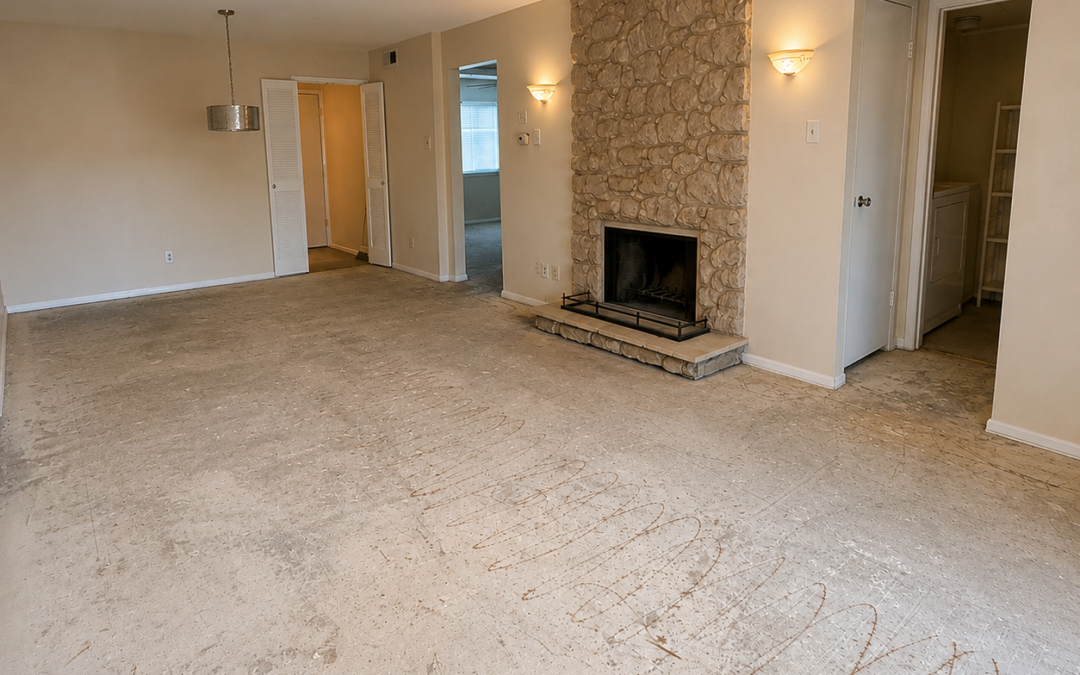
A Fireplace, a Vision, and a Condo in Dallas A few weeks ago, one of my clients, Festus, purchased a two-bedroom, two-bath condominium in Dallas. The unit needed updating, but it had good bones, an unusually large laundry room, and plenty of potential. One of the first things to go…

The 7 Most Requested Features in Dallas Homes Right Now, and How Sellers Are Capitalizing on Them
Every seller wants to know the same thing: “What are buyers looking for right now?” The answer may surprise you. In 2026, buyers aren’t necessarily searching for the biggest house on the block. They’re looking for homes that feel comfortable, functional, and ready for modern life. The good news for…

Why So Many Dallas Homes Need a Price Reduction
Every month, I review market reports, closed sales, and listing activity throughout Dallas. And every month, I find myself asking the same question: Why are so many homes requiring price reductions before they sell? The answer is usually not what people think. Most sellers assume a price reduction means the…

7 Characteristics of Dallas Renters Who Tend to Have Better Outcomes
A funny thing is happening in the Dallas rental market right now. People still think leasing is the wild west of a few years ago, when homes and apartments disappeared within hours and tenants felt like they were competing in the Olympics just to get a callback. The reality today…

Dallas Renters Are Moving Quickly, But Only for the Right Properties
There’s a strange disconnect happening in the Dallas leasing market right now. Some people believe the market has slowed down dramatically because they’re seeing price reductions, concessions, and lease listings sitting online longer than they used to. And yes, compared to the frenzy of 2021 and early 2022, things have…

Pre-Listing Prep If You’re Planning to Sell This Year
The goal isn’t perfection. It’s helping buyers emotionally connect with the home the moment they walk through the door. Thoughtful preparation almost always leads to stronger photography, better showings, and ultimately better offers. Thinking about selling this year? I’m always happy to walk through a home and discuss where preparation…

Dallas Buyers Are Gaining Leverage Right Now – Here’s What That Actually Means
Right now, the Dallas market is showing signs of a subtle but meaningful shift. We’re not in a downturn, but we are seeing more balance, and that changes how both buyers and sellers need to approach the market. Inventory has increased slightly, days on market are stretching in certain segments,…