
Kevin Day Real Estate Group Joins The Dallas REGISTRY

Kevin Day Real Estate Group Joins The Dallas REGISTRY

For more than thirty years, Kevin Day has helped clients buy, sell, lease, and invest in real estate across North Texas.

But along the way, something became increasingly clear.

People don’t simply want information about homes.

They want to understand the neighborhoods around them.

They want to know where to eat, where to shop, what makes one community different from another, and why certain places simply feel like home.

They want context.

They want local knowledge.

And increasingly, they want a trusted resource that helps connect all of those pieces.

That is the foundation for The Dallas REGISTRY.

The Dallas REGISTRY is a Dallas based digital media company focused on neighborhoods, local businesses, architecture, and the people and stories that shape life across North Texas.

Its mission is simple:

Provide thoughtful insight, practical resources, and meaningful stories that help people better understand and enjoy life in Dallas.

What began as an editorial project has evolved into something much larger, a growing platform dedicated to celebrating the places, people and communities that make Dallas one of the most dynamic cities in America.

Today, we’re pleased to announce that Kevin Day Real Estate Group has officially joined The Dallas REGISTRY to lead its real estate division.

The move brings together more than three decades of real estate experience with a broader platform dedicated to local and community insight.

This integration reflects a simple belief:

Real estate doesn’t exist in a vacuum.

A home is never just four walls and a roof.

It’s the neighborhood coffee shop.

The park down the street.

The restaurant where anniversaries are celebrated.

The small businesses that become part of daily routines.

The people who create a sense of belonging.

Real estate is ultimately about life, and life happens within communities.

By bringing together local digital media and real estate expertise, The Dallas REGISTRY aims to become a trusted source for residents, homeowners, buyers, sellers, and anyone who simply wants to know Dallas better.

Readers can expect expanded neighborhood coverage, local business features, community stories, and practical real estate guidance designed to help people make more informed decisions about where and how they live.

As The Dallas REGISTRY continues to grow, one thing remains unchanged:

A commitment to serving Dallas with curiosity, professionalism, and a genuine appreciation for the people and places that make this city extraordinary.

Because at the end of the day, it has never been just about real estate.

It’s about understanding the life that surrounds it.

And it’s not just about the house.

It’s about the life waiting inside of it.


About The Dallas REGISTRY

The Dallas REGISTRY is a Dallas based digital media company focused on people,  neighborhoods, local businesses, real estate, architecture, and community throughout North Texas.

About Kevin Day Real Estate Group

Kevin Day Real Estate Group, powered by Central Metro Realty, has served buyers, sellers, landlords, and investors throughout Dallas for more than three decades, providing trusted guidance and local expertise across the communities of North Texas.


Why Some Rental Applications Are Approved in an Hour and Others Take Two Weeks

Why Some Rental Applications Are Approved in an Hour and Others Take Two Weeks

Sometimes the delay isn’t you. Sometimes it’s the process.

Few things are more frustrating than finding the perfect place, submitting your application, and then hearing:

“We’re still waiting.”

An hour turns into a day.

A day turns into three.

Three days turn into a week.

And suddenly you’re wondering if you’ve been denied, if someone else got the property, or if you should simply start your search all over again.

The truth is that delays happen for many reasons, and surprisingly, they often have very little to do with the applicant.

Sometimes It’s the Application

An incomplete application can slow everything down.

Missing pay stubs.

Missing bank statements.

An unsigned form.

A forgotten driver’s license.

Every missing document creates another email, another phone call, and another day of waiting.

Sometimes It’s the Employer

Employment verification sounds simple.

It isn’t always.

A manager is on vacation.

Human resources is behind.

Someone simply doesn’t answer the phone.

I’ve seen excellent applicants sit in limbo simply because an employer took several days to confirm information.

Sometimes It’s the Previous Landlord

The same thing can happen with rental history.

A former landlord may be traveling, unavailable, or simply slow to respond.

The applicant has done everything correctly, but the process can’t move forward until someone answers a question or returns a call.

Sometimes It’s the Guarantor

When guarantors are involved, the timeline often gets longer.

There may be additional applications, additional financial documents, and additional signatures required.

Recently, I worked with three guarantors on one transaction. It took several business days simply to gather all of the paperwork.

Nobody was doing anything wrong.

It was simply a lot of moving parts.

And Sometimes… It’s the Listing Agent

This may surprise people.

But one of the biggest causes of delays I see today has nothing to do with the tenant at all.

It’s friction.

The listing agent hasn’t fully prepared the owner.

The owner’s requirements haven’t been clearly communicated.

Documents are submitted and then sit for days.

Questions go unanswered.

Updates come every two or three days instead of every few hours.

The process becomes a scavenger hunt.

I’ve seen situations where a perfectly qualified tenant waited nearly two weeks for answers, not because of credit or income, but because communication simply broke down.

I’ve also seen vacant properties sit while showing requests and questions went unanswered.

The landlord is frustrated.

The applicant is frustrated.

And both are victims of unnecessary friction.

The Best Transactions Feel Easy

The smoothest leasing transactions have one thing in common.

Everyone communicates.

Everyone knows what is needed.

Questions are answered quickly.

Expectations are clear.

Documents are gathered early.

Problems are addressed immediately.

The process feels calm.

That’s not luck.

That’s preparation.

A Final Thought for Applicants

If your application is taking longer than expected, don’t automatically assume the problem is you.

Sometimes the delay is simply a missing document.

Sometimes it’s an employer who hasn’t responded.

Sometimes it’s a guarantor gathering paperwork.

And sometimes, unfortunately, it’s a process that wasn’t thoughtfully managed.

The good news?

Most delays can be worked through with patience, communication, and someone willing to keep everyone moving toward the same goal.

Because at the end of the day, both the owner and the applicant usually want the same thing:

A successful move-in.

The best leasing experiences don’t add friction.

They remove it.

So if you’re waiting for an answer today, don’t let the silence convince you the worst has happened.

Silence doesn’t always mean rejection.

Sometimes it simply means someone, somewhere, hasn’t done their homework yet.

Why Landlords Should Expect More, and Deserve Better

Why Landlords Should Expect More, and Deserve Better

Somewhere along the way, the real estate industry decided that lease listings deserved less.

Less preparation.

Less marketing.

Less attention.

Less professionalism.

I’ve never understood that.

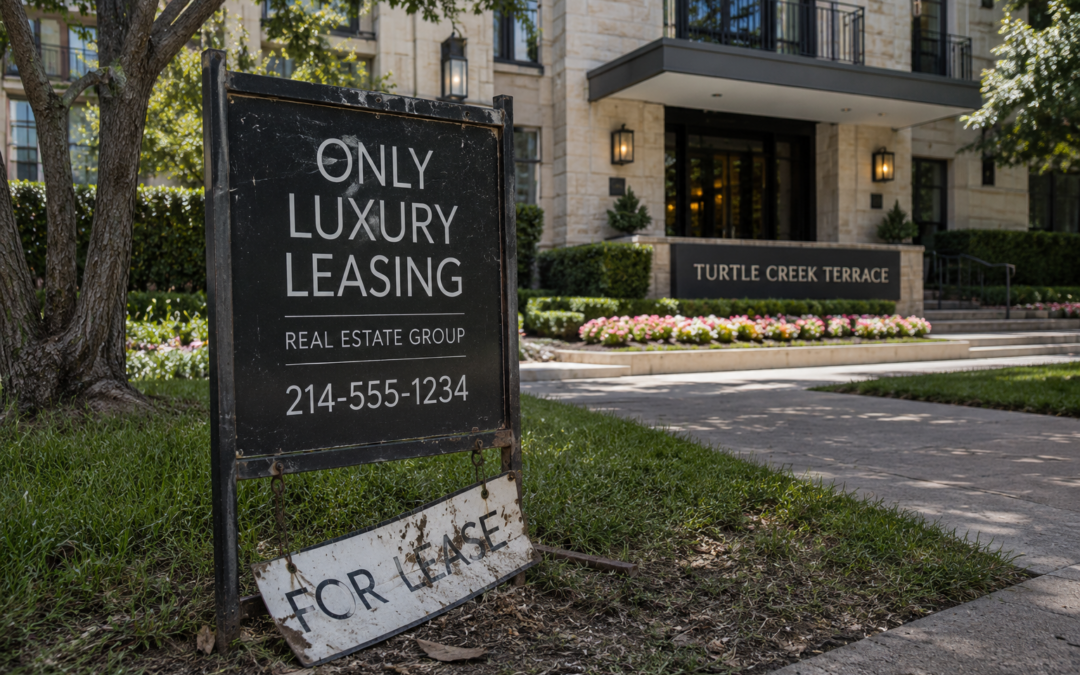
In neighborhoods like Oak Lawn, Uptown, Turtle Creek, and the Park Cities, leasing isn’t some side business.

It’s one of the largest segments of our housing market.

Families relocate.

Medical professionals arrive for fellowships.

Corporate executives transfer.

Young professionals begin building their lives.

Investors depend on rental income.

Leasing matters.

And landlords deserve representation that reflects that.

It Starts With Photography

The first showing almost never happens in person.

It happens online.

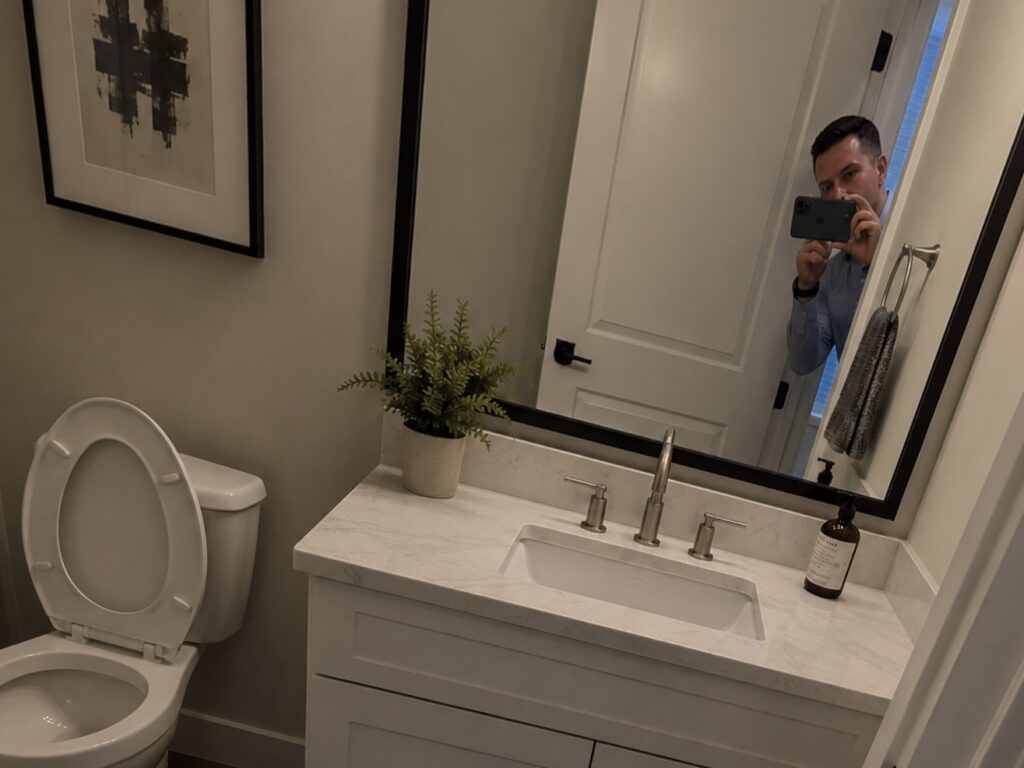
Unfortunately, I still see lease listings photographed with a cell phone in less time than it takes to order lunch.

Crooked verticals.

Dark rooms.

Blurry images.

Agents accidentally standing in bathroom mirrors.

And, for reasons I’ll probably never understand, beautifully composed portraits of… open toilets.

One of my personal favorites is the bathroom photo where the photographer is hiding behind the door, peeking around the frame while holding an iPhone, clearly reflected in the mirror.

As if no one would notice.

Then there’s the toilet.

Unless it’s carved from Italian marble and flushes with champagne, I’m comfortable taking it on faith that the home includes a toilet.

I’ve never once had a tenant call me and say,

“Kevin, I loved the property, but do you happen to have another angle of the toilet?”

Those observations aren’t meant to be mean.

They’re reminders that details matter.

Luxury isn’t communicated by photographing more things.

It’s communicated by photographing the right things.

A Property Can’t Lease If Nobody Finds It

The mistakes don’t stop with the photographs.

In many cases, the property is entered into the MLS incorrectly.

That may sound minor.

It isn’t.

Today’s renters don’t browse.

They filter.

They search for homes with a pool.

Covered parking.

Garage parking.

Washer and dryer included.

Pet friendly.

Elevator access.

If those boxes aren’t completed correctly, the property quietly disappears from search results before prospective tenants ever know it exists.

The landlord pays the price.

Not because the property wasn’t desirable.

Because it wasn’t represented thoughtfully.

Showing a Vacant Home Shouldn’t Be Difficult

Just this week I scheduled a showing through ShowingTime.

The appointment was approved.

The system provided the lockbox code.

Everything appeared ready.

Inside the lockbox was a handwritten note.

“Text agent for deadbolt code.”

I did.

Four hours later the agent responded.

By then my clients and I had long since left.

That property didn’t lose a showing because of its price.

It didn’t lose a showing because of its condition.

It lost a showing because someone created unnecessary friction.

If a property is vacant, why require someone to manually approve every showing?

Why make another Realtor wait?

Every obstacle reduces opportunity.

Tenant Occupied Doesn’t Mean Tenant Managed

Some of the most challenging lease listings are occupied by tenants.

That doesn’t mean they should be unmanaged.

The tenant should understand the goal.

The home should be reasonably clean.

Beds made.

Counters cleared.

Lights on.

And when possible, the tenant should step out for twenty or thirty minutes while prospective renters walk through.

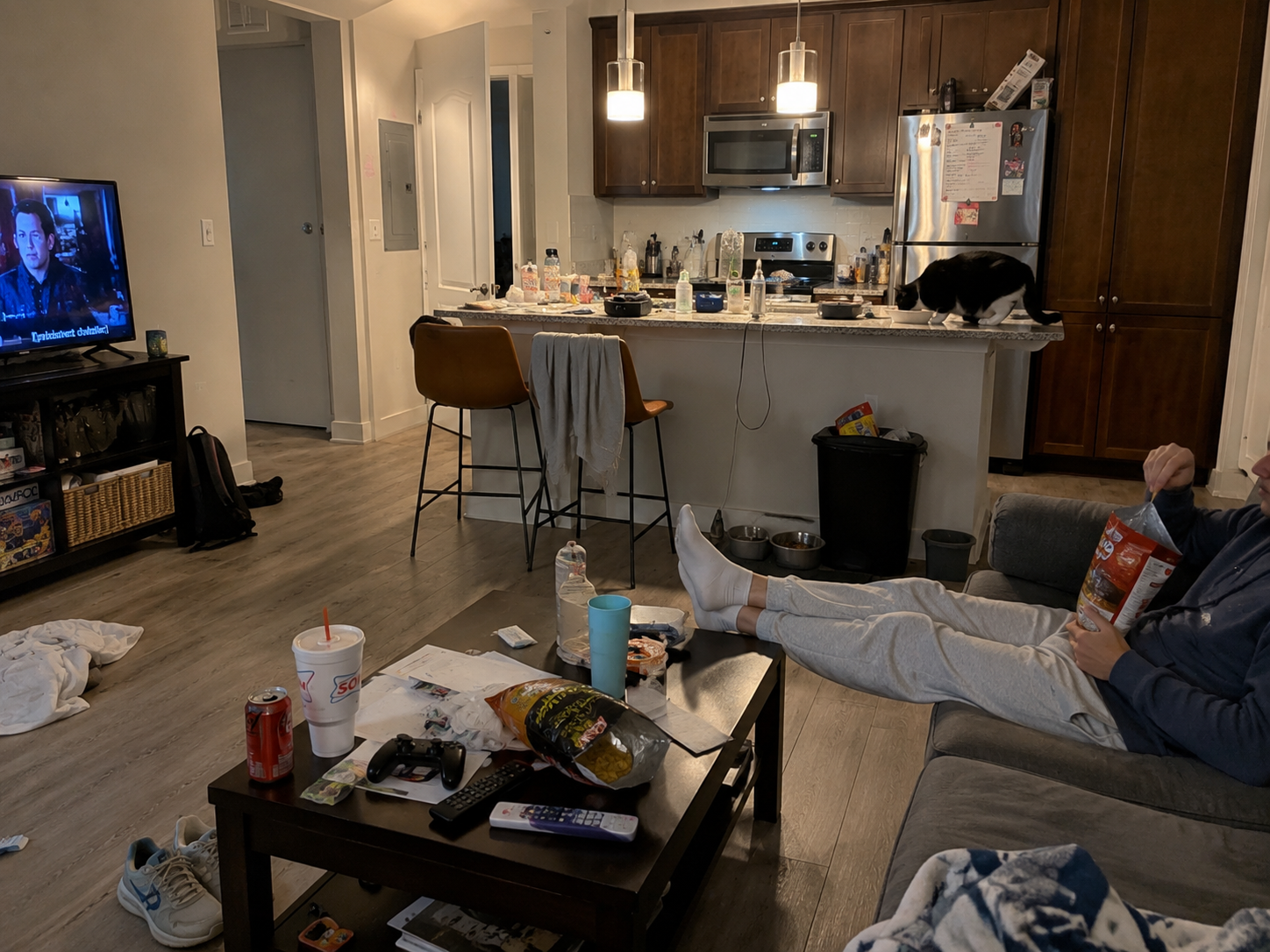
Instead, I’ve walked into homes where the television is blaring.

Dirty dishes fill the kitchen.

Laundry covers the furniture.

Pets are climbing on the counters.

The tenant is sitting on the sofa eating chips, watching television, while complete strangers awkwardly tour what is supposed to become their next home.

I’ve even experienced a tenant who intentionally stayed for every showing so they could complain about the landlord to prospective renters.

Needless to say, the home wasn’t leasing.

Managing a tenant occupied property is part of the job.

Ignoring it isn’t a strategy.

Representation Is a Thousand Small Decisions

Great representation isn’t one big moment.

It’s dozens of small decisions.

Professional photography.

Accurate MLS information.

Easy scheduling.

Thoughtful communication.

Preparing the tenant.

Removing obstacles before they become problems.

Every one of those decisions quietly increases the likelihood that the next qualified tenant falls in love with the home.

That’s what landlords should expect.

And that’s exactly what they deserve.

Because a lease isn’t “just a lease.”

It’s an investment.

It deserves the same level of care, marketing, strategy, and professionalism as any home offered for sale.

If you’re preparing to lease your home and would like to talk through how thoughtful marketing and representation can affect both the quality of applicants and the time it spends on the market, I’d be happy to have that conversation.

The Enduring Calm of an Oak Lawn Duplex Designed by Ed Baum, FAIA

The Enduring Calm of an Oak Lawn Duplex Designed by Ed Baum, FAIA

What if the greatest luxury isn’t a larger house or more expensive finishes, but a home thoughtfully designed to quiet the mind and restore the spirit?

Some Homes Ask You to Perform

Every so often I walk through a home that stays with me long after I’ve left.

Not because it’s the biggest.

Not because it’s the most expensive.

And certainly not because it has the latest finishes or the trendiest kitchen.

It stays with me because of the way it makes me feel.

For years, one particular duplex in Oak Lawn has done exactly that.

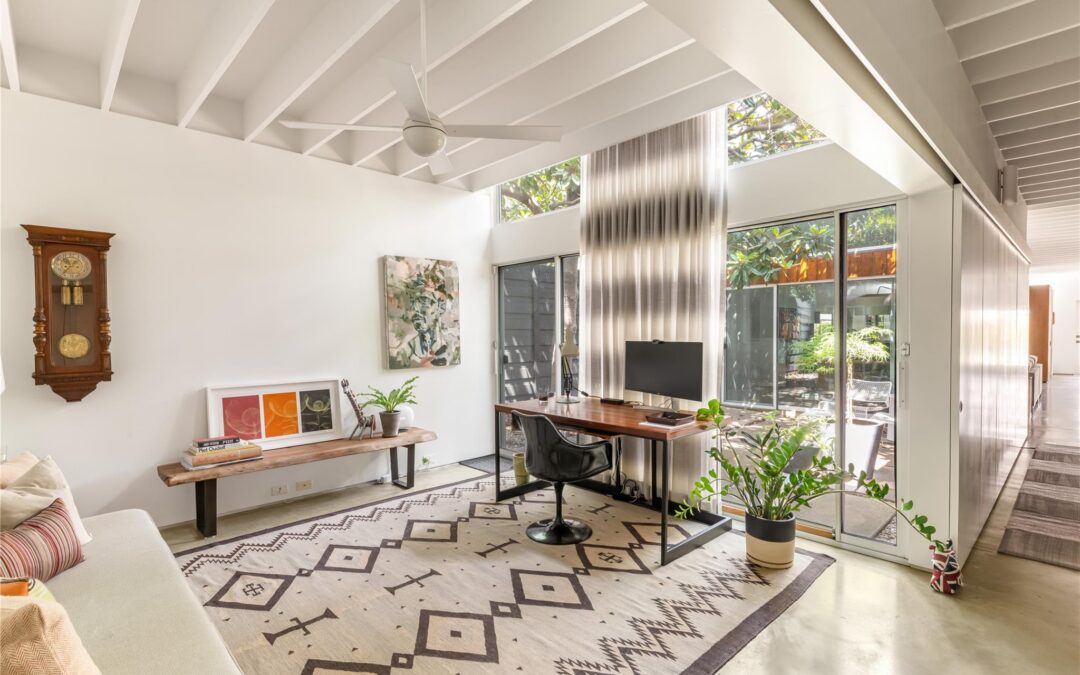
Designed by renowned architect Ed Baum, FAIA, it has quietly become one of my favorite residential designs in Dallas. As I write this, one side of the duplex has just come to market, and after walking through it once again, I was reminded why I’ve admired it for so long.

It doesn’t demand your attention.

It earns it.

Luxury Doesn’t Have to Raise Its Voice

We often mistake luxury for excess.

Higher ceilings.

Larger closets.

More marble.

More square footage.

More… everything.

This home quietly challenges that idea.

There is nothing ostentatious here. No dramatic staircase competing for attention. No oversized great room trying to impress visitors before they’ve even taken off their shoes.

Instead, every decision feels intentional.

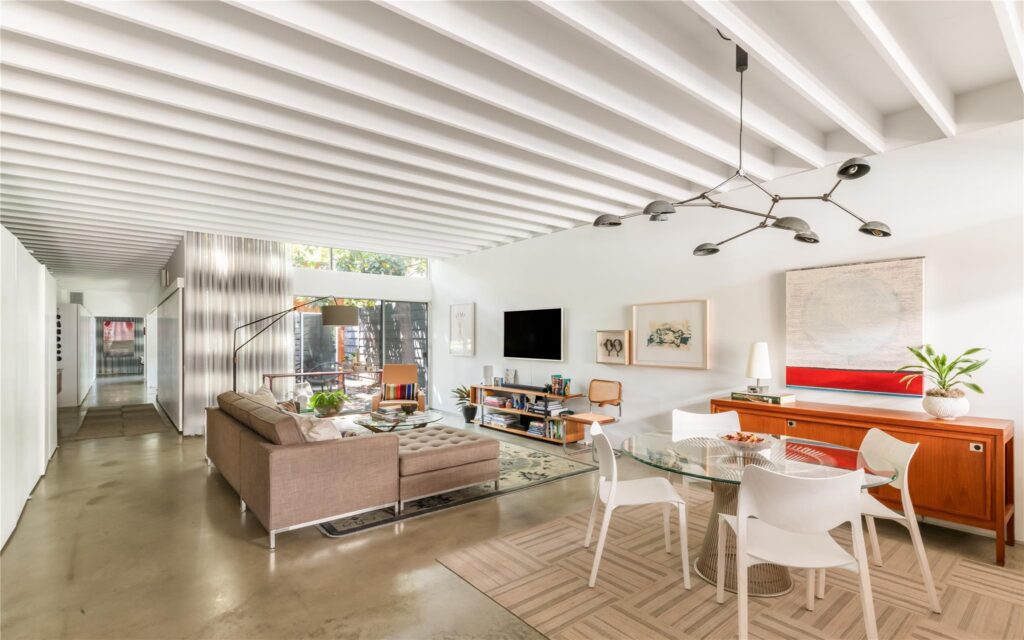
Concrete floors ground the home with quiet confidence.

Warm wood softens the experience.

Natural light filters through carefully placed windows instead of flooding every room indiscriminately.

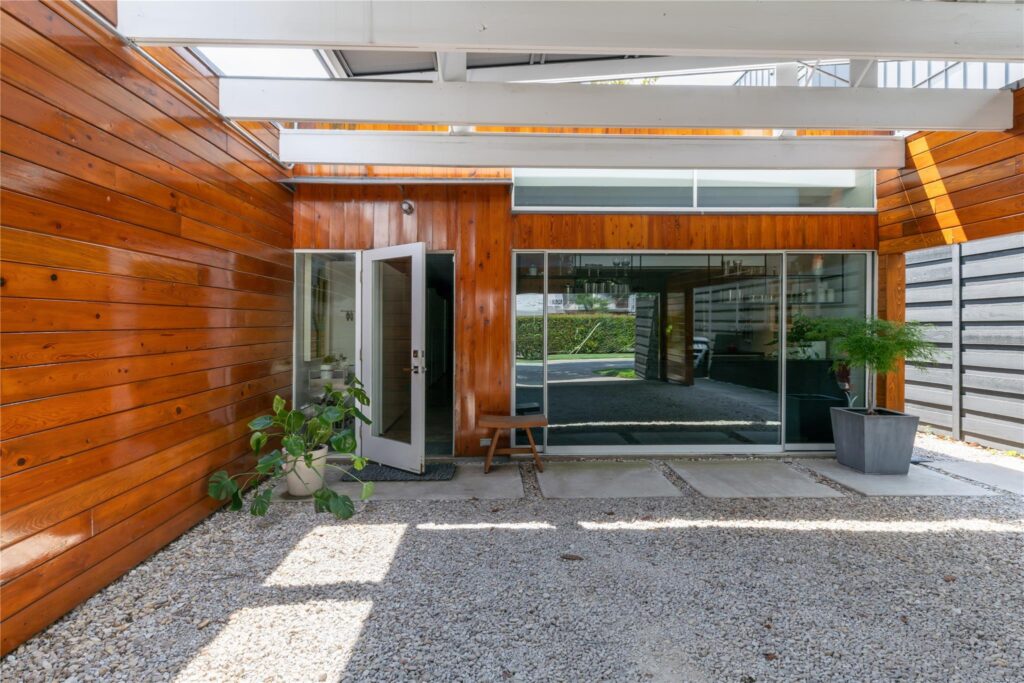
Even the courtyard feels less like an amenity and more like another room, one where nature has simply been invited inside.

It’s architecture that whispers instead of shouts.

Designed Around Life, Not Just Living Space

As someone who shares a home with two energetic Rhodesian Ridgebacks, I probably notice different things than many buyers.

Concrete floors don’t intimidate me.

They liberate me.

They invite beautiful area rugs instead of demanding pristine hardwood.

They welcome muddy paws after a walk instead of creating anxiety every time someone comes through the front door.

That realization made me appreciate this home even more.

Great architecture isn’t simply about creating beautiful spaces.

It’s about supporting the life that’s actually lived inside them.

The best homes don’t force us to change who we are.

They quietly make room for who we already are.

The Genius of Simplicity

Looking through this duplex, I found myself noticing what wasn’t there.

There is very little visual noise.

No unnecessary ornament.

No competing materials.

No endless parade of decorative flourishes.

Instead, exposed beams establish rhythm across the ceilings.

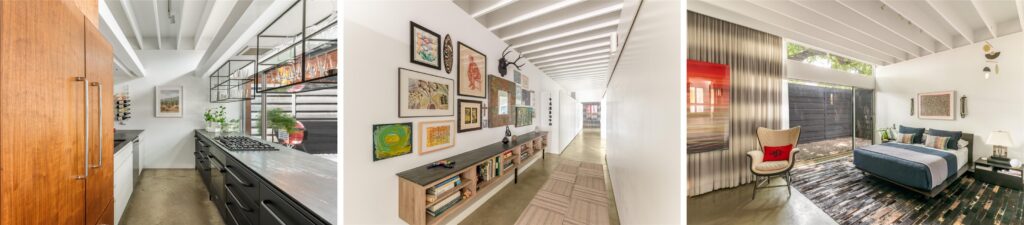
The hallway becomes a gallery rather than merely a passageway.

Glass walls borrow light from private courtyards while preserving a remarkable sense of privacy.

The house never seems interested in showing off.

Its confidence comes from restraint.

That may be Ed Baum’s greatest achievement.

He understood that calm can be designed just as intentionally as drama.

A Home That Lets You Exhale

There are houses that make you feel like you’re constantly entertaining, even when no one is visiting.

Then there are homes like this.

Homes that invite you to slow down.

To read another chapter.

To pour another cup of coffee.

To watch your dogs stretch out on a rug while afternoon light moves quietly across the concrete floor.

In a city that’s constantly growing, changing, and demanding our attention, that feeling has become surprisingly rare.

Perhaps that’s why this Oak Lawn duplex has stayed with me for so many years.

Not because it’s trying to be extraordinary.

But because it quietly reminds us that the finest luxury isn’t extravagance.

Sometimes it’s simply finding a place where you can stop performing, take the costume off, and finally feel at home.

Editor’s Note: At the time of publication, this remarkable Oak Lawn duplex is available for sale through Briggs Freeman Sotheby’s International Realty.

Explore The Listing →

The Investor Trap in a Buyer’s Market

The Investor Trap in a Buyer’s Market

A Fireplace, a Vision, and a Condo in Dallas

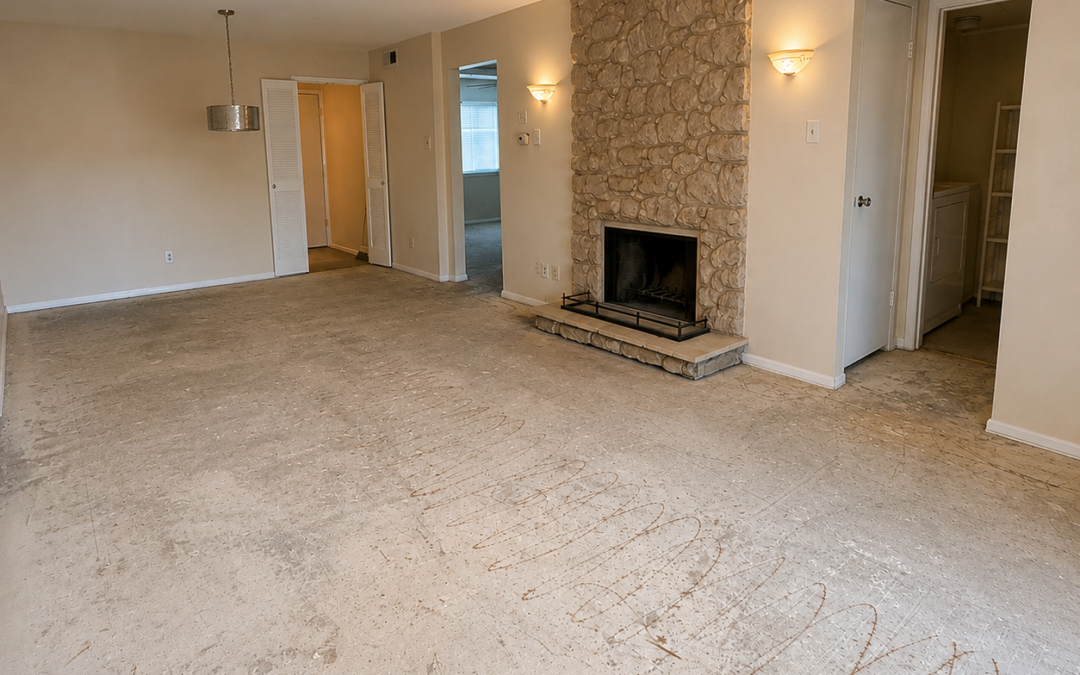
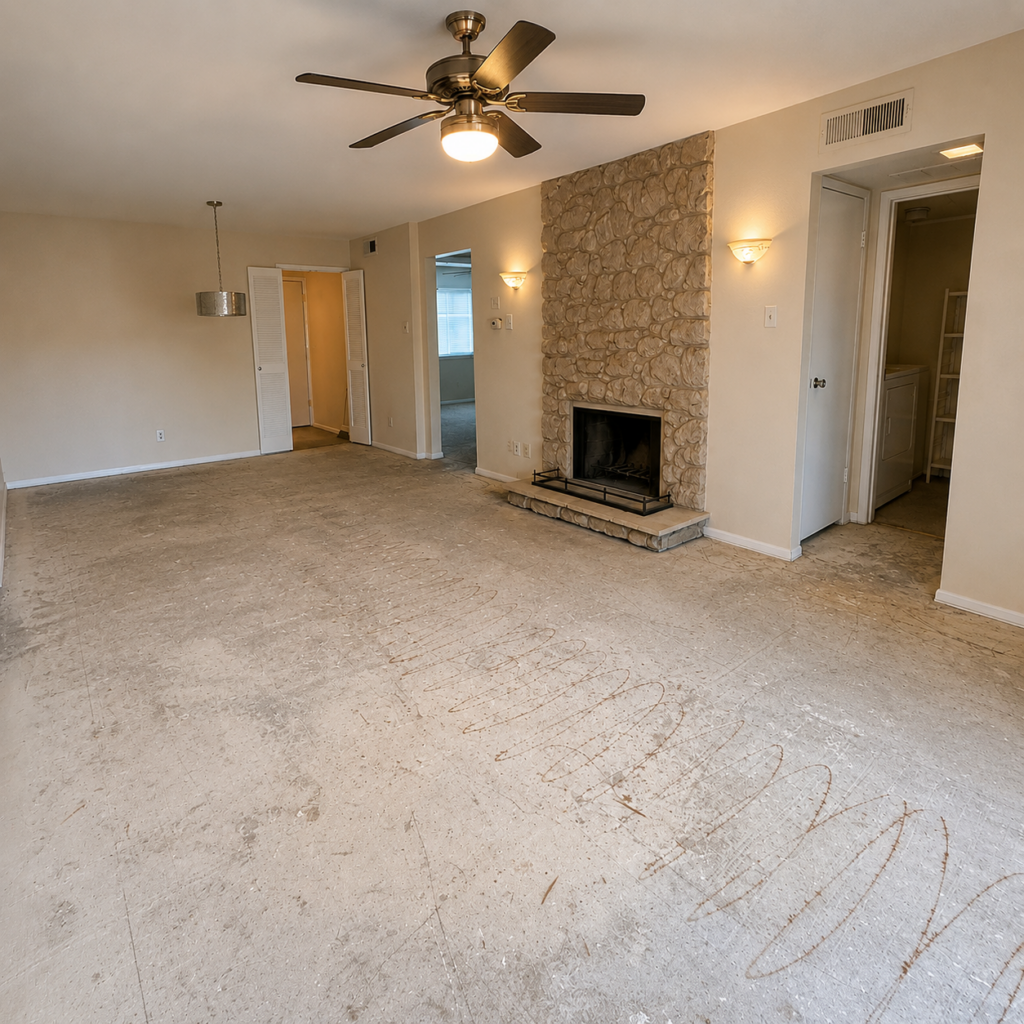
A few weeks ago, one of my clients, Festus, purchased a two-bedroom, two-bath condominium in Dallas. The unit needed updating, but it had good bones, an unusually large laundry room, and plenty of potential.

One of the first things to go was the oversized faux-stone fireplace that dominated the living room. Years ago, it may have been considered a feature. Today, it felt heavy and dated.

In its place, Festus is creating something entirely different, a sleek, dramatic marble fireplace that transforms the room and gives the property a much more modern feel.

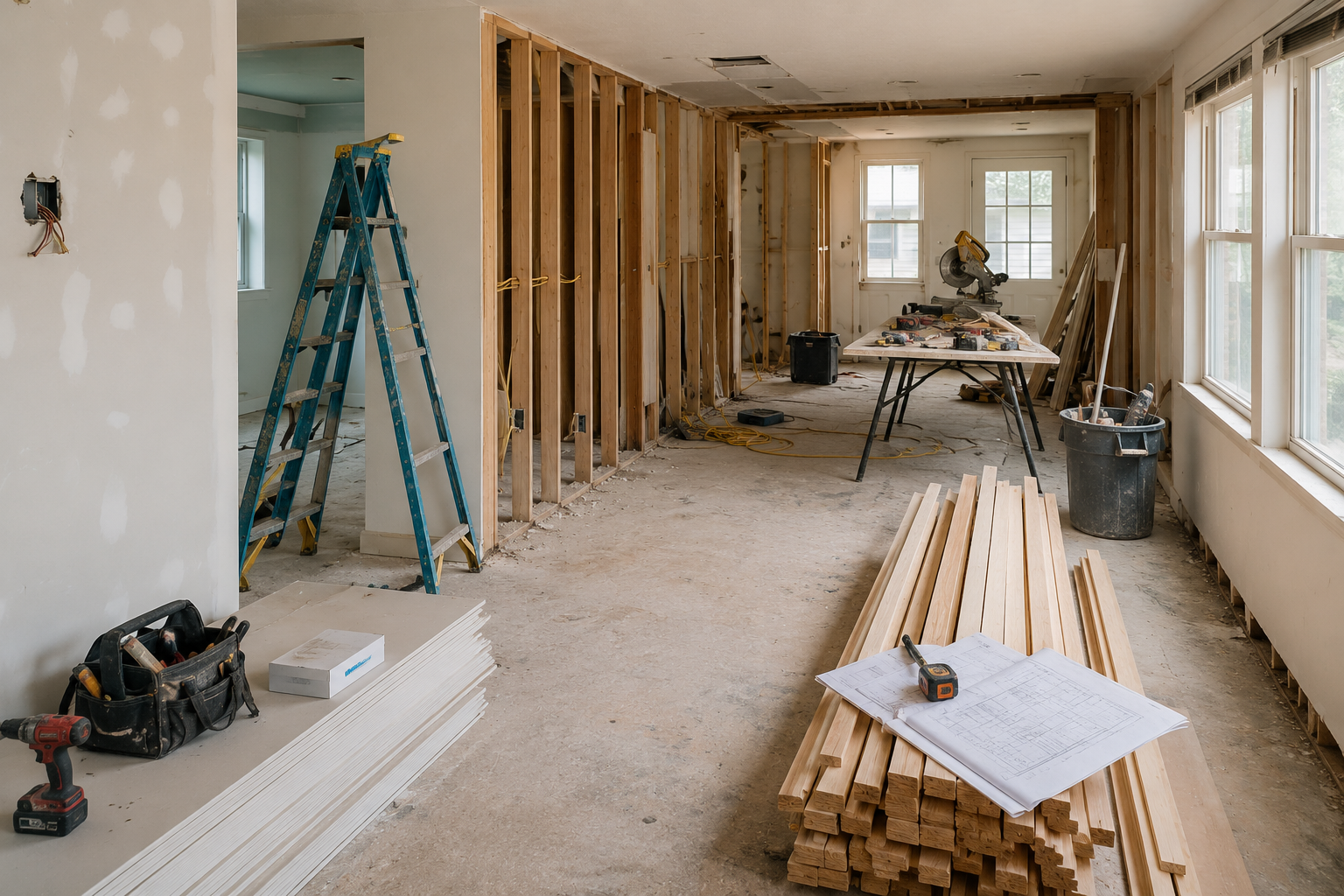
The kitchen is being completely reimagined. The bathrooms are being updated. The entire property is being refreshed for today’s buyer.

It’s exciting.

And it highlights one of the biggest challenges investors face in today’s market.

We’ll come back to Festus in a minute.

Every Market Creates Its Own Temptations

In a hot market, the temptation is to overpay because you’re afraid of missing out.

In a slower market, the temptation is to assume every bargain is a good deal.

That’s where investors can get into trouble.

When people hear that inventory is rising and buyers have more negotiating power, they often assume it’s the perfect environment to buy distressed properties, renovate them, and sell them for a profit.

And sometimes it is.

The problem is that many investors only think about the first half of the transaction.

The Fun Part

Buying.

That’s the exciting part.

The investor walks through the house and starts imagining possibilities.

  • Fresh paint.
  • Updated kitchens.
  • Modern lighting.
  • New flooring.
  • A higher resale price.

The numbers look fantastic.

On paper.

Then Reality Shows Up

  • Contractors cost more than expected.
  • Materials cost more than expected.
  • The renovation takes longer than expected.
  • Unexpected issues appear behind walls.
  • Permits take longer.
  • Schedules slip.

And when the work is finally complete, the investor discovers something important.

They’re selling into the same market they bought in, a buyer’s market.

The buyers are still negotiating.

The buyers are still cautious.

The buyers still have options.

How Experienced Investors Think Differently

This is where experienced investors separate themselves from newer investors.

They don’t ask:

“What can I sell this property for?”

They ask:

“How wrong can I be and still make money?”

That’s a completely different mindset.

The most successful investors understand that profit isn’t created when the renovated property sells.

Profit is created when the property is purchased correctly in the first place.

The acquisition price has to absorb surprises.

It has to absorb delays.

It has to absorb unexpected expenses.

And it has to absorb the possibility that the resale price won’t be quite as strong as originally projected.

Why This Market Rewards Discipline

Buyers are still active.

Homes are still selling.

Well-priced properties continue to attract attention.

But buyers have become more selective. They have more choices than they did a few years ago, and that changes the math for everyone involved.

Ironically, that’s not bad news.

It’s healthy.

Markets work best when they reward discipline instead of speculation.

Investors who succeed in this environment won’t necessarily be the ones who spend the most money.

They’ll be the ones who buy wisely, renovate thoughtfully, and understand exactly who their future buyer will be.

Back to Festus

One of the reasons I enjoyed helping Festus acquire this property is that he bought well.

Long before the first cabinet was removed, the first bathroom was updated, or that dated fireplace was transformed into a striking marble centerpiece, the numbers made sense.

That’s where successful investing begins.

Now comes the fun part.

The renovation is taking shape. The vision is becoming reality. I'm excited to see how buyers respond when the property returns to the market.

I’ll be sharing before-and-after photos, following the progress, and tracking the project’s journey all the way through closing.

In many ways, it’s a real-world case study of exactly what we’re discussing here.

Because in a buyer’s market, finding the deal is only half the job.

The other half is making sure the numbers still work when the excitement wears off.

How will the market responds to Festus’ vision for this property? I think overwhelmingly positive; I have a feeling this won’t be the last time you hear about that fireplace.

Oak Lawn is Reinventing Itself, Again

Oak Lawn is Reinventing Itself, Again

If you’ve spent any time in Oak Lawn, you’ve probably noticed something happening over the last several years.

The neighborhood isn’t just changing.

It’s evolving.

Older properties are being renovated, aging retail centers are being reimagined, and developers continue looking for opportunities to bring new density and new investment into one of Dallas’ most desirable urban neighborhoods.

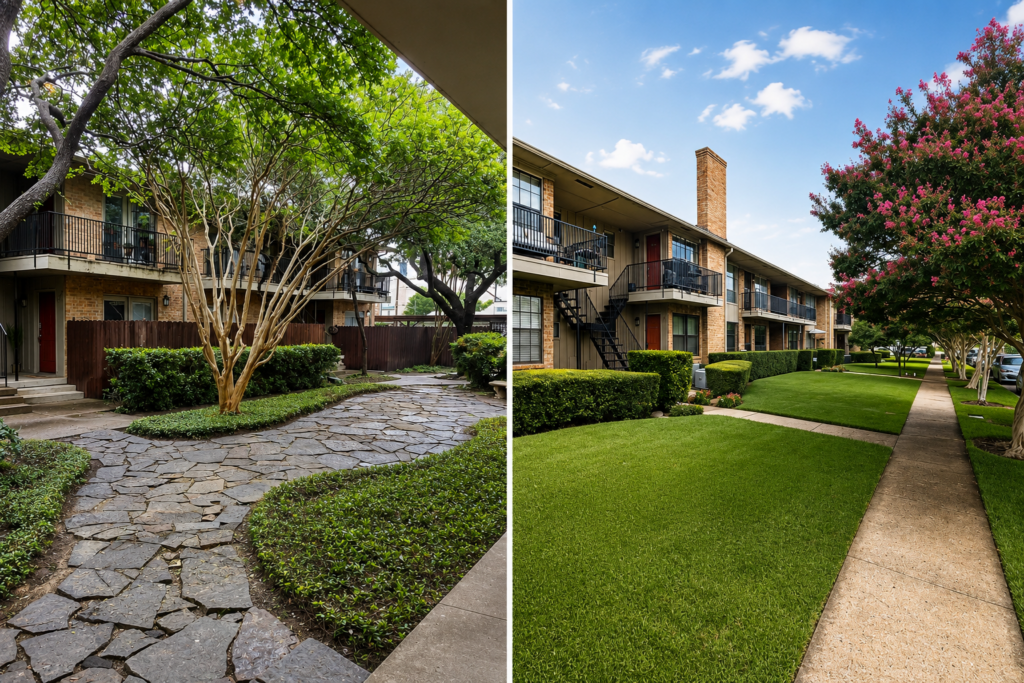
The latest example is a proposed 28-story residential tower planned near the intersection of Newton Avenue and Oak Lawn Avenue where presently stands 4211 Neton Avenue. If approved, the project would replace an aging condominium community that has occupied the site since the 1960s.

The proposed development would bring hundreds of new residential units to the area, along with structured parking, publicly accessible green space, water features, and a pedestrian-focused design intended to better connect with the surrounding neighborhood.

Whether you love new development or hate it, projects like this force an interesting conversation.

What should happen when a building reaches the end of its useful life?

Should a city preserve everything exactly as it is?

Or should neighborhoods be allowed to evolve as demand changes?

There isn’t a perfect answer.

What is clear is that Oak Lawn continues to attract residents who want an urban lifestyle close to Uptown, Turtle Creek, Highland Park, the Katy Trail, and some of Dallas’ most popular restaurants, shops, and entertainment destinations.

Demand for that lifestyle isn’t slowing down.

Developers know it.

Investors know it.

And buyers know it.

One detail I found particularly interesting while researching this story wasn’t mentioned in most of the development coverage.

I pulled the MLS history for the condominium community slated for redevelopment.

Over the past twelve months, there were no recorded sales.

Not one.

The only transactions reported in the MLS were three leases, one in July, one in August, and one in November of last year.

Of course, we don’t know the story behind every unit. It’s entirely possible that some owners had already reached agreements outside the MLS. It’s also possible that residents simply chose not to sell.

Still, the absence of sales activity is hard to ignore.

In a market where ownership changes hands every day, zero sales over an entire year is unusual.

Whether residents knew redevelopment was coming or whether the market simply sensed change on the horizon, the data suggests this community may have already been entering its final chapter.

As a condominium owner myself, I find stories like this fascinating.

A building isn’t just concrete and drywall.

It’s a collection of memories, neighbors, investments, and decades of history.

But cities are living things.

They grow.

They adapt.

They reinvent themselves.

And sometimes that means saying goodbye to one chapter so another can begin.

This proposed tower may still face approvals, community discussions, and additional planning before construction begins.

But regardless of the final outcome, it offers an interesting glimpse into the future of Oak Lawn and the continued evolution of one of Dallas’ most recognizable neighborhoods.