

Turtle Creek Is Entering a New Chapter, and the Best May Still Be Ahead

Turtle Creek Is Entering a New Chapter, and the Best May Still Be Ahead

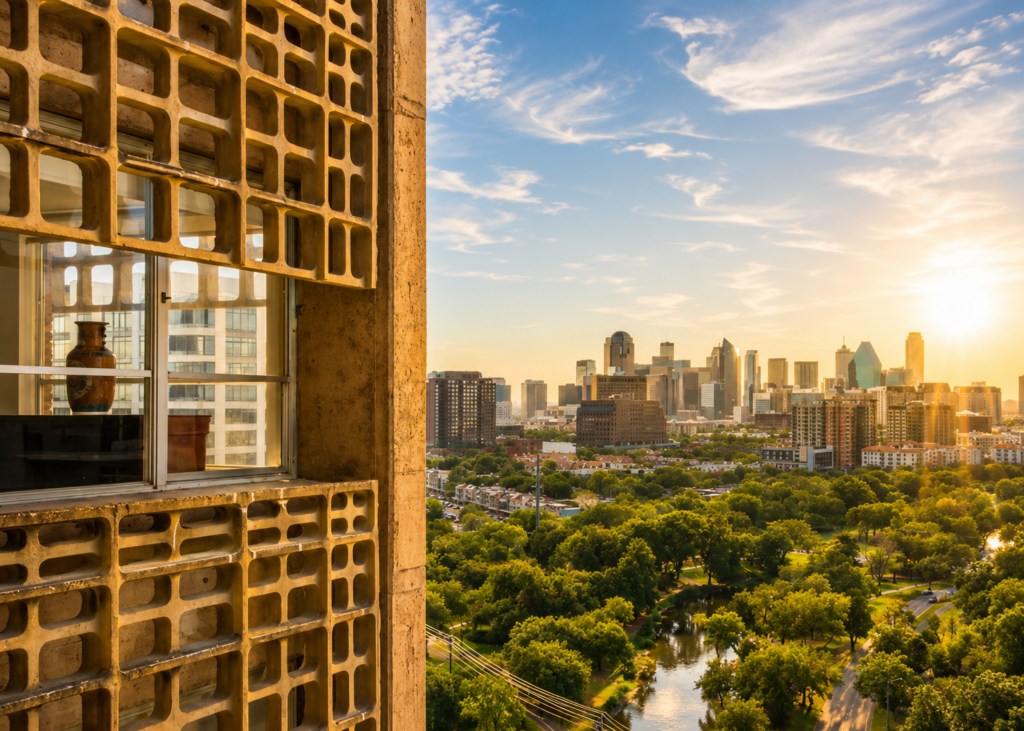
For decades, Turtle Creek has been one of Dallas’ most recognizable neighborhoods. Its winding creek, mature canopy of trees, historic bridges, luxury high-rises, and proximity to Uptown have made it one of the city’s most desirable places to live.

Now, another chapter is unfolding.

A wave of investment is reshaping the Turtle Creek and Uptown corridor, with approximately 2.7 million square feet of new development currently under construction, bringing new residences, offices, restaurants, and public improvements to one of Dallas’ most walkable neighborhoods.

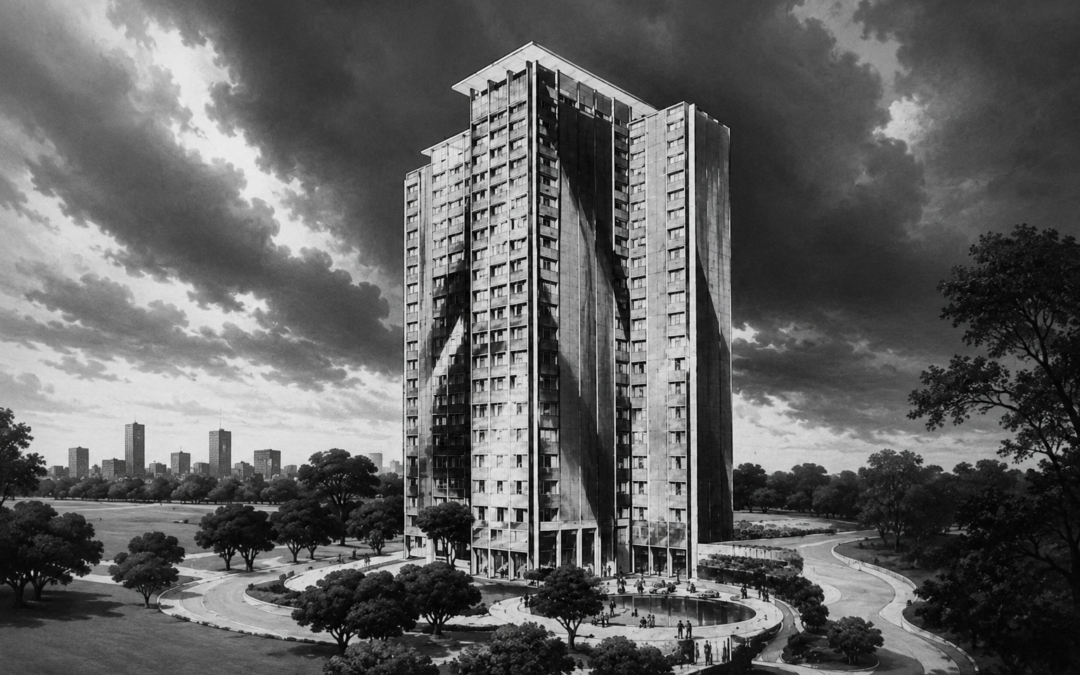
A New Landmark Is Rising Along Turtle Creek

Perhaps the most anticipated project is Rosewood Residences Turtle Creek.

Located just a short walk from the iconic Mansion on Turtle Creek, the development represents a return to the neighborhood where the Rosewood brand began. Rather than building another hotel, Rosewood is creating an ultra-luxury residential tower designed specifically for homeowners seeking privacy, concierge-level service, and timeless architecture.

The project will feature:

  • A 17-story luxury residential tower
  • Approximately 33 private residences, with earlier plans calling for around 46 homes during the design phase
  • Homes ranging from roughly 2,000 to more than 6,000 square feet
  • Rooftop pool and lounge
  • Fitness center
  • Library and private dining room
  • Landscaped gardens
  • Dedicated pet amenities
  • Architecture by renowned Chicago architect Lucien Lagrange, inspired by classical Beaux-Arts design
  • Interior design by Dan Fink Studio

The confidence behind the project is reflected in its financing. Developers recently secured a $97.5 million senior construction loan, underscoring continued investor confidence in Turtle Creek’s luxury residential market.

Restoring One of Dallas’ Hidden Gems

While new towers often receive the headlines, another project may have an even greater impact on everyday life.

Several of Turtle Creek’s historic pedestrian bridges are undergoing restoration as part of ongoing efforts to preserve one of Dallas’ most picturesque urban landscapes. These small bridges have quietly connected walking paths, parks, and neighborhoods for generations, allowing residents to enjoy the creek from a perspective many drivers never experience.
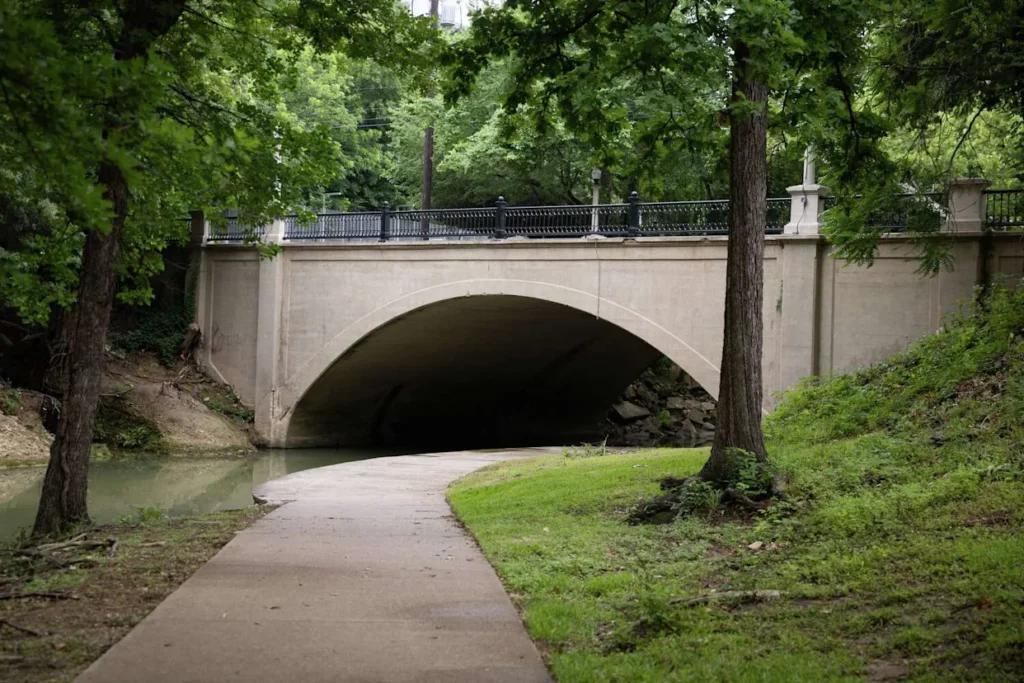
The restoration work focuses on preserving the historic character of the bridges while improving their long-term durability and safety, ensuring they remain part of Turtle Creek’s identity for decades to come.

Growth Without Losing Character

One of the reasons Turtle Creek has aged so gracefully is that it has never tried to become downtown.

Its appeal has always been different.

Morning walks beneath mature live oaks.

Views of the creek instead of traffic.

Historic architecture sitting comfortably beside contemporary design.

That balance appears to be guiding this newest wave of investment as well. Rather than replacing the neighborhood’s character, many of the projects are designed to complement it through high-quality architecture, generous landscaping, and thoughtful public spaces.

Why It Matters

Development isn’t simply about adding more buildings.

When done thoughtfully, it creates a neighborhood that’s easier to enjoy on foot, attracts new restaurants and retailers, supports local businesses, and encourages continued investment in parks and public spaces.

For homeowners, it often signals long-term confidence in the neighborhood.

For visitors, it creates an even better experience.

And for Dallas as a whole, it reinforces Turtle Creek’s reputation as one of the city’s signature addresses.

Whether you’re crossing one of the restored pedestrian bridges on a quiet morning or watching another crane reshape the skyline, one thing is becoming increasingly clear.

Turtle Creek isn’t standing still.

It’s evolving, while holding onto everything that made it special in the first place.

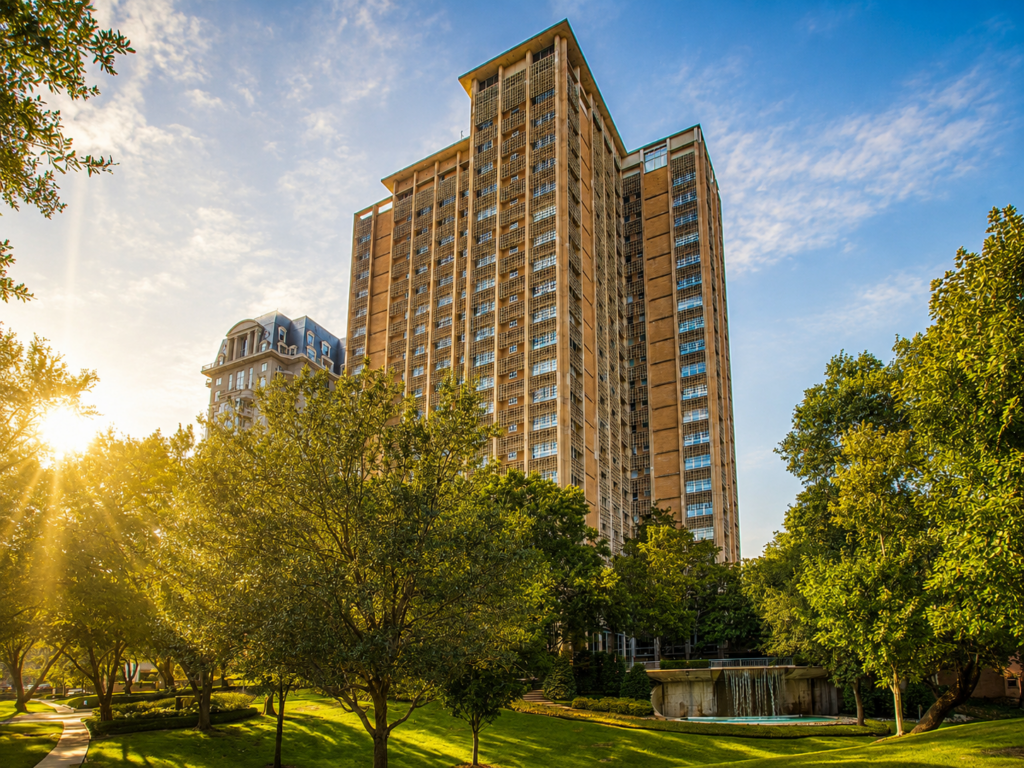
When One Address Was Enough, The Remarkable Story Behind a Dallas Icon

When One Address Was Enough, The Remarkable Story Behind a Dallas Icon

Today, every luxury residential building has a name, a logo, a marketing campaign, and a website.

Back in the late 1950s, one Dallas building needed none of those things.

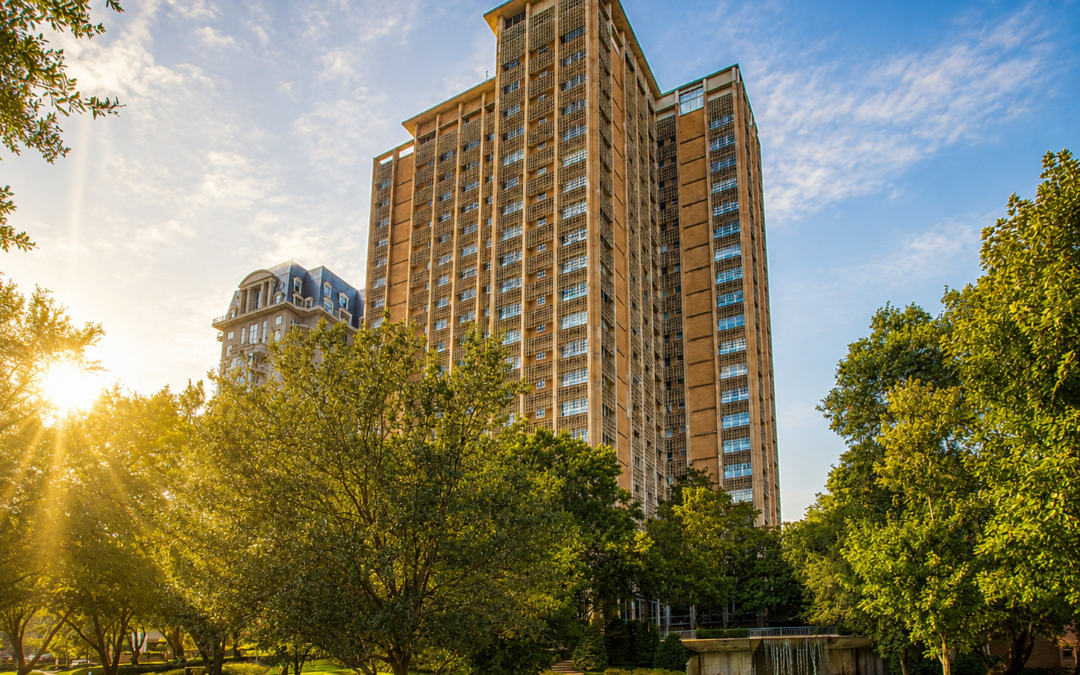
According to a 2006 feature in The Dallas Morning News, simply saying “3525” was enough. Everyone knew exactly what you meant. It wasn’t shorthand for a neighborhood. It was shorthand for prestige.

The article, written by David Flick, paints a fascinating portrait of a building that became woven into Dallas history in ways that extend far beyond real estate.

Rather than focusing only on architecture, Flick chronicles the people, stories, and larger-than-life personalities that passed through its doors. Hollywood stars including Greer Garson, Fabian, Tyrone Power, Joan Collins, and Van Johnson all have connections to the building. Former British Prime Minister Margaret Thatcher visited. Van Cliburn performed at birthday celebrations. Oil magnates, prominent attorneys, philanthropists, socialites, and business leaders all called 3525 home at one time or another.

The article also reminds us that glamorous buildings often develop colorful histories.

There were stories of vice squad raids at the building’s private club, society gossip that filled newspaper columns, high-profile burglaries, celebrity sightings, and the tragic discovery of a resident in the famous circular swimming pool. These weren’t simply events happening at an apartment building. They became part of Dallas folklore.

One of the article’s most memorable observations comes from longtime resident Col. James Pinckney Caston, who explains why so many people never seem to leave.

“Once you’ve lived in the Grande Dame of Turtle Creek, really nothing is ever the same.”

It’s a remarkable statement because it doesn’t describe finishes, square footage, or amenities.

It describes an emotional connection.

Perhaps that’s why the building has remained relevant for nearly seven decades. While luxury towers have grown taller and flashier around it, 3525 continues to attract people who appreciate history, thoughtful architecture, and the quiet confidence of a building that has never needed to chase trends.

Reading the article today feels like opening a time capsule. It captures an era when Dallas was rapidly growing into an international city, and one address became the backdrop for many of its most memorable stories.

Some buildings are valuable because they’re old.

Others become priceless because they have stories worth telling.

3525 Turtle Creek has both.

The Most Important Beings in My Home Search Don’t Pay the Mortgage

The Most Important Beings in My Home Search Don’t Pay the Mortgage

The most important beings in my home search don’t pay the mortgage.

They don’t contribute to the down payment.

They don’t review HOA documents.

They don’t care about interest rates.

And they have absolutely no opinion whatsoever on granite countertops.

Their names are Otto and Giorgio.

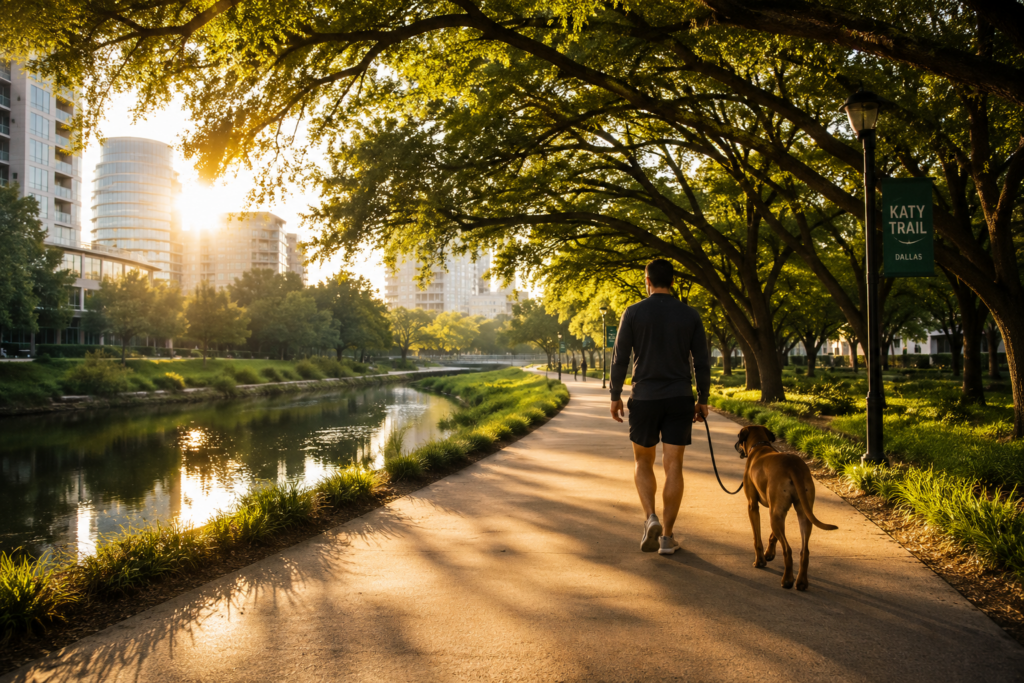
They’re two Rhodesian Ridgebacks who have somehow managed to become the unofficial directors of my daily schedule.

And while they may not understand real estate, they’ve taught me something important about choosing where to live.

The best neighborhoods aren’t always the ones with the biggest homes.

They’re the ones that make everyday life better.

Before I became a dog dad, I thought I evaluated neighborhoods based on architecture, restaurants, walkability, and convenience.

Then Otto and Giorgio arrived.

They forced me to think beyond the house itself.

Because at some point you realize you’re not just buying square footage.

You’re buying the route you walk every morning.

The park you’ll visit after work.

The coffee shop you’ll stop at on Saturday.

The people you’ll meet.

The life you’ll actually live once the moving truck leaves.


One of the reasons I love Oak Lawn, Uptown, and Turtle Creek is that they work exceptionally well for people who live pet-centered lives.

A great neighborhood for dog owners isn’t simply a place with a dog park.

It’s a place where daily life feels easy.

It’s a place where a morning walk doesn’t feel like a chore.

It’s a place where you can leave your front door and immediately find beautiful streets, shaded sidewalks, trails, green spaces, and other people doing exactly what you’re doing.

Walking their dogs.

Living their lives.

Connecting with their community.

Some mornings, Otto and Giorgio and I walk beneath the massive tree canopy that covers portions of Turtle Creek and Oak Lawn.

The boys are happy.

I’m getting exercise.

And for a few minutes, everybody’s blood pressure improves.

Including mine.

As a bonus, it’s difficult to take yourself too seriously when one of your dogs suddenly decides a squirrel is public enemy number one.

The other thing that makes these neighborhoods special is that they’re built around daily convenience.

Veterinarians.

Boarding facilities.

Groomers.

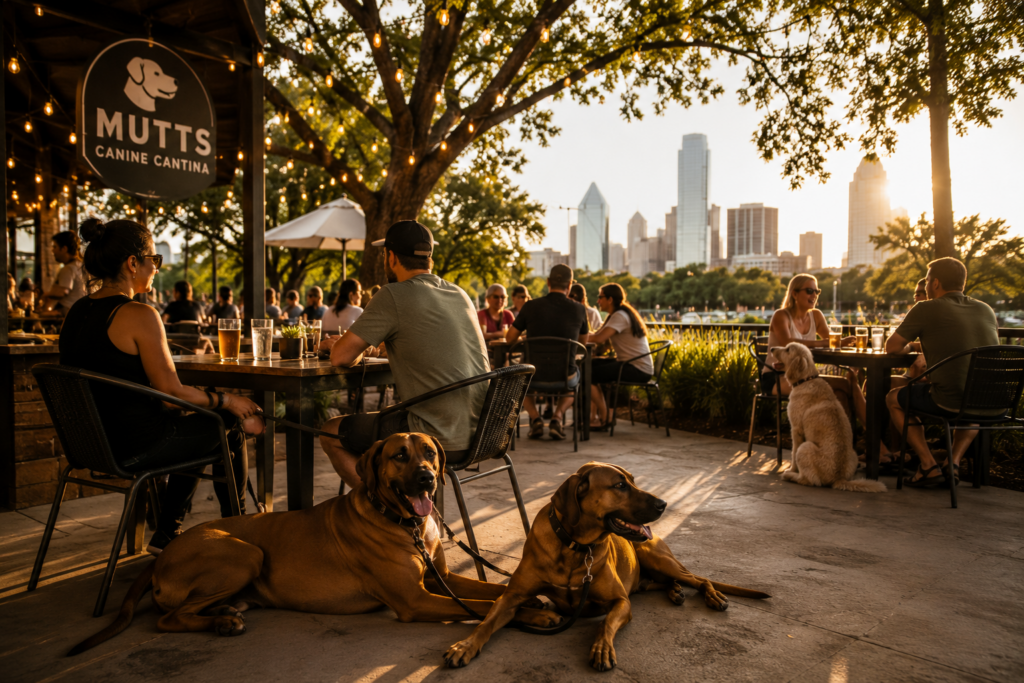
Dog-friendly patios.

Coffee shops.

Parks.

Trails.

They’re all woven into the fabric of the neighborhood.

You don’t have to plan your life around your dog.

Your neighborhood already supports both of you.


One of my favorite examples is watching how often dogs become social connectors.

People who might never speak to each other suddenly find themselves having a ten-minute conversation because their dogs introduced them.

A neighborhood starts feeling smaller.

Friendlier.

More connected.

Community happens.

And sometimes it happens because a Labrador refuses to mind its own business.

Or because a Ridgeback decides everyone within a fifty-foot radius should come say hello.

The best dog-friendly neighborhoods aren’t necessarily the neighborhoods with the biggest backyards.

They’re the neighborhoods that make daily life enjoyable.

The places where a walk feels peaceful.

The places where a patio welcomes both you and your dog.

The places where green space, shade, trails, and community are part of everyday life.

Before Otto and Giorgio, I thought I was choosing neighborhoods based on location.

Now I realize I was choosing neighborhoods based on quality of life.

The dogs just happened to point it out first.

And while they don’t pay the mortgage, they absolutely influence where I want to live.


6 SOLID REASONS Why Selling Your Home Now Could Be a Smart Move – Even Before the Spring Rush

6 SOLID REASONS Why Selling Your Home Now Could Be a Smart Move – Even Before the Spring Rush

Thinking about selling your home? Many homeowners wait until spring to list, believing that’s the prime season for real estate. While that’s typically true, this year presents unique opportunities for sellers who act sooner rather than later.

Some homeowners may hesitate due to high mortgage rates or concerns about slow-moving properties. However, serious buyers are still in the market, and listing now could work to your advantage.

“Homes are taking a bit longer to sell than in previous years, but motivated buyers are still out there,” says Ebonee Johnikin, a real estate agent in Laurel, MS. “Sellers who price their homes correctly are still receiving strong offers.”

So, should you consider selling before the busy spring season? Here are six reasons why listing early in 2025 might be a smart move.

1. Low Inventory Creates Opportunity for Sellers

While 2024 saw limited housing inventory, 2025 is starting off similarly, meaning sellers still have a competitive edge—at least for now.

However, experts predict that more homes will hit the market soon. In fact, the Realtor.com® 2025 Housing Forecastestimates that available homes for sale will increase by 11.7% compared to 2024.

Alex Platt, a South Florida real estate broker, confirms this trend: “We’ve seen inventory rise each week in 2025. If you’re thinking of selling, it’s better to act sooner rather than later before competition increases.”

In areas like San Diego, homes may sit on the market longer than sellers would like, but well-maintained properties are still in high demand. “If your home is in good condition, this could be a great time to sell and maximize your profits,” says agent Alyssa DeBoo.

2. Home Prices Are Expected to Remain Steady

Many homeowners worry about selling too soon and missing out on potential price increases. However, market predictions suggest that home values will stay relatively stable this year.

The Realtor.com 2025 Housing Forecast anticipates only a 3.7% increase in home prices, meaning sellers who wait may not see significant financial gains.

Johnikin reassures sellers: “If you’re ready to sell now, you’re unlikely to miss out on major price jumps later in the year.”

She also warns that even slight price increases could make homes less affordable, potentially deterring buyers down the line. “Higher home prices paired with today’s mortgage rates could cause buyers to be even more cautious later this year.”

3. Mortgage Rates Are Lower Than Before

One of the biggest reasons homeowners have held off on selling is the fear of trading in a low mortgage rate for a higher one.

However, rates have eased up compared to previous years, and experts predict a gradual decline in 2025.

Of course, homeowners who locked in ultra-low rates (in the 2-3% range) may still hesitate, but for those with higher rates, the gap isn’t as extreme as it was in 2023. Selling now could make more financial sense than waiting.

4. Winter Sellers Face Less Competition

Most people assume spring and summer are the best times to list, but the early months of the year come with advantages.

Cedric Stewart of Entourage RG in Washington, D.C., points out that many buyers have extra cash from work bonuses and tax refunds, which can lead to stronger offers.

“You may not get as many offers as you would in the summer, but the ones you do receive could be more serious,”Stewart explains. “In peak season, buyers have more choices. Right now, if someone needs to move, they don’t have as many options, so they’re more likely to work with you.”

5. Selling Now Helps You Buy Your Next Home Before the Market Heats Up

If you’re planning to buy another home after selling, doing so before peak season can work to your advantage.

Stewart notes that sellers who get their homes sold now can enter the market as buyers before prices rise further in spring and summer. This means you could not only secure a good price on your sale but also avoid increased competition when purchasing your next home.

6. Personal Circumstances Matter More Than Market Trends

While timing the market can be beneficial, real estate decisions often come down to personal needs. Whether you’re relocating for work, downsizing, or experiencing a change in family size, it’s important to move when it makes sense for you.

“The key is to sell when it aligns with your life—not just market predictions,” says Denver-based Realtor Crystalle Guss.

Platt adds: “You can’t perfectly time the market. If you need to sell, the best time is when you’re ready.”

Thinking of Selling? Here Are 4 Key Tips

If you’re considering listing your home soon, here’s how to make the process as smooth and successful as possible:

1. Price Your Home Strategically

Homes are sitting on the market longer than they did in previous years, but pricing correctly can make a big difference.

“Sellers who price their homes fairly—based on local market conditions—are seeing the best results,” says DeBoo.

2. Make Necessary Updates Before Listing

Buyers are looking for move-in-ready homes, so minor upgrades can go a long way.

“Step back and ask yourself: ‘If I moved in today, what updates would I need to make?’” says Guss. “Quality and condition matter more than ever.”

3. Be Flexible With Buyers

In this market, sellers who offer incentives—such as covering closing costs or offering a mortgage rate buy-down—are gaining an edge.

“A well-priced home in good condition will still sell, but being flexible with buyers can help move the process along faster,” says Johnikin.

4. Work With an Experienced Real Estate Agen

Not all agents are created equal. In today’s market, choosing the right real estate professional can make all the difference.

“Over 74% of agents didn’t sell a single home last year,” says Texas broker Amber Brown. “Do your homework—interview agents, ask for referrals, and make sure they have a strong track record.”

Selling your home before the traditional spring rush can offer unique advantages—from less competition to serious buyers who are ready to act now.