469-991-3132
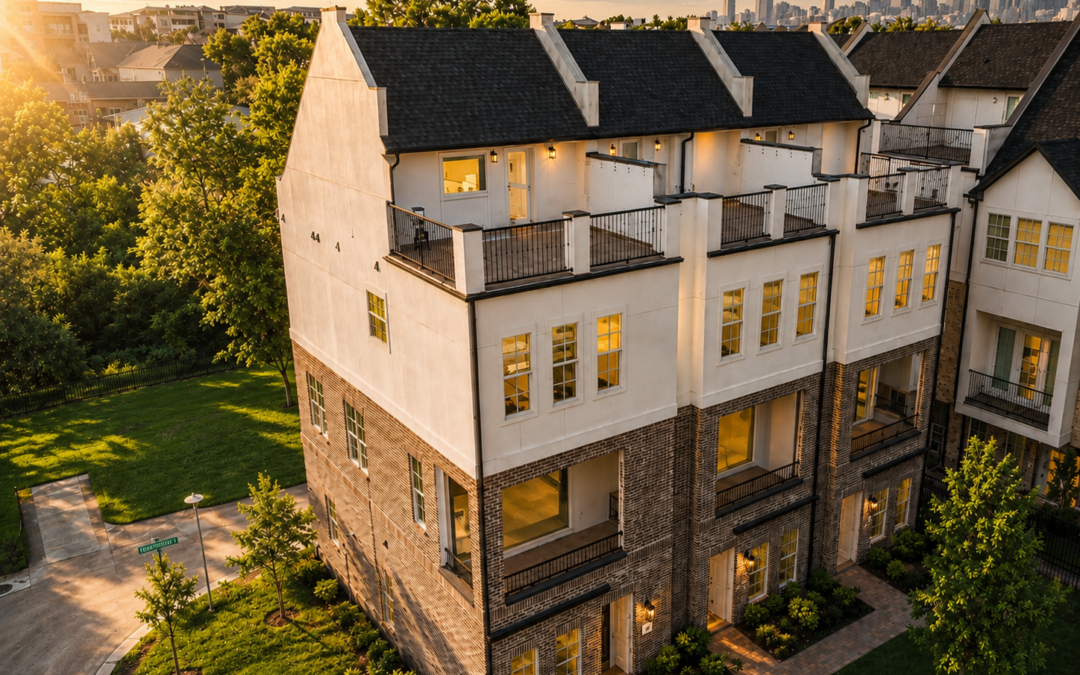
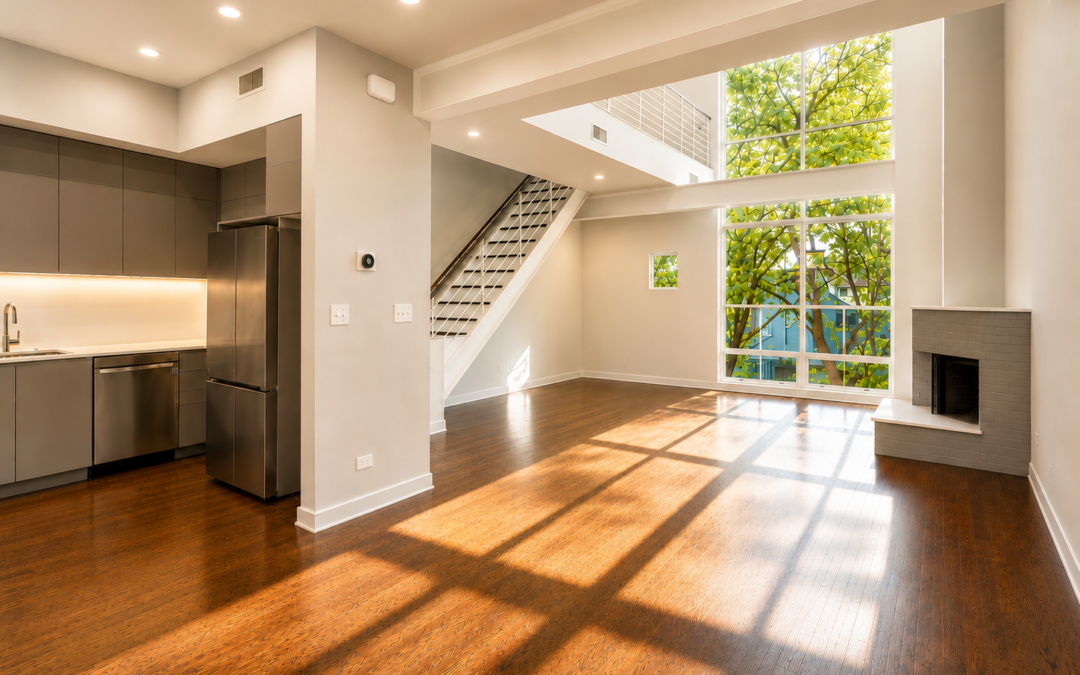
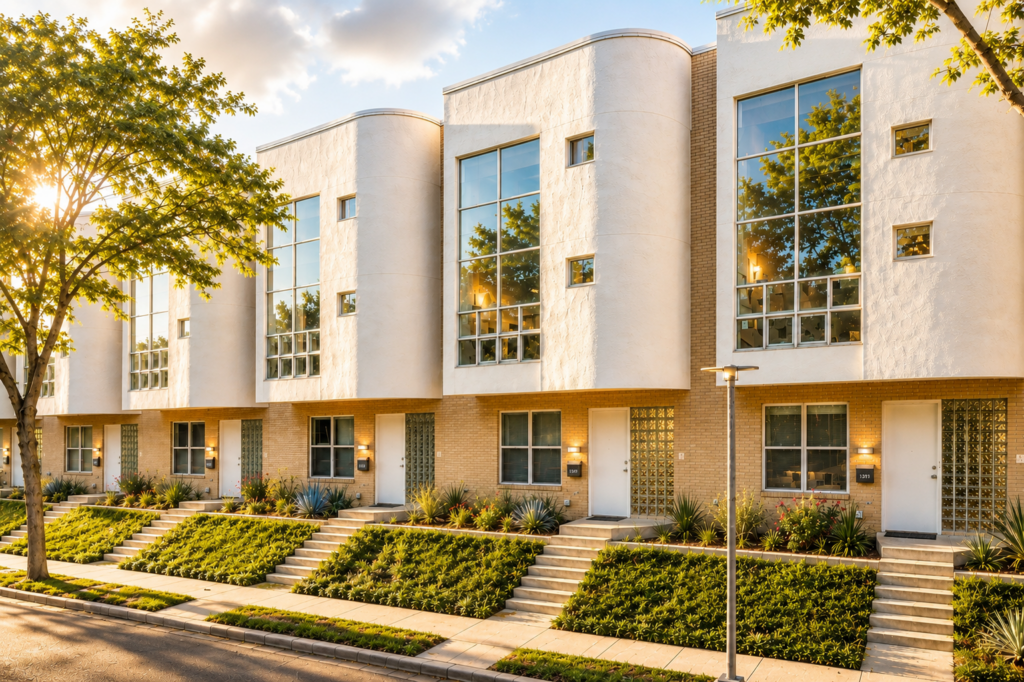
2114 Wenge Lane | Cedar Branch Townhomes

2114 Wenge Lane | Cedar Branch Townhomes

MORE INFO COMING FRIDAY the 12th!

This exciting new listing is scheduled to launch on Friday, June 12.

If you’re lucky, you may catch an early preview beginning Thursday, June 11, as information starts appearing here and syndicating to popular real estate websites such as Zillow, Realtor.com, and others.

We’re putting the finishing touches on the photography, video, property details, and marketing materials to ensure this exceptional residence is presented at its very best.

Check back soon for additional information, professional photography, pricing details, and a complete property tour. We look forward to sharing this remarkable opportunity with you.

The Difference Between a House You Walk Through and a House You Remember

The Difference Between a House You Walk Through and a House You Remember

Most buyers think they’re shopping for square footage.

They’re not.

They think they’re comparing kitchens, bathrooms, floor plans, and countertops.

They’re not doing that either.

What they’re really doing is walking through a home and asking themselves one simple question:

“Can I see my life here?”

And one of the biggest factors influencing that decision often goes completely unnoticed.

Lighting.

Not the light fixtures.

Not the chandeliers.

Not the brand of recessed cans.

The light itself.

Think about the homes you’ve toured that felt warm, comfortable, and inviting.

Now think about the homes that felt cold, dark, or forgettable.

The difference is often lighting.

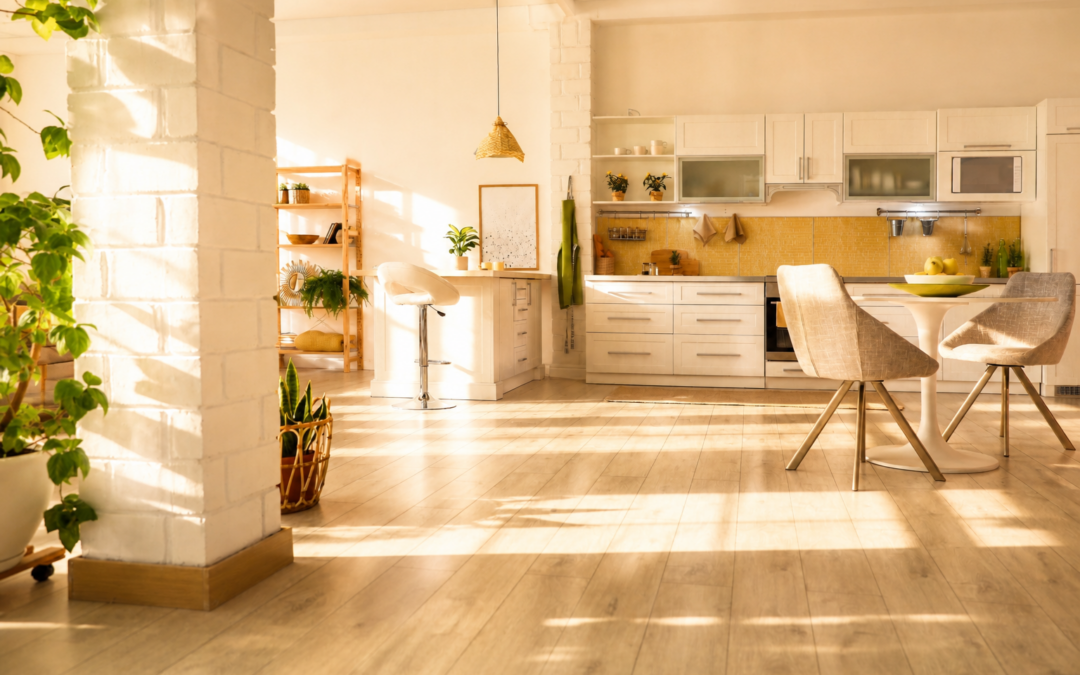
A well-lit home feels larger. Cleaner. More welcoming. More expensive.

A poorly lit home can make a beautiful property feel smaller than it is and less inviting than it should be.

The interesting part is that buyers rarely walk through a house and say, “The lighting is fantastic.”

Instead, they say things like:

“I love this room.”

“This house feels different.”

“It just feels right.”

They’re reacting to the atmosphere the lighting creates.

Natural light is usually the first thing people notice.

Large windows, thoughtfully placed glass, and rooms that capture daylight tend to photograph better, show better, and leave a stronger impression on buyers.

But natural light is only part of the story.

The homes that feel truly special often use layers of lighting throughout the space.

Accent lighting can highlight artwork, architectural details, built-ins, or decorative niches.

Task lighting improves function in kitchens, offices, and reading areas.

Ambient lighting creates warmth and comfort throughout the room.

Together, these layers create depth.

The room feels intentional.

Finished.

Comfortable.

Luxury builders have understood this for years.

Luxury Dallas living room featuring layered interior lighting, illuminated built-in shelving, recessed ceiling lights, and architectural accent lighting.

Walk through a custom home and you’ll often find subtle lighting tucked into bookshelves, art niches, cabinetry, stairways, and outdoor living spaces.

The lighting isn’t screaming for attention.

It’s quietly shaping the experience.

Even exterior lighting plays an important role.

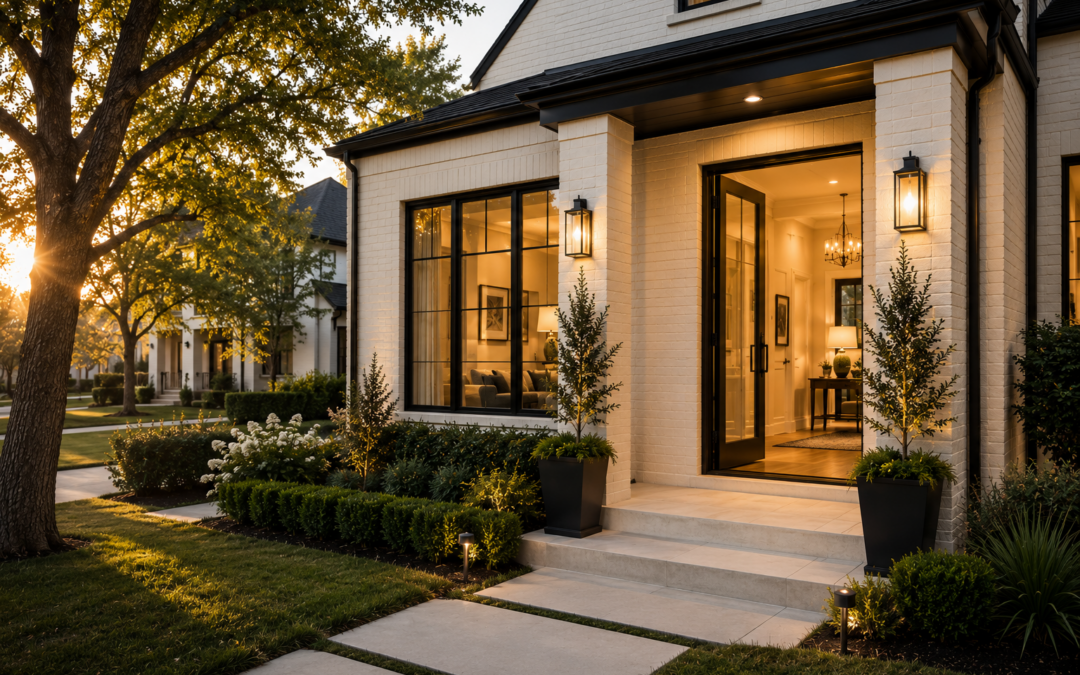
A thoughtfully illuminated entry creates a welcoming first impression long before a buyer steps through the front door.

Mid-century modern Dallas home with architectural landscape lighting and illuminated exterior trees at dusk.

Landscape lighting can make a home feel established, elegant, and secure.

The best lighting does something that every homeowner wants their property to do.

It creates emotion.

Because at the end of the day, buyers don’t remember every floor plan they toured.

They don’t remember every countertop they saw.

They remember how a home made them feel.

That’s why some houses become forgettable before the next showing.

And why others stay with buyers long after they’ve left the driveway.

Sometimes the difference isn’t the size of the room.

It’s simply how the light falls across it.

How Buyers Can Reduce Out-of-Pocket Costs at Closing

How Buyers Can Reduce Out-of-Pocket Costs at Closing

Many first-time buyers spend months saving for a down payment.

Then they discover something surprising.

The down payment isn’t the only money they’ll need to bring to closing.

In addition to the down payment, buyers are often responsible for closing costs. These can include lender fees, title fees, prepaid property taxes, homeowners insurance, and other expenses associated with completing the purchase.

Depending on the price of the home, those costs can add up to thousands of dollars.

For some buyers, that’s not a problem.

For others, it’s the difference between feeling comfortable and feeling financially stretched.

The good news is that buyers may not have to pay all of those costs themselves.

One of the most common negotiation strategies in real estate is asking the seller to contribute toward a buyer’s closing costs.

Let’s look at a simple example.

Imagine you’re buying a home and your total closing costs are $8,000.

Instead of paying the entire $8,000 yourself, you might ask the seller to contribute $5,000 toward those expenses.

If the seller agrees, your out-of-pocket cost drops from $8,000 to $3,000.

That’s real money.

Money that can stay in your savings account.

Money that can help with moving expenses.

Money that can help furnish your new home.

Money that can simply make the transition into homeownership less stressful.

This is one of the reasons many buyers work with experienced REALTORS®.

Most first-time buyers know they can negotiate the purchase price.

Many don’t realize they can negotiate other terms as well.

Of course, not every seller will agree.

The likelihood often depends on the market, the property, and the seller’s situation.

A seller receiving multiple offers may have little reason to help with closing costs.

A seller whose home has been sitting on the market for several weeks may be more willing to negotiate.

Every situation is different.

That’s why there is no single strategy that works for every home.

The important thing is knowing the conversation is available.

Too many buyers assume the numbers they see on the first day are the numbers they’ll be stuck with all the way through closing.

That’s not always true.

Real estate is a negotiation.

And sometimes the most valuable negotiation isn’t about getting a lower price.

Sometimes it’s about reducing the amount of cash you need to bring to the closing table.

If you’re planning to buy a home, especially for the first time, make sure you understand all of the tools available to you.

Seller contributions toward closing costs may not work in every transaction.

But when they do, they can make the path to homeownership considerably easier.

The Borracho Beans That Keep You Home

The Borracho Beans That Keep You Home

Some recipes are made in thirty minutes. Borracho beans are made all day. They bubble away quietly while the house fills with the smell of bacon, onions, and beer, becoming less of a recipe and more of an event. They’re a small celebration of being present, of slowing down, checking on the pot every now and then, and spending a Sunday with the people and dogs you love. By supper, the entire house smells like home.

Ingredients

For the Beans

  • 1 pound dried pinto beans
  • 8 ounces thick-cut bacon, diced
  • 1 large yellow onion, diced
  • 6 cloves garlic, minced
  • 1 roasted poblano pepper, peeled and chopped
  • 1 smoked ham hock
  • 1 bottle (12 oz) Negra Modelo
  • 6 cups chicken stock
  • 1 tablespoon tomato paste
  • 2 teaspoons kosher salt (start here, adjust later)
  • 1 teaspoon black pepper
  • 1 teaspoon cumin
  • 1 teaspoon smoked paprika
  • 1 teaspoon Mexican oregano
  • 1 to 2 teaspoons brown sugar
  • 2 bay leaves

For Finishing

  • Juice of 1 lime
  • ½ cup chopped cilantro
  • Reserved crispy bacon


Saturday Night Prep 

Place beans in a large bowl.

Cover with several inches of water.

Soak overnight.

Drain before cooking.


Sunday Morning

Roast the Poblano

Place poblano directly over a gas flame or under the broiler.

Blacken the skin.

Place in a bowl and cover for 10 minutes.

Peel.

Remove seeds.

Rough chop.

Set aside.


Cook the Bacon

In a large Dutch oven or crockpot insert on the stove:

Cook bacon slowly.

Render as much fat as possible.

Cook until deeply browned and crisp.

Remove bacon.

Reserve for garnish.

Leave the fat behind.


Build the Flavor Base

Add onion to the bacon fat.

Cook 8 to 10 minutes.

Longer than you think.

You want sweetness.

Add garlic.

Cook 1 minute.

Add tomato paste.

Cook 2 minutes.

This little step adds enormous depth.


Into the Pot

Add:

  • soaked beans
  • roasted poblano
  • ham hock
  • beer
  • chicken stock
  • cumin
  • smoked paprika
  • oregano
  • pepper
  • bay leaves
  • brown sugar

Stir.

Bring to a gentle simmer.


Crockpot or Stovetop in a Dutch Oven

Simmer for 5 to 8 hours, depending your cooking temputure, checking every hour and a half or so.

Until beans are completely tender.


The Secret Restaurant Trick

When beans are finished:

Remove ham hock.

Pull off the meat.

Discard skin and bone.

Return meat to pot.

Then:

Take about 1½ cups of beans and broth.

Blend until smooth.

Return to the pot.

Stir.

Now the broth becomes silky, rich, and luxurious without losing texture.


Final Adjustment

Taste.

Now add:

  • lime juice
  • cilantro
  • additional salt if needed

Do NOT add all the salt early.

The ham hock, bacon, stock, and reduction all contribute salt.

Taste first.


Serve

Ladle into bowls.

Top with:

  • reserved crispy bacon
  • extra cilantro
  • squeeze of lime

Serve beside hot cornbread.

Or better yet:

Place a chunk of cornbread in the bottom of the bowl and ladle the beans over it. Here I added 3 or 4 one inch by one inch cornbread squares and topped with too many green onions… but it sounded good at the time and oh lordy, it was! 

What Buyers Say They Want vs. What They Actually Need 

What Buyers Say They Want vs. What They Actually Need 

What Buyers Say They Want vs. What They Actually Need

Most buyers start with a list.

Three bedrooms.

Open kitchen.

Quartz countertops.

Walk-in closet.

Two-car garage.

And there is absolutely nothing wrong with that.

But after thirty years in real estate, I’ve noticed something interesting.

The features buyers talk about first are rarely the things that matter most six months after they move in.

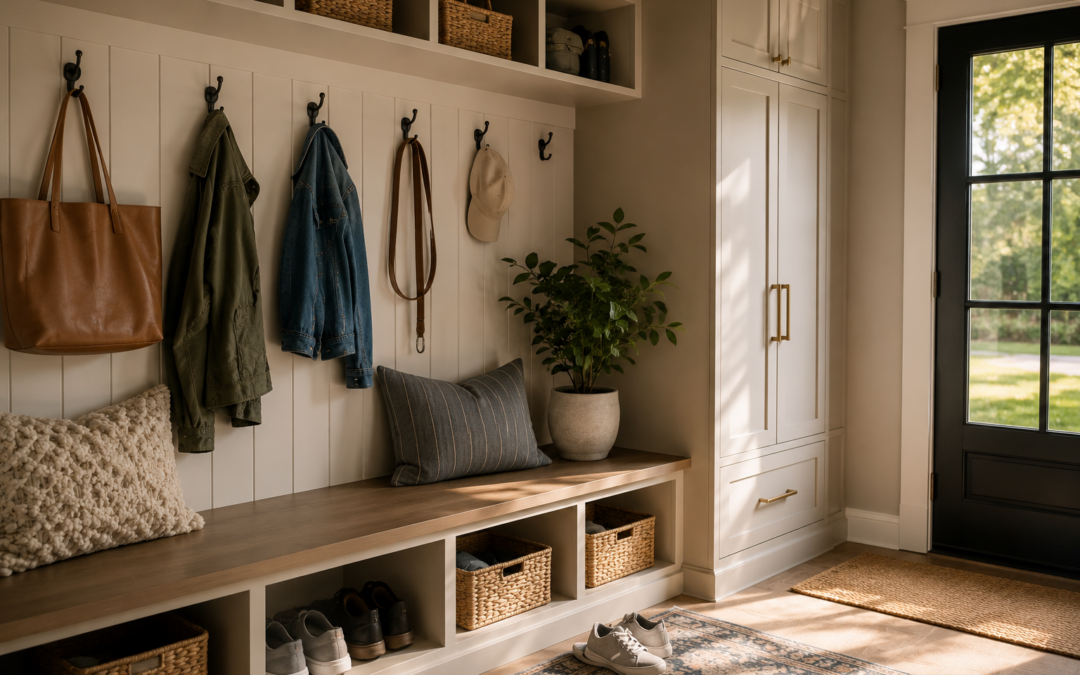
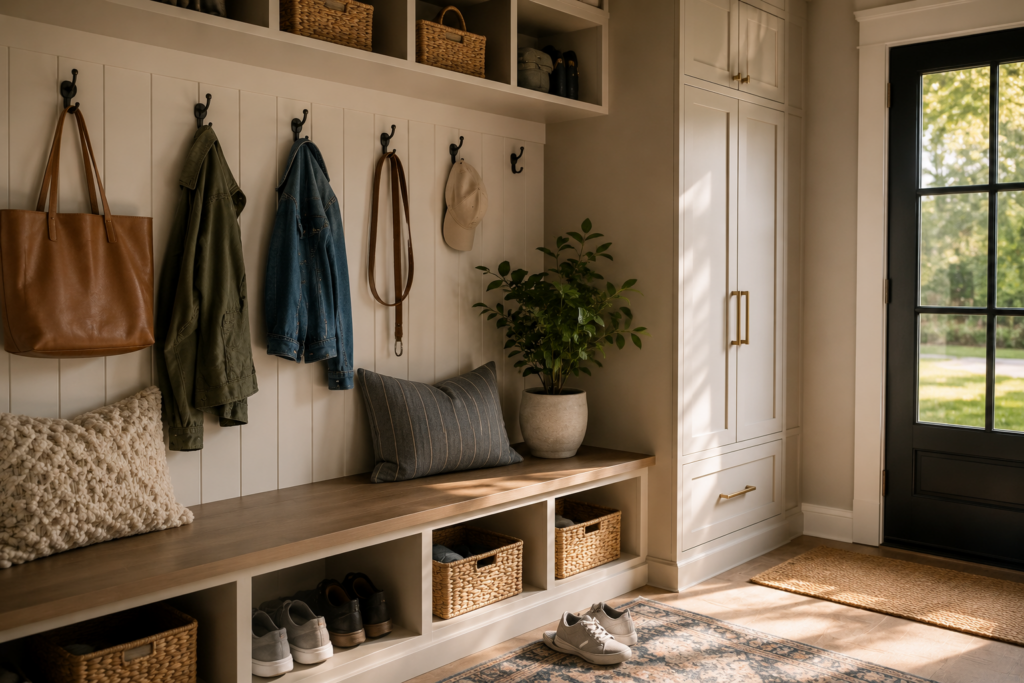
Take this mudroom.

Almost nobody calls me and says, “Kevin, finding a great mudroom is my top priority.”

Nobody has ever started a home search with a passionate speech about coat hooks, storage cubbies, or a built-in bench.

Yet the moment people live with a space like this, they don’t want to give it up.

Why?

Because the mudroom isn’t solving a housing problem.

It’s solving a life problem.

It’s eliminating clutter.

It’s creating organization.

It’s giving backpacks, shoes, dog leashes, purses, keys, and all the little daily annoyances a place to live.

In other words, it’s making everyday life easier.

And that’s where many buyers accidentally get off track.

They focus on the feature.

What they really care about is the frustration the feature eliminates.

A few years ago, I would have described a buyer’s needs very differently.

Then I started paying closer attention.

People would tell me they wanted a larger garage.

What they actually wanted was less stress.

People would tell me they wanted an extra bedroom.

What they actually wanted was flexibility.

People would tell me they wanted a bigger kitchen.

What they actually wanted was a place where family naturally gathered.

Then there are buyers who don’t even realize what’s bothering them until we start talking.

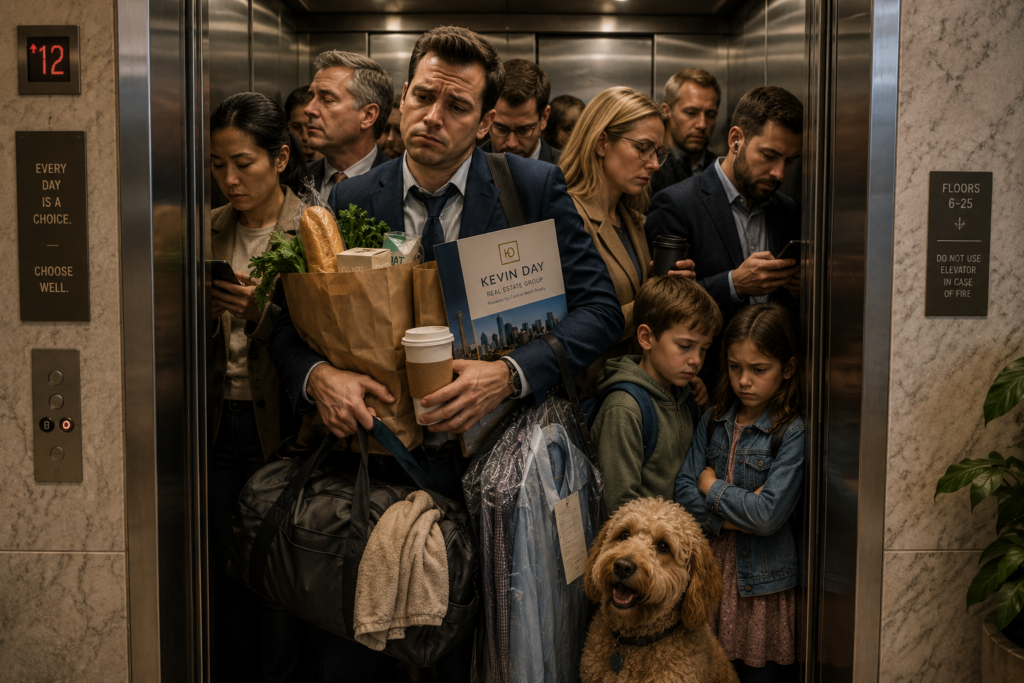
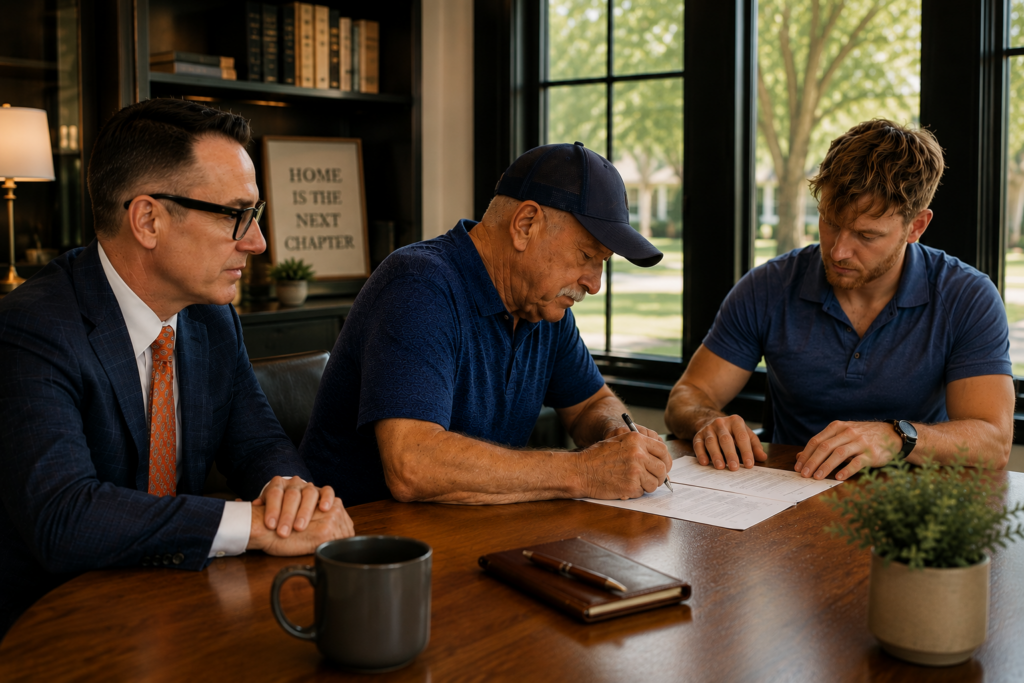
This guy doesn’t need granite countertops.

He needs relief.

He’s carrying groceries.

Dry cleaning.

A gym bag.

Coffee.

He’s sharing an elevator with half the building.

He’s trying to manage a busy life inside a space that no longer works very well.

If he walked into my office and handed me a wish list, the things written on that paper might be useful.

But the real clues would be everything written between the lines.

The frustrations.

The routines.

The inconveniences.

The things he’s tired of doing every single day.

That’s where the real story lives.

And that’s why some of the smartest homebuyers eventually stop asking one question:

“What house do I want?”

And start asking a much better one:

“What problems am I trying to solve?”

Because once you identify the real problem, the right house often becomes much easier to find.

The best homes don’t simply check boxes.

They improve daily life.

And sometimes the feature that changes everything isn’t the flashy one you noticed first.

Sometimes it’s the mudroom.

The Most Important Beings in My Home Search Don’t Pay the Mortgage

The Most Important Beings in My Home Search Don’t Pay the Mortgage

The most important beings in my home search don’t pay the mortgage.

They don’t contribute to the down payment.

They don’t review HOA documents.

They don’t care about interest rates.

And they have absolutely no opinion whatsoever on granite countertops.

Their names are Otto and Giorgio.

They’re two Rhodesian Ridgebacks who have somehow managed to become the unofficial directors of my daily schedule.

And while they may not understand real estate, they’ve taught me something important about choosing where to live.

The best neighborhoods aren’t always the ones with the biggest homes.

They’re the ones that make everyday life better.

Before I became a dog dad, I thought I evaluated neighborhoods based on architecture, restaurants, walkability, and convenience.

Then Otto and Giorgio arrived.

They forced me to think beyond the house itself.

Because at some point you realize you’re not just buying square footage.

You’re buying the route you walk every morning.

The park you’ll visit after work.

The coffee shop you’ll stop at on Saturday.

The people you’ll meet.

The life you’ll actually live once the moving truck leaves.


One of the reasons I love Oak Lawn, Uptown, and Turtle Creek is that they work exceptionally well for people who live pet-centered lives.

A great neighborhood for dog owners isn’t simply a place with a dog park.

It’s a place where daily life feels easy.

It’s a place where a morning walk doesn’t feel like a chore.

It’s a place where you can leave your front door and immediately find beautiful streets, shaded sidewalks, trails, green spaces, and other people doing exactly what you’re doing.

Walking their dogs.

Living their lives.

Connecting with their community.

Some mornings, Otto and Giorgio and I walk beneath the massive tree canopy that covers portions of Turtle Creek and Oak Lawn.

The boys are happy.

I’m getting exercise.

And for a few minutes, everybody’s blood pressure improves.

Including mine.

As a bonus, it’s difficult to take yourself too seriously when one of your dogs suddenly decides a squirrel is public enemy number one.

The other thing that makes these neighborhoods special is that they’re built around daily convenience.

Veterinarians.

Boarding facilities.

Groomers.

Dog-friendly patios.

Coffee shops.

Parks.

Trails.

They’re all woven into the fabric of the neighborhood.

You don’t have to plan your life around your dog.

Your neighborhood already supports both of you.


One of my favorite examples is watching how often dogs become social connectors.

People who might never speak to each other suddenly find themselves having a ten-minute conversation because their dogs introduced them.

A neighborhood starts feeling smaller.

Friendlier.

More connected.

Community happens.

And sometimes it happens because a Labrador refuses to mind its own business.

Or because a Ridgeback decides everyone within a fifty-foot radius should come say hello.

The best dog-friendly neighborhoods aren’t necessarily the neighborhoods with the biggest backyards.

They’re the neighborhoods that make daily life enjoyable.

The places where a walk feels peaceful.

The places where a patio welcomes both you and your dog.

The places where green space, shade, trails, and community are part of everyday life.

Before Otto and Giorgio, I thought I was choosing neighborhoods based on location.

Now I realize I was choosing neighborhoods based on quality of life.

The dogs just happened to point it out first.

And while they don’t pay the mortgage, they absolutely influence where I want to live.


Why Garages Matter More Than Granite

Why Garages Matter More Than Granite

If you’re a first-time buyer, I need you to promise me something.

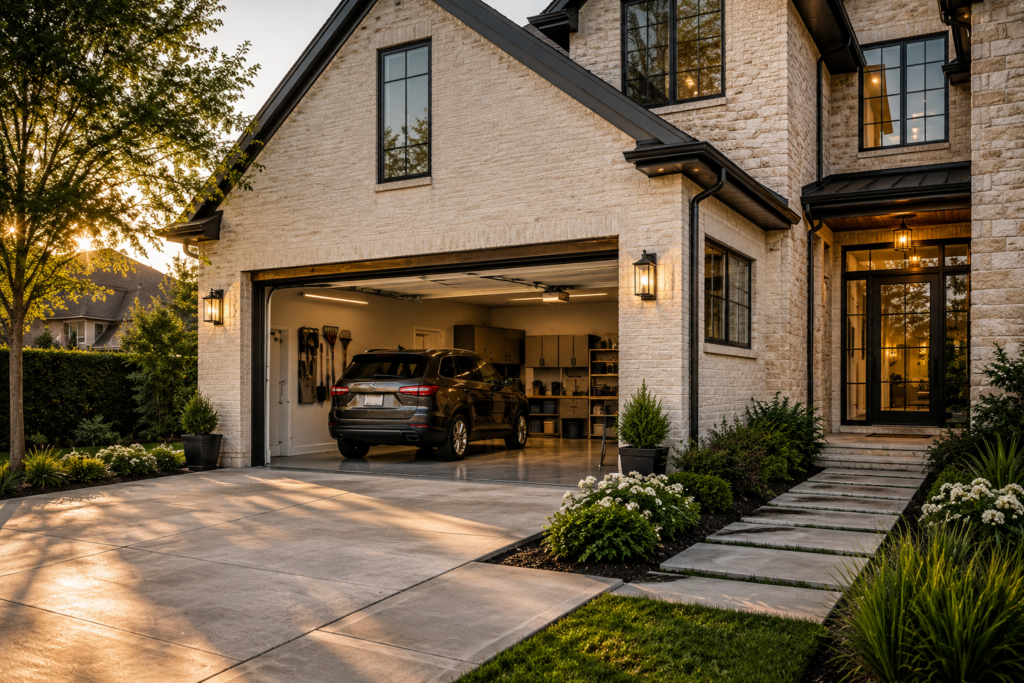
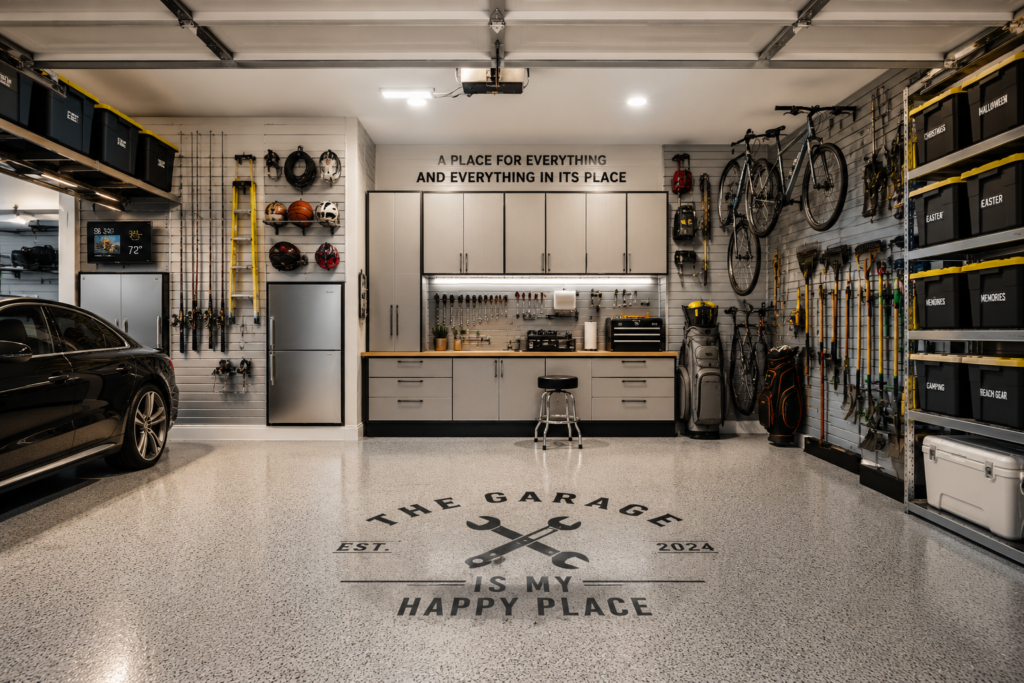
The next time you’re touring a home, spend at least as much time looking at the garage as you do looking at the kitchen.

I know.

That’s not nearly as exciting.

Granite countertops are beautiful. Quartz is beautiful. New appliances are beautiful. Under-cabinet lighting is beautiful.

Nobody has ever invited friends over and proudly announced, “Wait until you see my oversized two-car garage.”

I take that back, a couple of my friends have!

But after more than three decades in real estate, I’ve learned something interesting.

The features that get your attention during a showing are not always the features that improve your life the most after you move in.

And garages are one of the best examples.

When buyers walk into a home, they often spend fifteen minutes discussing the kitchen.

Then they spend about forty-five seconds looking at the garage.

Five years later, they’re using the garage every single day.

The granite?

They’re barely noticing it anymore.

A garage quietly earns its value over time.

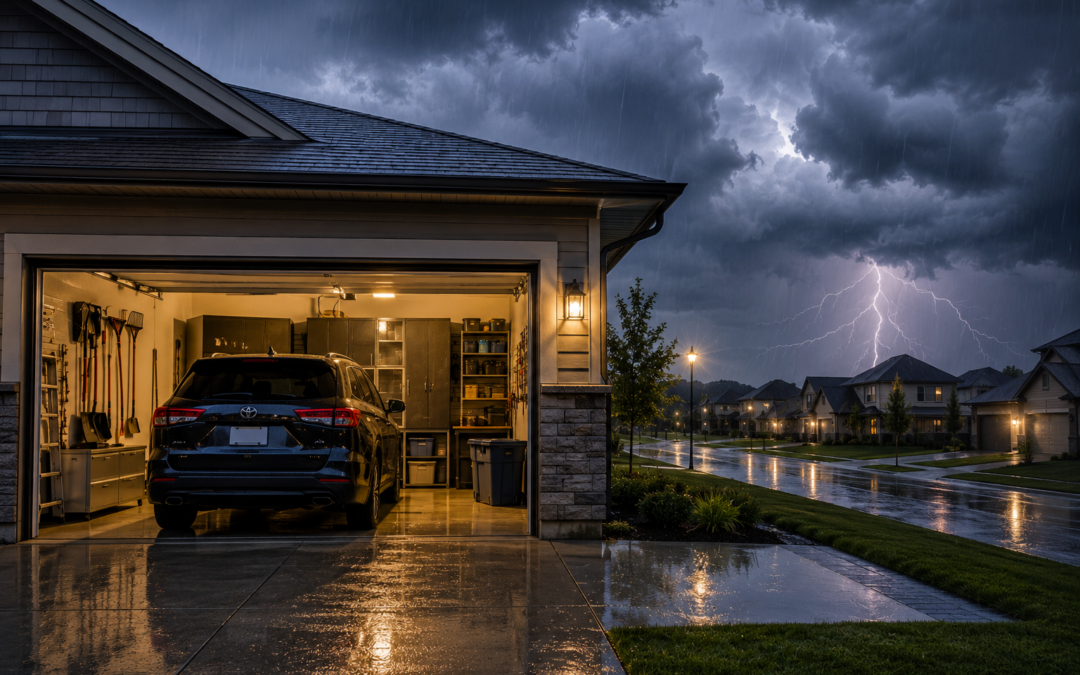
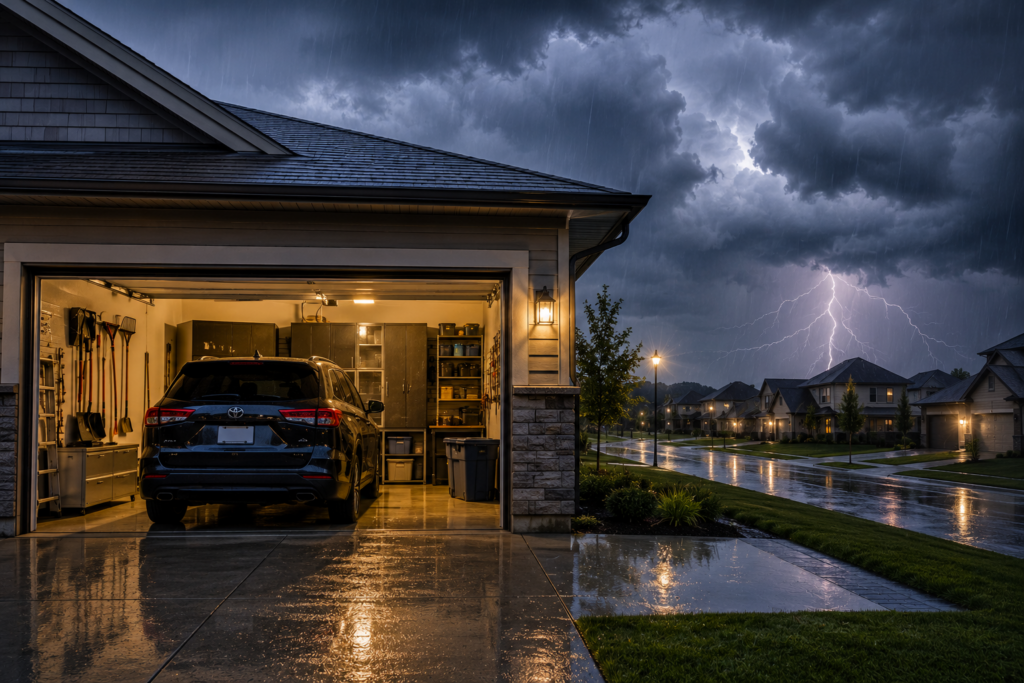
You appreciate it when it’s raining and you’re carrying groceries into the house.

You appreciate it when it’s August in Texas and your steering wheel isn’t capable of branding cattle.

You appreciate it when your Amazon package isn’t sitting on the front porch.

You appreciate it when holiday decorations need a home.

You appreciate it when you buy something from Costco that seemed like a good idea at the time and now requires its own zip code.

Suddenly, that garage doesn’t seem so boring.

And not all garages are created equal.

Some buyers love front-entry garages because they’re convenient and straightforward.

Others prefer rear-entry garages because they create a cleaner streetscape and often improve curb appeal.

Then there are tandem garages.

If you’ve never seen one, imagine parking one car directly behind another.

They can work beautifully for some households.

They can also become a daily negotiation if the person parked in front decides to sleep late.

Tandem garages are a little like bunk beds.

They’re fantastic until somebody needs something.

The larger point is this:

Experienced homeowners tend to evaluate homes differently than first-time buyers.

They still notice the beautiful kitchen.

They still appreciate updated finishes.

But they’ve learned to pay attention to the features that affect daily life.

Storage.

Closets.

Pantries.

Laundry rooms.

Parking.

Garages.

The practical things.

Because those are the features you’ll still be appreciating long after the excitement of new countertops wears off.

This doesn’t mean granite doesn’t matter.

Of course it does.

A beautiful kitchen adds enjoyment, functionality, and value.

The smartest buyers simply learn to evaluate both.

Granite may get your attention.

The garage may improve your life.

And when you’re searching for your next home, it’s worth remembering that the features that photograph best aren’t always the features that serve you best.

The Old “Buyer” Playbook Isn’t the Only Playbook Anymore

The Old “Buyer” Playbook Isn’t the Only Playbook Anymore

For many people, buying a home feels like something they should have already done.

Maybe they assumed they would buy after getting married.

Maybe they thought they would buy younger.

Maybe they imagined buying with a spouse, two children, a golden retriever, and a white picket fence.

Then life happened.

Careers took unexpected turns. Relationships changed. Priorities shifted. Some people stayed single longer than expected. Others found themselves buying later in life. Some are purchasing alone for the very first time.

And because the traditional image of homeownership has been repeated for generations, many buyers quietly wonder if they somehow missed the right moment.

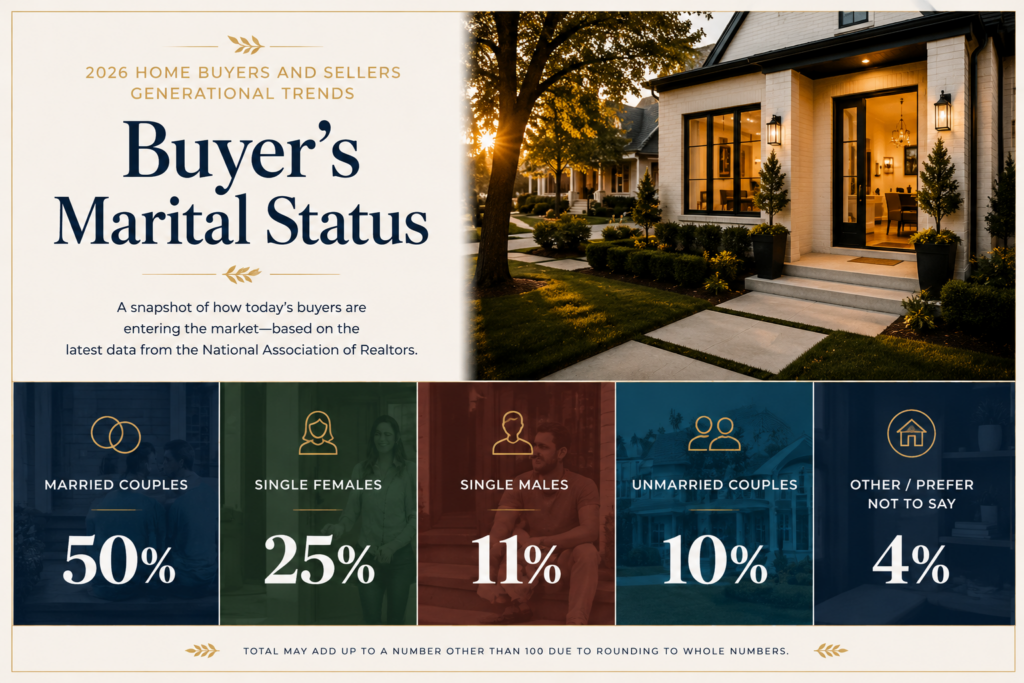
The latest data from the National Association of Realtors tells a very different story.

The reality is that today’s homebuyer looks nothing like the homebuyer of twenty or thirty years ago.

The market is far more diverse than many people realize.

Married couples still represent the largest group of buyers, but they account for only half of the market. The other half consists of single women, single men, unmarried couples, and buyers whose circumstances do not fit neatly into traditional categories.

That means millions of Americans are purchasing homes outside the “expected” path.

Not because they failed.

Because life is different.

And because the definition of homeownership has evolved.

One of the most rewarding parts of working in real estate is seeing firsthand how different buyers arrive at the same destination.

Some are buying their first home.

Some are downsizing.

Some are purchasing after a major life change.

Some are buying alone for the first time.

Others are purchasing later in life than they ever imagined.

The common thread isn’t age, income, or marital status.

The common thread is that each buyer reached a point where homeownership became the right solution for their life.

That’s an important distinction.

Too many people compare their personal timeline to someone else’s.

Too many buyers believe there is one correct age, one correct income level, one correct relationship status, or one correct life stage to purchase a home.

There isn’t.

What matters today is less about who you are and more about what you need.

A stable place to live.

A sense of control over your future.

More room.

Less maintenance.

A shorter commute.

A better school district.

A place to build equity instead of paying rent.

The motivations may be different, but the goal is often the same.

When you look beyond marital status and demographics, something interesting happens.

Buyers begin prioritizing many of the same things.

Comfort.

Security.

Lifestyle.

Financial stability.

Community.

A place that feels like home.

The old playbook suggested that homeownership followed a single predictable path.

The new reality is much more flexible.

And honestly, much more encouraging.

The takeaway from all of this is simple.

If you’ve been waiting because your life doesn’t look exactly the way you thought it would, you may be comparing yourself to a version of the market that no longer exists.

There has never been one right way to become a homeowner.

There has never been one correct timeline.

And there has never been one type of buyer.

The people purchasing homes today come from every stage of life imaginable.

The question is no longer whether your story matches someone else’s.

The question is whether homeownership solves a problem, creates an opportunity, or improves your life today.

Because when it does, that’s usually the right time to start looking.

Open House Schedule for the Weekend of May 30th and 31st

Open House Schedule for the Weekend of May 30th and 31st

This weekend’s open house lineup is shaping up beautifully, with opportunities to tour homes across some of Dallas’ most sought-after neighborhoods. From the timeless charm of Bluffview and Devonshire to the energy of Uptown, Oak Lawn, and State Thomas, there’s something inspiring around nearly every corner. With gorgeous spring weather expected Saturday and Sunday, it’s the perfect weekend to step inside a few exceptional properties, explore the neighborhoods, and maybe even discover the one that feels like home. Whether you’re actively searching or simply gathering inspiration, these homes are absolutely worth seeing in person.


Open House List for May 30th and 31st >>> Properties for Sale

Before the Landlord Knows Who You Are, They Have Nothing to Lose

Before the Landlord Knows Who You Are, They Have Nothing to Lose

There is a pattern happening in the Dallas rental market right now, especially in highly desirable neighborhoods and properties that are already priced correctly.

A tenant walks into a property they absolutely love. Great location. Beautiful finishes. Strong value. Exactly where they want to be.

And within the first few minutes, before the landlord even knows their name, they ask for the rent to be reduced.

Not because the property is overpriced.

Not because comparable properties support a lower number.

Not because the home has been sitting vacant for 90 days.

Simply because a lower number would “feel better” for them.

That is not negotiation. That is wishful thinking.

And more importantly, it is usually happening at the worst possible moment.

Powerful negotiation is built on two things:

Desire and fear of loss.

If a property is fresh on the market, showing beautifully, and already generating activity, the landlord has no fear of losing you because without a completed application, back ground and credit check in front of them, they do not know who you are.

Without that data, at that stage in the process, there is no emotional or financial investment in the conversation. The tenant is just someone wanting to know “if they can get it cheaper.”

Before the landlord knows who you are, they have nothing to lose.

But once they see a strong application, excellent rental history, stable income, good credit, and the tenant is genuinely a tenant they would desire, the dynamic changes. Completely.

Once desire is introduced, and they want you as a tenant, that is when the landlord is willing to negoiate.

Because now the landlord is thinking: “This is someone I would actually like living in my property.”

That is when negotiation becomes real, once there is leverage.

A thoughtful renter understands this instinctively. They allow the landlord to see the full picture first. They create confidence. They create comfort. They create competition.

Then, if they want to negotiate, they bring something meaningful to the table.

Maybe they offer a longer lease term.

Maybe they are willing to move in within two weeks instead of four.

Maybe they have impeccable financials and know the landlord would prefer stability over rolling the dice and hoping for better by continuing showings.

That is negotiation with strategy behind it.

And equally important, good negotiation requires teeth.

A renter cannot simply say:
“I’d like it cheaper.”

There has to be an actual possibility of loss attached to the request.

Otherwise, the landlord simply waits for the next applicant.

Ironically, the renters who create the most friction early are often the same renters who are least prepared once the process begins. Weak timelines. Unstable employment. Poor credit. Unrealistic expectations. High maintenance energy from the very beginning.

Meanwhile, the strongest renters usually move differently.

They understand presentation matters.

They understand timing matters.

And they understand that in competitive neighborhoods, especially around places like Knox, Henderson, Uptown, and Oak Lawn, desire is often worth more than trying to save a trivial amount of money upfront.

Because if the property truly checks every box, losing it over a small negotiation that was handled poorly is rarely the victory people think it is.

The best negotiations are rarely emotional.

They are strategic.

And the strongest leverage almost always begins after the landlord sees who you are.

Henderson Avenue’s Next Chapter Is Arriving Faster Than Anyone Expected

Henderson Avenue’s Next Chapter Is Arriving Faster Than Anyone Expected

For years, Henderson Avenue has quietly been evolving into one of Dallas’ most interesting neighborhood corridors.

Not polished in the same way Knox has become. Not as vertical as Uptown. Not trying to imitate either one.

Henderson has always carried a slightly different energy, more layered, more neighborhood-driven, more transitional. Old houses sit beside modern restaurants. Longtime storefronts share blocks with newer concepts trying to establish themselves. It has felt, for a long time, like a district still becoming what it ultimately wanted to be.

Now a major new development stretching across a quarter-mile of Henderson Avenue appears ready to accelerate that transformation in a very serious way.

Developers Mark Masinter and Tristan Simon, co-founders of real estate firm Ignite-Rebees, began construction in October 2024 on a 161,000-square-foot mixed-use project spread across 10 buildings between Glencoe Street and McMillan Avenue.

And the tenant lineup beginning to emerge suggests this is not intended to be a typical retail project.

The development has secured an impressive collection of luxury retailers, several making either their Texas debut or even their first entry into the United States market.

Vertical construction is now complete, with the overall project expected to deliver in mid-November.

Ariat Is Coming to Henderson Avenue

One of the most recognizable names attached to the project is Ariat, the Western lifestyle and bootmaker brand.

The California-based retailer will open its first Dallas location at 2240 N. Henderson Avenue in a 6,324-square-foot space. According to a filing with the Texas Department of Licensing and Regulation, interior construction is expected to begin in June with completion targeted for October.

At the moment, Ariat’s only other Dallas-Fort Worth location is in Mule Alley at the Fort Worth Stockyards.

What makes this notable is not simply that Ariat is expanding.

It is where they chose to expand.

A Western lifestyle brand selecting Henderson Avenue instead of a traditional luxury shopping district says quite a bit about how retailers now view the corridor and the type of customer they believe is already spending time there.

The new Dallas location will also become Ariat’s largest retail footprint in North Texas.

Several Luxury Brands Are Entering Texas Through Henderson
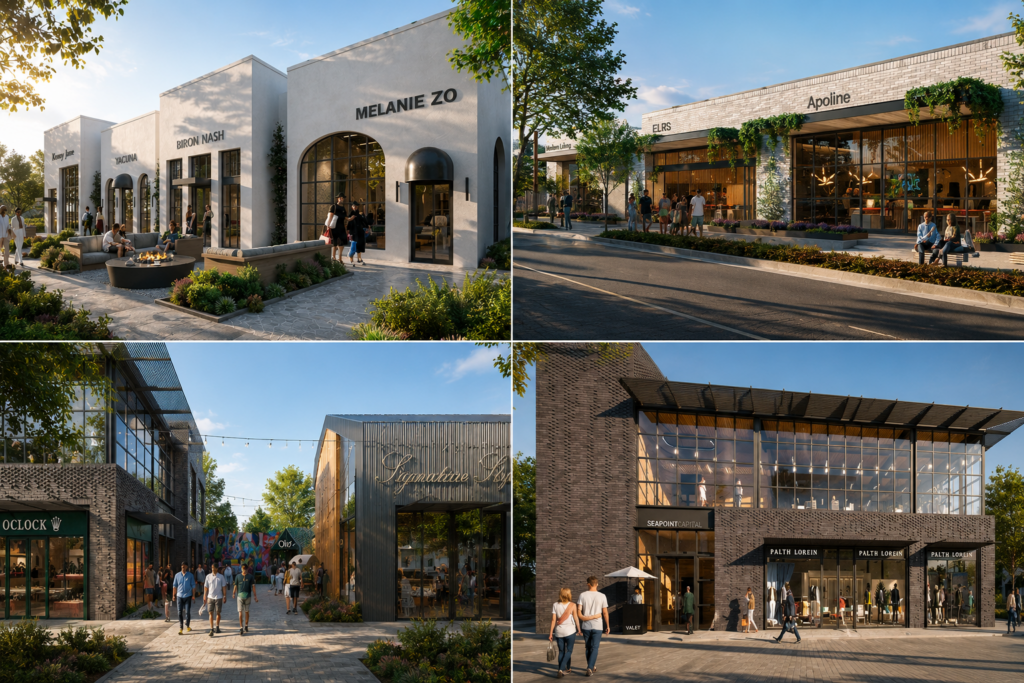
The project is also attracting several fashion and lifestyle retailers that have previously operated only in markets like New York, Los Angeles, and Miami.

Jean Dousset, the Los Angeles jeweler founded by the great-great-grandson of Louis Cartier, will open a 1,369-square-foot location at the development. The brand currently operates stores in West Hollywood and SoHo.

Luxury womenswear label Guizio will open a 2,018-square-foot space. The New York-based brand currently operates locations in Manhattan and Aventura, Florida.

Cami NYC, another New York womenswear brand, will open a 1,452-square-foot store. Its only existing retail location today is on Manhattan’s Upper East Side.

Margaux, the high-end shoe and accessories brand known for its West Village flagship in New York City, has also signed on for an 856-square-foot space.

Several international brands are entering the United States through the project as well, including Alberta Boot Co. and Cody & Sioux, both based in Alberta, Canada.

The retailer lineup will also include Sway Wellness, a Denver-based spa concept opening in a 2,245-square-foot space.

A Walkable Retail District, Not Just Another Shopping Center

What stands out most about the project is probably not any individual retailer.

It is the way the development itself is being designed.

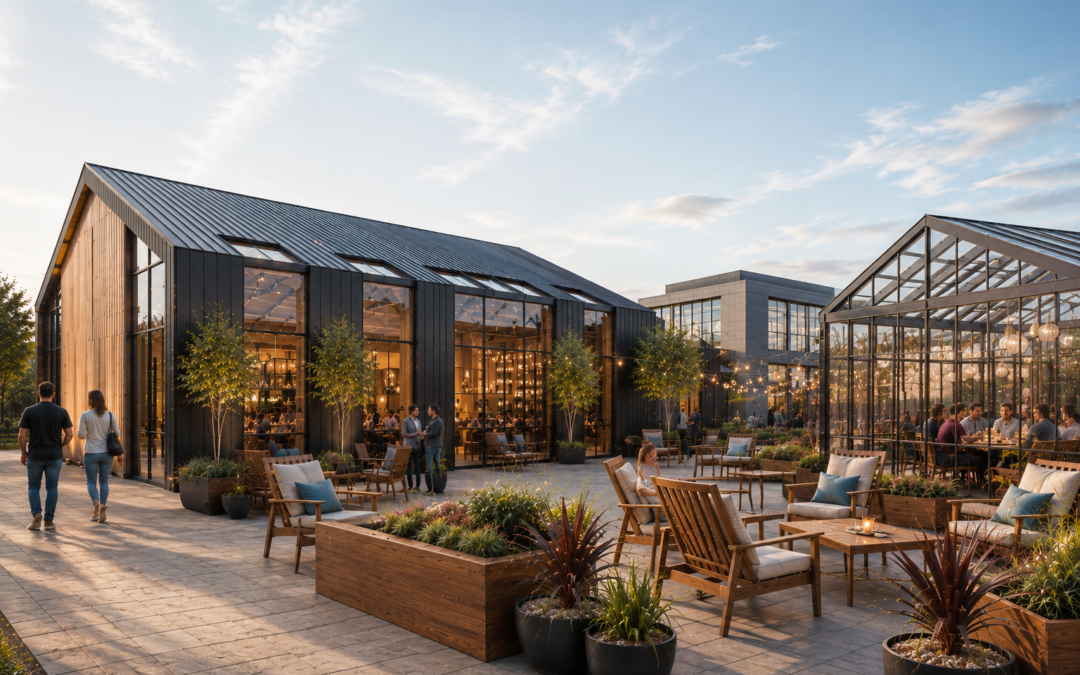
Instead of one large commercial structure, the project is broken into smaller buildings ranging from single-tenant bungalow concepts to larger three-story structures. The plan includes approximately 75,000 square feet of retail, 12,000 square feet of restaurant space, and 74,000 square feet of office space across two office buildings collectively known as Henderson East.

The architecture feels intentionally pedestrian-oriented.

Outdoor gathering spaces, smaller storefronts, layered building materials, restaurant patios, and walkable pathways all appear designed to create an environment that feels more integrated into the neighborhood rather than isolated from it.

That distinction matters.

Especially on Henderson.

Romy Will Anchor the Restaurant Component

So far, the only announced restaurant tenant is Romy, an all-day bakery and café concept that transitions into a restaurant in the evening.

Romy will occupy a 3,000-square-foot space at the base of one of the office towers and was the first major tenant publicly announced for the project earlier this year.

Additional restaurant announcements are still expected.

Henderson’s Momentum Continues

This project is also arriving during a period where Henderson Avenue already feels increasingly active.

Rag & Bone is expected to relocate from its temporary Henderson storefront into a permanent space within the new development. Salt & Straw recently opened its first Texas location nearby on May 15, while PopUp Bagels is expected to arrive later this summer.

Taken together, the corridor is beginning to feel less like an emerging district and more like an established destination attracting serious long-term investment.

And that may be the biggest story here.

For years, Henderson Avenue has been one of Dallas’ most promising transitional neighborhoods.

Projects like this suggest the next chapter may be arriving faster than anyone expected.

Development design by GFF. Original renderings by Pictury. Re-rendered editorial imagery by KDREGMedia


You Cannot Buy Katy Trail Access at Home Depot

You Cannot Buy Katy Trail Access at Home Depot

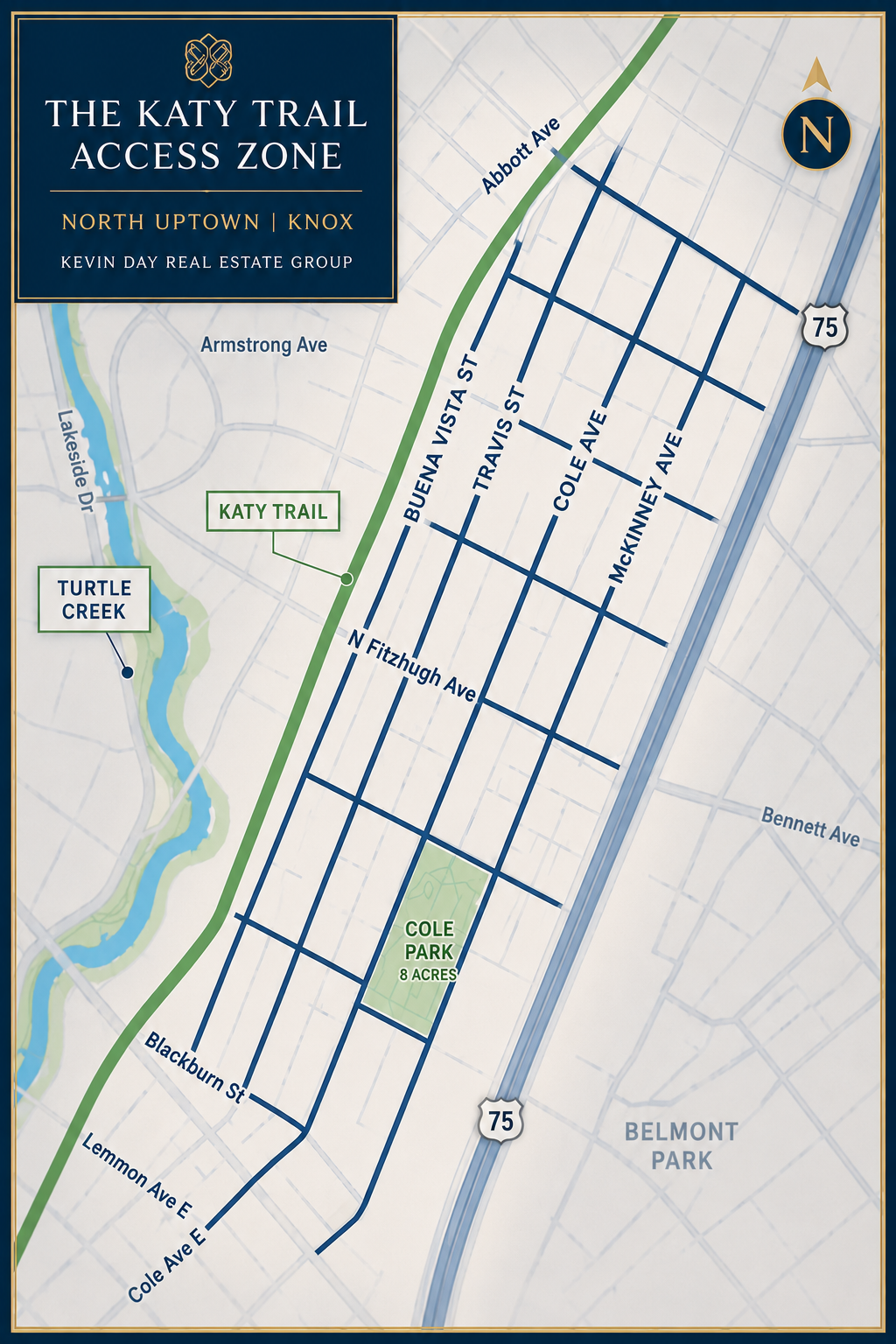
Kitchen cabinets, countertops, lighting, and flooring can all be upgraded. But the thing that keeps drawing people to the eight blocks of Uptown, just south of Knox, isn’t sitting on a shelf at Home Depot.
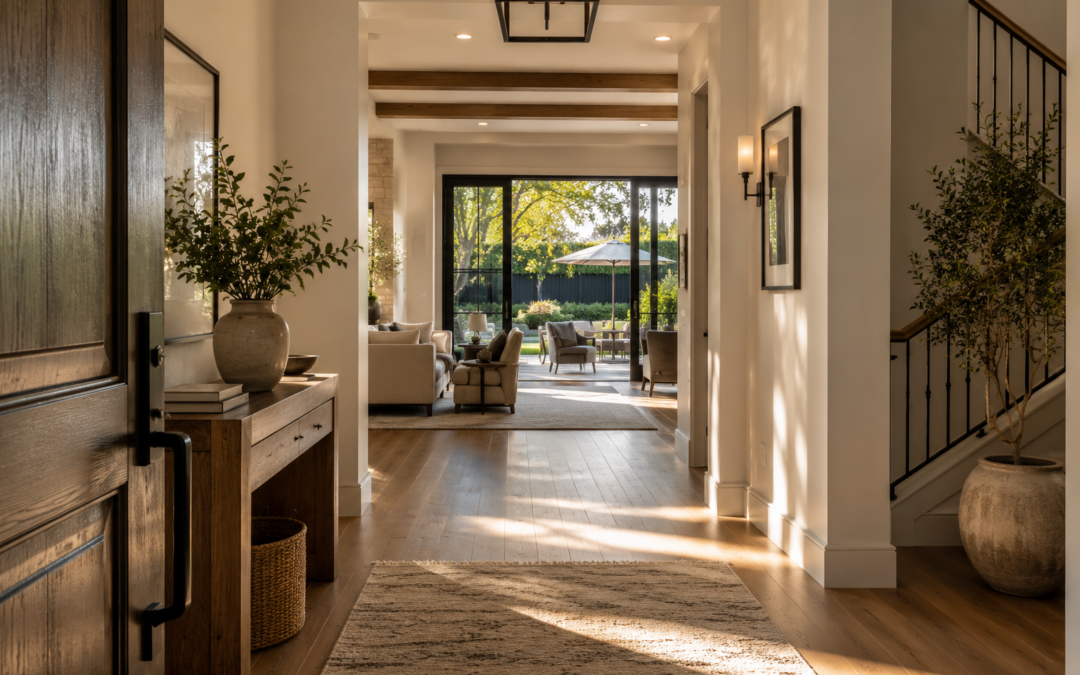
It’s Katy Trail access.

Most people search for rentals or places to buy by square footage, bedroom count, finish-out details, and price. Then, there is an elite group that want close proximity to Katy Trail.

Because living near Katy Trail changes how people actually live.

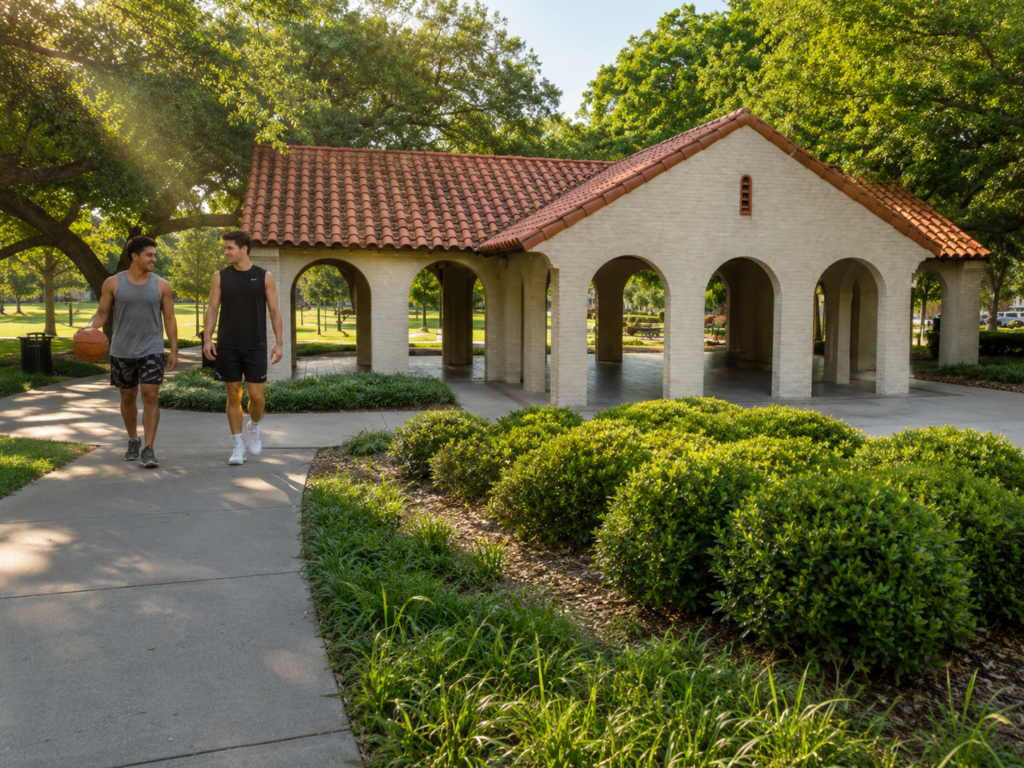
Suddenly morning coffee is not a drive. Exercise is not something you schedule. Dinner is not an event that requires planning. You walk out your front door and it’s all in the neighborhood.

You see people walking dogs, runners finishing morning miles, neighbors heading to the market, friends meeting for coffee, and rooftop patios filling up as the sun starts dropping over the skyline.

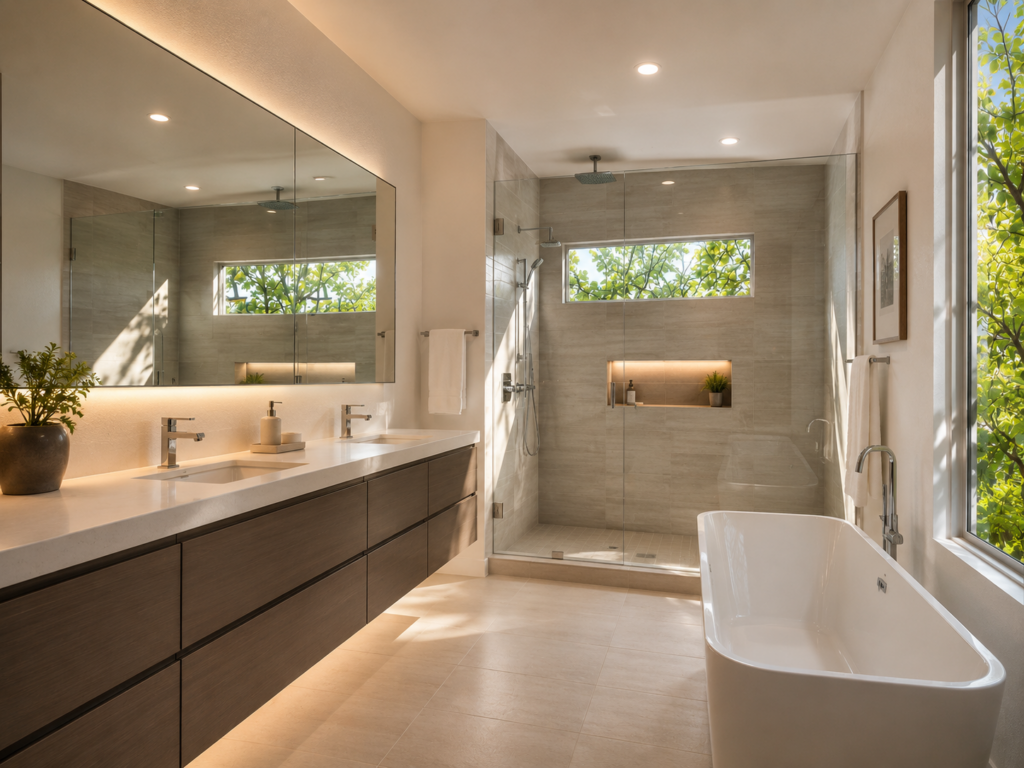
The townhomes are beautiful. The kitchens are beautiful. The finish-outs are beautiful.

But those things exist all over Dallas.

Katy Trail access a block away, does not.

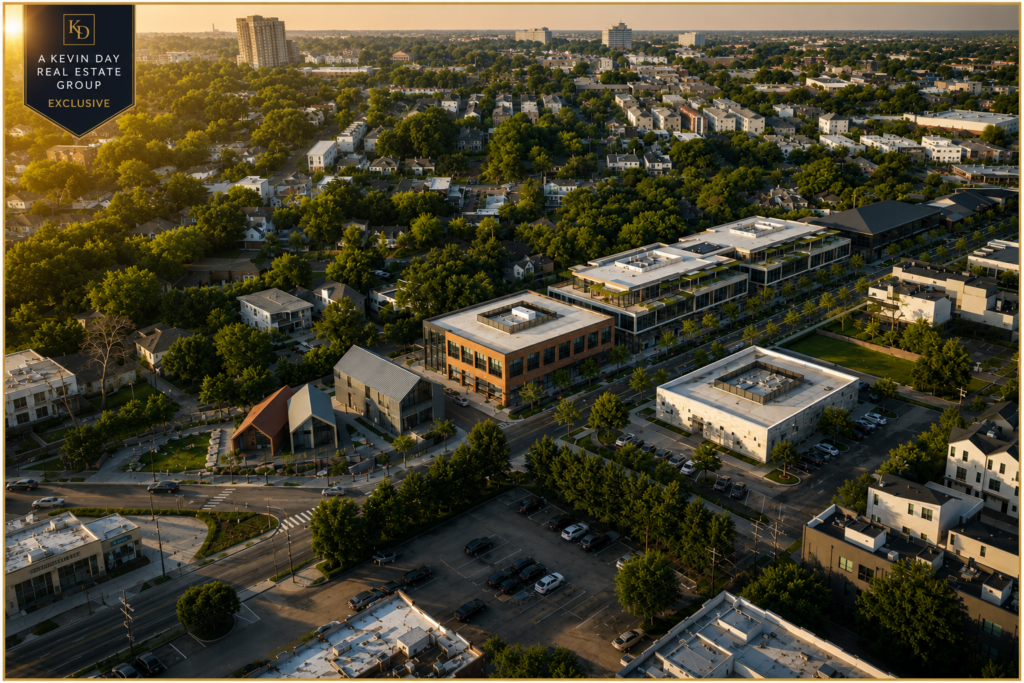
There are certain places around Dallas where people want more than square footage, and this little pocket just south of Knox is one of them. If you’re not familiar with it, think roughly McKinney Avenue, Cole Avenue, Travis Street, Buena Vista, and Katy Trail itself stretching beside it all. It’s an area that somehow manages to feel connected, and tucked away, at the same time.

You can walk out your front door and be on Katy Trail in seconds.

That changes things.

Everything now becomes a walk.

Life gets smaller in the best possible way.

People underestimate how valuable that becomes.

I’ve shown townhomes where couples initially start talking about kitchen finishes and backsplash tile selections. Then we step outside and they realize they can walk to any and everything that want.

Walkable neighborhoods, especially ones with immediate access to the trail, is requested more than large closets or gas stoves.

And here’s another funny observation.

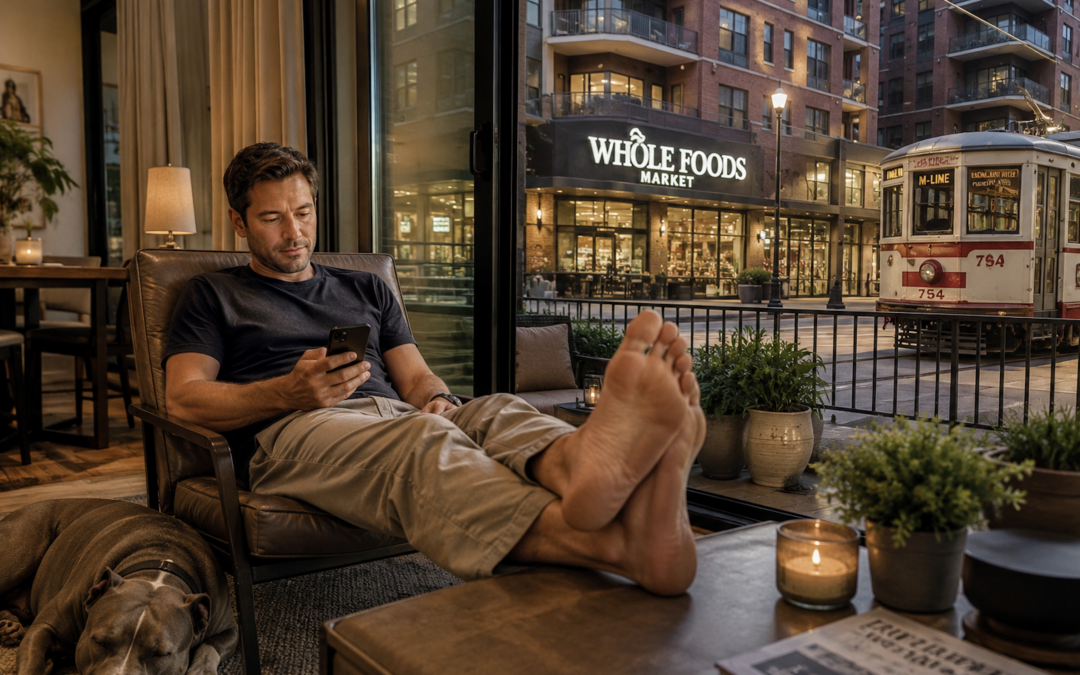
Wherever I see an Apple store, I usually expect a Starbucks and a grocery concept like Trader Joe’s or Whole Foods nearby.

Put a one-mile radius around that trifecta and you’re usually standing in valuable real estate.

Those retailers figured that out a long time ago.

But even that’s only part of the story.

The real magic isn’t those stores or eateries.

It’s the rhythm.

It’s the little routines that don’t seem important until one day you realize you would hate giving them up.

That’s why people come here.

And that’s why they stay, until life changes.

As time goes on they get engaged, or a baby is on the way, and the next move usually isn’t a larger townhome.

It’s a house.

They have thoroughly embraced this Uptown townhome life, but their priorities have changed. Their love for Katy Trail is replaced by the need for good school districts, and the other benefits suburban communities offer growing families.

And while they are moving off to the suburbs, a new young couple has decided to lease the townhome they’ve lived in; and the new young couple is discovering the absolute joy of having immediate Katy Trail access as they requested, as well as their new life of walking everywhere, like the couple before them.

Katy Trail is a property feature that gets requested hundreds of times a day.

You can remodel kitchens.

You can replace flooring.

You can renovate bathrooms.

But you cannot buy Katy Trail access at Home Depot.