
What Buyers Say They Want vs. What They Actually Need
Most buyers start with a list.
Three bedrooms.
Open kitchen.
Quartz countertops.
Walk-in closet.
Two-car garage.
And there is absolutely nothing wrong with that.
But after thirty years in real estate, I’ve noticed something interesting.
The features buyers talk about first are rarely the things that matter most six months after they move in.
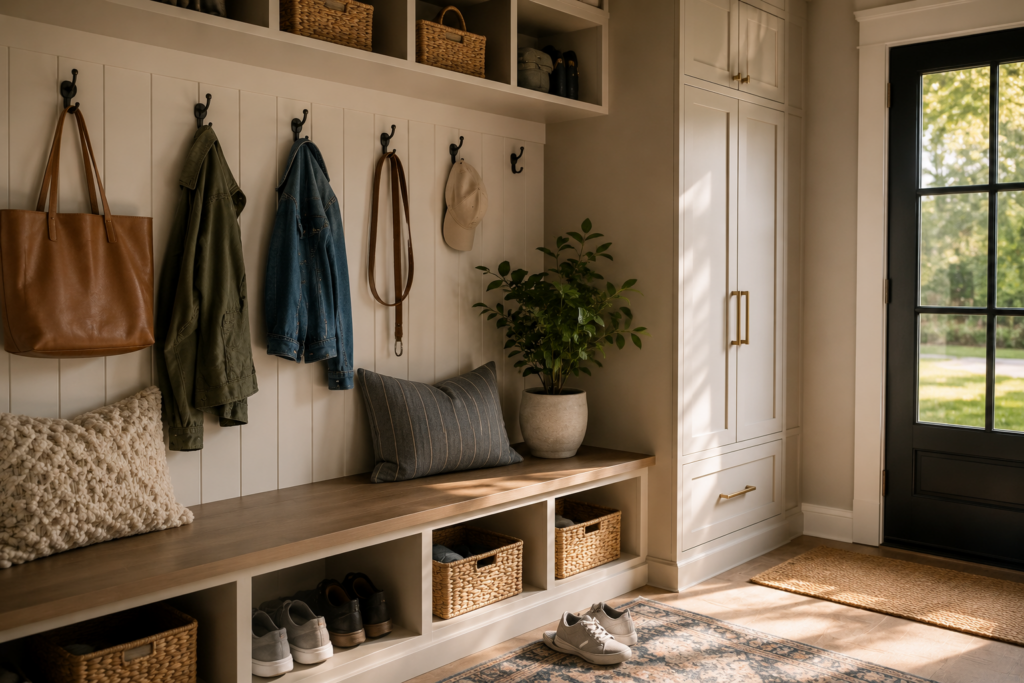
Take this mudroom.
Almost nobody calls me and says, “Kevin, finding a great mudroom is my top priority.”
Nobody has ever started a home search with a passionate speech about coat hooks, storage cubbies, or a built-in bench.
Yet the moment people live with a space like this, they don’t want to give it up.
Why?
Because the mudroom isn’t solving a housing problem.
It’s solving a life problem.
It’s eliminating clutter.
It’s creating organization.
It’s giving backpacks, shoes, dog leashes, purses, keys, and all the little daily annoyances a place to live.
In other words, it’s making everyday life easier.
And that’s where many buyers accidentally get off track.
They focus on the feature.
What they really care about is the frustration the feature eliminates.
A few years ago, I would have described a buyer’s needs very differently.
Then I started paying closer attention.
People would tell me they wanted a larger garage.
What they actually wanted was less stress.
People would tell me they wanted an extra bedroom.
What they actually wanted was flexibility.
People would tell me they wanted a bigger kitchen.
What they actually wanted was a place where family naturally gathered.
Then there are buyers who don’t even realize what’s bothering them until we start talking.

This guy doesn’t need granite countertops.
He needs relief.
He’s carrying groceries.
Dry cleaning.
A gym bag.
Coffee.
He’s sharing an elevator with half the building.
He’s trying to manage a busy life inside a space that no longer works very well.
If he walked into my office and handed me a wish list, the things written on that paper might be useful.
But the real clues would be everything written between the lines.
The frustrations.
The routines.
The inconveniences.
The things he’s tired of doing every single day.
That’s where the real story lives.
And that’s why some of the smartest homebuyers eventually stop asking one question:
“What house do I want?”
And start asking a much better one:
“What problems am I trying to solve?”
Because once you identify the real problem, the right house often becomes much easier to find.
The best homes don’t simply check boxes.
They improve daily life.
And sometimes the feature that changes everything isn’t the flashy one you noticed first.
Sometimes it’s the mudroom.